If you ever find yourself in an audiophile-type argument and need proof that, in the 21st century, manufacturing high-performance audio gear to sell for a reasonable retail price is becoming an impossibility, point to Vincent T.A.C.'s TubeLine SV-236MK integrated amplifier, designed in Germany and built in China.
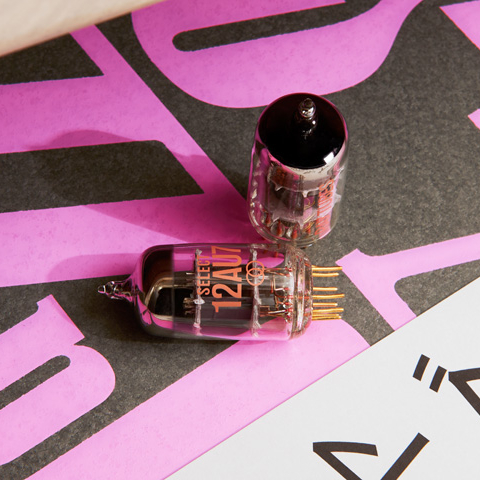
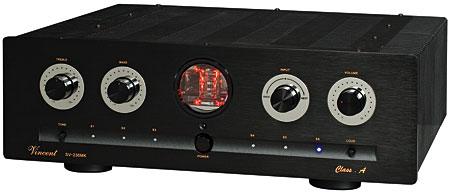 Have the person you're arguing with inspect the fit'n'finish of this handsome, 45-lb powerhouse, and finger the rugged heatsinks flanking its chassis. Encourage that audiophile to pop the heavy top plate and examine the superior build quality and parts (including WIMA caps), the elegant layout, the dual sets of hunky speaker terminals, the massive toroidal power transformer—not to mention the discrete output devices, and the front-end's three 12AX7 tubes, ripe for rolling.
When your friend is finished looking, and you've told him or her that the SV-236MK is rated to output 150Wpc into 8 ohms (with the first 10Wpc in class-A), or 250Wpc into 4 ohms—and even before you sit down to listen to it—ask your friend to guess its price. $3000? $4000? $5000?
Who'd guess that the SV-236MK's list price is $1995? Not me, that's for sure—and I've been around this stuff a long time.
Too Grand for Two Grand
Have the person you're arguing with inspect the fit'n'finish of this handsome, 45-lb powerhouse, and finger the rugged heatsinks flanking its chassis. Encourage that audiophile to pop the heavy top plate and examine the superior build quality and parts (including WIMA caps), the elegant layout, the dual sets of hunky speaker terminals, the massive toroidal power transformer—not to mention the discrete output devices, and the front-end's three 12AX7 tubes, ripe for rolling.
When your friend is finished looking, and you've told him or her that the SV-236MK is rated to output 150Wpc into 8 ohms (with the first 10Wpc in class-A), or 250Wpc into 4 ohms—and even before you sit down to listen to it—ask your friend to guess its price. $3000? $4000? $5000?
Who'd guess that the SV-236MK's list price is $1995? Not me, that's for sure—and I've been around this stuff a long time.
Too Grand for Two Grand
In addition to plenty of claimed power, your $1995 gets you a smoothly machined metal remote control for volume, mute, selecting from among six line inputs, and a dimmer for the "show" tube, which is prominently framed by a circular glass window at the center of the thick front panel, and backed by a mirror. Obviously, it's not the tube's filaments that dim when you push the dimmer button. Instead, a series of filament-tinted LEDs mounted to the window's sides reflect off the tube to do the trick. And note the tone controls: Treble and Bass, defeatable by a Tone button. In addition to the Volume and input controls, there's even a Loudness button, which adjusts the amplifier's response at low volumes to compensate for the nominal changes in human hearing sensitivity. It's like the 1960s, with a price to match (in '60s dollars, $2000 is about $395). On the rear panel are Tape Out and Preamp Out jacks.
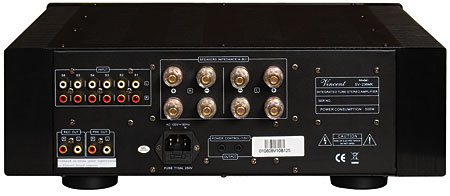
After removing the RCA jacks' translucent covers—a nice touch omitted even from more expensive gear—you plug in your sources, connect your speaker cables to the WBT-like five-way binding posts (maybe they're real WBTs—Vincent is a German firm, after all), push the Power button at the center of the front panel, and—unless you've been tipped off in advance by reading this review—you're in for a big surprise.
Smooth, vibrant sound
It might seem unfair to audition a $1995 integrated amplifier using a $65,000 pair of loudspeakers, but the Wilson Audio Specialties MAXX 3s were the speakers hooked up to my reference system at the time, so that's what I used. Vincent's American importer, WS Distributing, said the TubeLine SV-236MK had "no problem" driving the MAXX 2s, and the MAXX 3s are easier to drive. After spending a few weeks listening to the Vincent easily driving the new Wilsons, I had no doubt it would do just as well with the MAXX 2s. What do you hear when you switch to a $2000 integrated from an amp-preamp combo capable of outputting four times the power and costing more than twenty times more? At first, I heard only my bank account draining. When I fired it up, the SV-236MK was that good.
 It sounded even more together about an hour later. Then, the SV-236MK produced a sonic picture that never disappointed, or needed excuses based on its price. Its overall sound was full-bodied, self-assured, seemingly complete. There were no glaring weaknesses, such as softness or rhythmic confusion on bottom. In fact, the Vincent's ability to firmly grip and hold the MAXX 3s' woofer bins came as a pleasant surprise. Low-frequency extension was seemingly complete, and the rhythmic presentation was nimble and taut. At no time did I get the feeling that the SV-236MK's three tubes were excessively or unevenly warming or softening the signal before passing it off to the amp's solid-state output stage. In fact, the Vincent's overall sound was on the lean, fast side, with a slight emphasis of transient information at the expense of the harmonic and textural envelope.
However, the SV-236MK's presentation was more fully fleshed out than that of the Chord SPM 650 power amp I reviewed in March, and which costs more than three times as much. The Chord's cleaner, faster, more grain-free transients give it an overall purity and transparency the SV-236MK couldn't provide, but the Vincent compensated with richer instrumental and orchestral colors.
Rather than listen to familiar LPs and CDs on my reference system and then insert the Vincent, I thought it might be more revealing to listen to new and totally unfamiliar recordings. Neil Young's Massey Hall 1971 (two LPs, Reprise/Classic 43328-1) was released just as I was setting up the SV-236MK, so I immediately played it. The album opens with hall sound, then applause as the conquering hero returns to his native Canada. Young begins with a stripped-down rendition of his moody Buffalo Springfield tune "On the Way Home." It's just Neil and his acoustic guitar in a spare, wistful, less chipper, far more vital version of the familiar, overproduced opening track of the Springfield's Last Time Around, sung on that album by Richie Furay.
It sounded even more together about an hour later. Then, the SV-236MK produced a sonic picture that never disappointed, or needed excuses based on its price. Its overall sound was full-bodied, self-assured, seemingly complete. There were no glaring weaknesses, such as softness or rhythmic confusion on bottom. In fact, the Vincent's ability to firmly grip and hold the MAXX 3s' woofer bins came as a pleasant surprise. Low-frequency extension was seemingly complete, and the rhythmic presentation was nimble and taut. At no time did I get the feeling that the SV-236MK's three tubes were excessively or unevenly warming or softening the signal before passing it off to the amp's solid-state output stage. In fact, the Vincent's overall sound was on the lean, fast side, with a slight emphasis of transient information at the expense of the harmonic and textural envelope.
However, the SV-236MK's presentation was more fully fleshed out than that of the Chord SPM 650 power amp I reviewed in March, and which costs more than three times as much. The Chord's cleaner, faster, more grain-free transients give it an overall purity and transparency the SV-236MK couldn't provide, but the Vincent compensated with richer instrumental and orchestral colors.
Rather than listen to familiar LPs and CDs on my reference system and then insert the Vincent, I thought it might be more revealing to listen to new and totally unfamiliar recordings. Neil Young's Massey Hall 1971 (two LPs, Reprise/Classic 43328-1) was released just as I was setting up the SV-236MK, so I immediately played it. The album opens with hall sound, then applause as the conquering hero returns to his native Canada. Young begins with a stripped-down rendition of his moody Buffalo Springfield tune "On the Way Home." It's just Neil and his acoustic guitar in a spare, wistful, less chipper, far more vital version of the familiar, overproduced opening track of the Springfield's Last Time Around, sung on that album by Richie Furay.
Have the person you're arguing with inspect the fit'n'finish of this handsome, 45-lb powerhouse, and finger the rugged heatsinks flanking its chassis. Encourage that audiophile to pop the heavy top plate and examine the superior build quality and parts (including WIMA caps), the elegant layout, the dual sets of hunky speaker terminals, the massive toroidal power transformer—not to mention the discrete output devices, and the front-end's three 12AX7 tubes, ripe for rolling.
When your friend is finished looking, and you've told him or her that the SV-236MK is rated to output 150Wpc into 8 ohms (with the first 10Wpc in class-A), or 250Wpc into 4 ohms—and even before you sit down to listen to it—ask your friend to guess its price. $3000? $4000? $5000?
In addition to plenty of claimed power, your $1995 gets you a smoothly machined metal remote control for volume, mute, selecting from among six line inputs, and a dimmer for the "show" tube, which is prominently framed by a circular glass window at the center of the thick front panel, and backed by a mirror. Obviously, it's not the tube's filaments that dim when you push the dimmer button. Instead, a series of filament-tinted LEDs mounted to the window's sides reflect off the tube to do the trick. And note the tone controls: Treble and Bass, defeatable by a Tone button. In addition to the Volume and input controls, there's even a Loudness button, which adjusts the amplifier's response at low volumes to compensate for the nominal changes in human hearing sensitivity. It's like the 1960s, with a price to match (in '60s dollars, $2000 is about $395). On the rear panel are Tape Out and Preamp Out jacks.
It might seem unfair to audition a $1995 integrated amplifier using a $65,000 pair of loudspeakers, but the Wilson Audio Specialties MAXX 3s were the speakers hooked up to my reference system at the time, so that's what I used. Vincent's American importer, WS Distributing, said the TubeLine SV-236MK had "no problem" driving the MAXX 2s, and the MAXX 3s are easier to drive. After spending a few weeks listening to the Vincent easily driving the new Wilsons, I had no doubt it would do just as well with the MAXX 2s. What do you hear when you switch to a $2000 integrated from an amp-preamp combo capable of outputting four times the power and costing more than twenty times more? At first, I heard only my bank account draining. When I fired it up, the SV-236MK was that good.
It sounded even more together about an hour later. Then, the SV-236MK produced a sonic picture that never disappointed, or needed excuses based on its price. Its overall sound was full-bodied, self-assured, seemingly complete. There were no glaring weaknesses, such as softness or rhythmic confusion on bottom. In fact, the Vincent's ability to firmly grip and hold the MAXX 3s' woofer bins came as a pleasant surprise. Low-frequency extension was seemingly complete, and the rhythmic presentation was nimble and taut. At no time did I get the feeling that the SV-236MK's three tubes were excessively or unevenly warming or softening the signal before passing it off to the amp's solid-state output stage. In fact, the Vincent's overall sound was on the lean, fast side, with a slight emphasis of transient information at the expense of the harmonic and textural envelope.
However, the SV-236MK's presentation was more fully fleshed out than that of the Chord SPM 650 power amp I reviewed in March, and which costs more than three times as much. The Chord's cleaner, faster, more grain-free transients give it an overall purity and transparency the SV-236MK couldn't provide, but the Vincent compensated with richer instrumental and orchestral colors.
Rather than listen to familiar LPs and CDs on my reference system and then insert the Vincent, I thought it might be more revealing to listen to new and totally unfamiliar recordings. Neil Young's Massey Hall 1971 (two LPs, Reprise/Classic 43328-1) was released just as I was setting up the SV-236MK, so I immediately played it. The album opens with hall sound, then applause as the conquering hero returns to his native Canada. Young begins with a stripped-down rendition of his moody Buffalo Springfield tune "On the Way Home." It's just Neil and his acoustic guitar in a spare, wistful, less chipper, far more vital version of the familiar, overproduced opening track of the Springfield's Last Time Around, sung on that album by Richie Furay.