Most of us, most of the time, live in the world of good enough. On a Saturday, we might drive our Ford Fiesta to pick up a polo shirt at Banana Republic, then dine at Outback Steakhouse, and later get ready for bed with a mug of Celestial Seasonings Caramel Apple Dream tea while watching an episode of Hoarder House Flippers.
Though nearly all of us have to factor convenience and cost into what we consume, to much of the planet's population, our mediocrity looks like an affluent fantasy. I recall my first, utterly blissful visit to a US shopping mall as a college freshman. I couldn't believe how much there was to see and buy and taste, or that that I could eat a soft pretzel under a palm tree in Ohio. That the Chi Chi's on the mezzanine level offered all-you-can-eat chips and salsa for the table struck me as a small miracle of homegrown socialism.
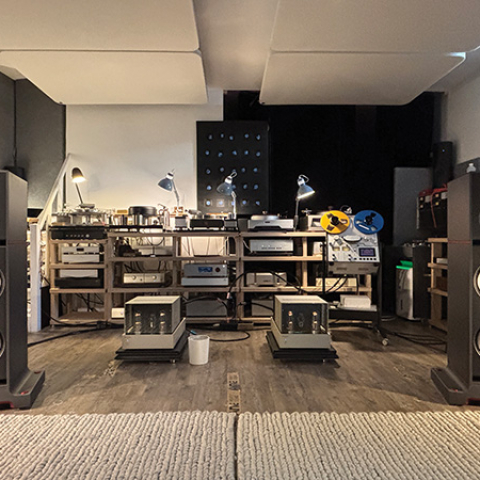
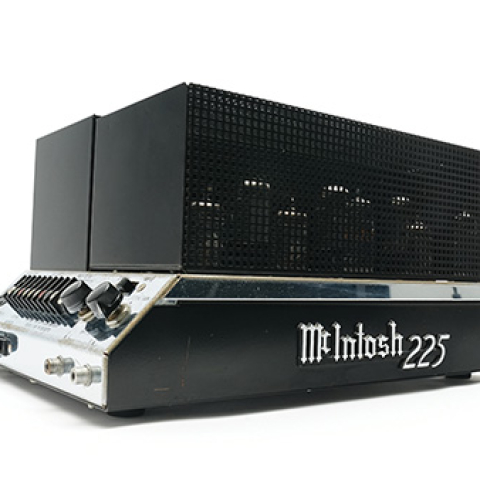
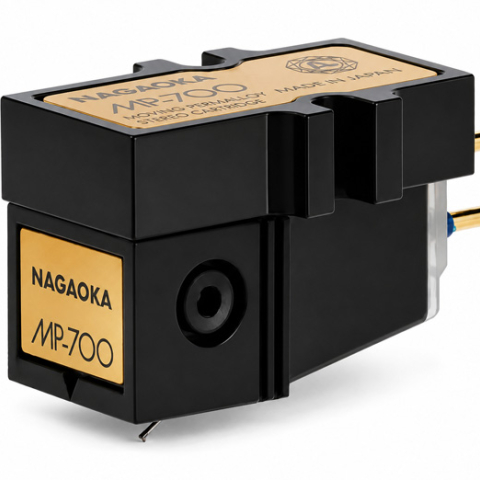
But this column concerns those among us for whom the world of good enough is not, at least when it comes to hi-fi. A nice receiver and a pair of minimonitors were never going to do it for these people. Philosophers and theologians have spent centuries warning us against perfectionism. "If you think you can be perfectly flawless ... you misunderstand both the depth of sin and the vastness of grace," wrote Thomas à Kempis in the beloved devotional classic The Imitation of Christ. Franciscan priest and theologian Richard Rohr averred that "maturity is the ability to joyfully live in an imperfect world." And don't even get me started on the Buddhists.
Luckily for us, the makers of the gear discussed below have chosen to ignore these timeless insights and shoulder their way past good enough into the rarefied realm of frankly pretty baller. Let's find out whether they've succeeded.
The Allnic H-7000 phono stage
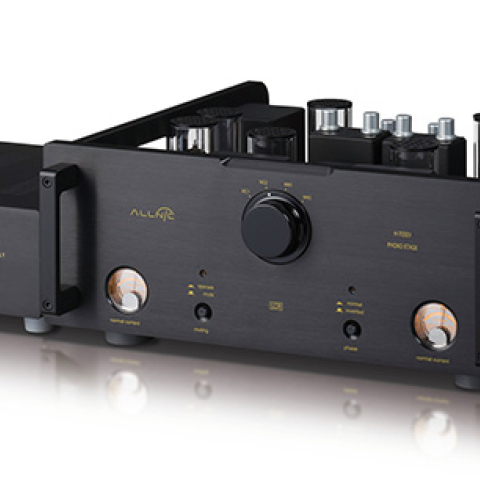
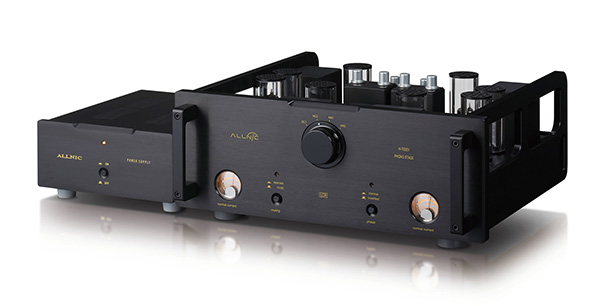
Kang Su Park's company's name is a portmanteau of "all" and "nickel," a tribute to the material in the transformer cores he uses in his equipment, often referred to by the trade name Permalloy. (The pedantic will note that the cores are not, in fact, all nickel because they also contain ferrosilicon, otherwise known as electrical steel.) To wit, the user manual that comes with the H-7000 phono stage pours one out for the homies: "Allnic is grateful to Mr. G.W. Elmen of Western Electric for inventing Permalloy for transformer core use, and in so doing, providing an enormous service to recorded music listeners everywhere."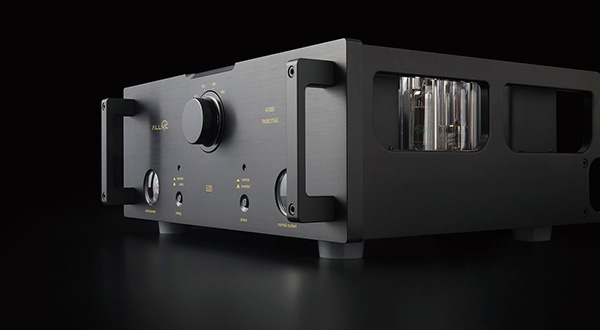 Though the H-7000 isn't Allnic's top-of-the-line phono stage, it happens to be a fanatical attempt to solve the issues in decoding the tiny signals generated by phono cartridges. Its steampunk 35lb chassis is powered by an external 18lb power supply. One reason for this zaftig casework is the unit's LCR circuit, which means that it uses inductors as well as capacitors and resistors to decode the RIAA signal. The Allnic contains two transformer-coupled active gain stages—hey, no coupling capacitors—and in addition to a pair of step-up transformers, features output transformers. And the H-7000 uses a whopping nine tubes: four for gain, four for voltage regulation, and a rectifier, all drawn from a new-old-stock mix originating in the US and the former Soviet Union. The review unit I listened to came with the optional silver step-up transformers, wound in house, which bring its retail price from the $19,800 base price to a formidable $21,300 (footnote 1).
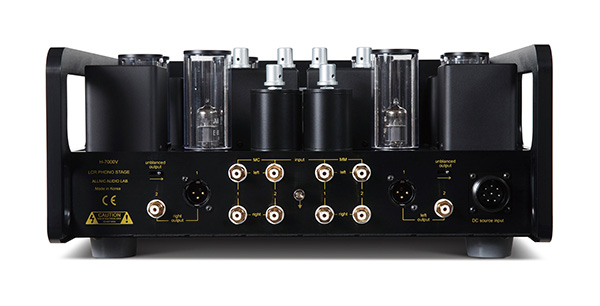
There's plenty of flexibility on board for the maximalist vinyl geek. The H-7000 offers two moving magnet inputs, which provide 40dB of gain, and two moving coil inputs, which rely on the step-up transformers. Those can be switched between four taps that offer a total of 62, 66, 68, and 72dB of gain, respectively. The input impedance can be switched between 20k, 30k, 47k, and 75k ohms; that unusual last setting allows the higher-gain SUT settings to be used without loading down a typical low-output moving coil cartridge excessively. The Allnic also offers a choice of single-ended or balanced outputs, but no volume control or mono switch. The front panel contains buttons for muting and inverting phase as well as a pair of nifty-looking current meters, while the tubes are arrayed across the top panel in distinctive glass chimneys. The website of Allnic's US distributor, Kevalin Audio, calls the phono stage "beefy" and "masculine," descriptors I will leave alone.
Though the H-7000 isn't Allnic's top-of-the-line phono stage, it happens to be a fanatical attempt to solve the issues in decoding the tiny signals generated by phono cartridges. Its steampunk 35lb chassis is powered by an external 18lb power supply. One reason for this zaftig casework is the unit's LCR circuit, which means that it uses inductors as well as capacitors and resistors to decode the RIAA signal. The Allnic contains two transformer-coupled active gain stages—hey, no coupling capacitors—and in addition to a pair of step-up transformers, features output transformers. And the H-7000 uses a whopping nine tubes: four for gain, four for voltage regulation, and a rectifier, all drawn from a new-old-stock mix originating in the US and the former Soviet Union. The review unit I listened to came with the optional silver step-up transformers, wound in house, which bring its retail price from the $19,800 base price to a formidable $21,300 (footnote 1).
There's plenty of flexibility on board for the maximalist vinyl geek. The H-7000 offers two moving magnet inputs, which provide 40dB of gain, and two moving coil inputs, which rely on the step-up transformers. Those can be switched between four taps that offer a total of 62, 66, 68, and 72dB of gain, respectively. The input impedance can be switched between 20k, 30k, 47k, and 75k ohms; that unusual last setting allows the higher-gain SUT settings to be used without loading down a typical low-output moving coil cartridge excessively. The Allnic also offers a choice of single-ended or balanced outputs, but no volume control or mono switch. The front panel contains buttons for muting and inverting phase as well as a pair of nifty-looking current meters, while the tubes are arrayed across the top panel in distinctive glass chimneys. The website of Allnic's US distributor, Kevalin Audio, calls the phono stage "beefy" and "masculine," descriptors I will leave alone.
 My first impression when listening to music through the Allnic—which I heard with the Ortofon SPU Royal N, the Koetsu Urushi Vermilion, and the Dynavector DRT XV-1s cartridges mounted on my Garrard 301 turntable in either the Schick 12" or Groovemaster 4 12" tonearms—was of wideband response and ample information. While listening to "Bismillahi 'Rrahmani 'Rrahim" from Harold Budd's Pavilion of Dreams, a Brian Eno–produced minimalist classic, the interplay between Richard Bernas's celeste and Marion Brown's alto saxophone was rendered in ultrahigh resolution, the instrumental halos and reverberant trails sounding palpable enough to touch. And on the next track, "Two Songs: 1. Let Us Go into the House of the Lord / 2. Butterfly Sunday," adapted from compositions by Pharoah Sanders and John Coltrane, respectively, Linda Richardson's mezzo-soprano and Maggie Thomas's harp sounded so vividly detailed and present that they nearly startled me out of my seat.
The H-7000 also turned out to be remarkably, consistently quiet. Given the unusually high number of transformers inside, this didn't surprise me, but it lent the copious sonic detail extracted from my records a suitably serene backdrop against which to unfold. Transient response was also superb, portraying music in a quicksilver manner that never impeded its flow. And the soundstage was finely layered and, when called for, both wide and deep.
The Manley Steelhead I live with provided an instructive contrast. In my system, the Allnic emphasized clarity, transparency, and detail extraction, areas in which it audibly exceeded the Manley. On the other hand, the Manley prioritizes tone color, presence, dynamic expression, and drive, categories in which it prevailed over the Korean phono stage. Which flavor appeals to you more is a personal choice. The delicate, meditative Budd record made an unbeatable case for the Allnic's quiet, pellucid nature, but the chunk and noise on Sonic Youth's wonderful Sonic Nurse shifted my preference to the Manley, which portrayed it as more propulsive, tonally dense, and menacing.
My first impression when listening to music through the Allnic—which I heard with the Ortofon SPU Royal N, the Koetsu Urushi Vermilion, and the Dynavector DRT XV-1s cartridges mounted on my Garrard 301 turntable in either the Schick 12" or Groovemaster 4 12" tonearms—was of wideband response and ample information. While listening to "Bismillahi 'Rrahmani 'Rrahim" from Harold Budd's Pavilion of Dreams, a Brian Eno–produced minimalist classic, the interplay between Richard Bernas's celeste and Marion Brown's alto saxophone was rendered in ultrahigh resolution, the instrumental halos and reverberant trails sounding palpable enough to touch. And on the next track, "Two Songs: 1. Let Us Go into the House of the Lord / 2. Butterfly Sunday," adapted from compositions by Pharoah Sanders and John Coltrane, respectively, Linda Richardson's mezzo-soprano and Maggie Thomas's harp sounded so vividly detailed and present that they nearly startled me out of my seat.
The H-7000 also turned out to be remarkably, consistently quiet. Given the unusually high number of transformers inside, this didn't surprise me, but it lent the copious sonic detail extracted from my records a suitably serene backdrop against which to unfold. Transient response was also superb, portraying music in a quicksilver manner that never impeded its flow. And the soundstage was finely layered and, when called for, both wide and deep.
The Manley Steelhead I live with provided an instructive contrast. In my system, the Allnic emphasized clarity, transparency, and detail extraction, areas in which it audibly exceeded the Manley. On the other hand, the Manley prioritizes tone color, presence, dynamic expression, and drive, categories in which it prevailed over the Korean phono stage. Which flavor appeals to you more is a personal choice. The delicate, meditative Budd record made an unbeatable case for the Allnic's quiet, pellucid nature, but the chunk and noise on Sonic Youth's wonderful Sonic Nurse shifted my preference to the Manley, which portrayed it as more propulsive, tonally dense, and menacing.
 I was also able to compare the step-up transformers in the H-7000 with the Consolidated Audio Monster Can. (I set the former to the Consolidated's 20× ratio and routed the latter through the Allnic's moving magnet inputs.) This is a punishing challenge; the Monster Can is still the best sounding step-up device I've heard. Nonetheless, the Allnic SUTs came close, equaling the larger transformer from Berlin in both transparency and detail, though not in scale, imaging, or musical communication. Comparatively, they left me wishing for a bit more richness and earth, especially given their very slight tendency to spotlight the upper frequencies, which I associate with silver wire (though my ears tend to be uncommonly allergic to this effect). Still, the SUTs in the H-7000 are undoubtedly top-class units made with evident skill and care.
One of the most fun parts of auditioning the Allnic was a box that arrived from Kevalin Audio's John Ketcham. Inside, I found some of the most exotic rectifier tubes known to humanity, which he suggested I try in the H-7000's power supply. After removing the very many screws holding the power supply's cover in place, I discovered a vintage Sylvania 5U4G. Over a number of months, I took turns substituting the more exotic rectifiers from Ketcham's box, all of which effected an improvement over the stock tube, though sometimes admittedly a subtle one. My favorites included the G.E.C. U52, which lent the Allnic a sweeter, more tactile personality, and the punchy, exciting-sounding Sylvania JAN-CHS-5931. Oddly, I didn't particularly care for the very expensive Takatsuki 274B, a current- production tube that sounded a bit thin in this application. Even more surprisingly, my favorite of the bunch turned out to be a 5U4G from Stradi, a brand I hadn't heard of manufactured in South Korea by a company called ZeroMountain. This beautifully constructed rectifier (which retails for $340) seemed to combine the best sonic qualities of several of the other tubes with the lowest noisefloor. It made me curious to investigate Stradi's other offerings.
The opportunity for tube rolling is just another advantage of this richly featured, well-engineered phono stage. Given its delicate, pure voicing and moderate gain, I think it would work best paired with a good active line stage. In the right setting, the H-7000 could be a terrific part of a highly resolving, vinyl-centered hi-fi.
I was also able to compare the step-up transformers in the H-7000 with the Consolidated Audio Monster Can. (I set the former to the Consolidated's 20× ratio and routed the latter through the Allnic's moving magnet inputs.) This is a punishing challenge; the Monster Can is still the best sounding step-up device I've heard. Nonetheless, the Allnic SUTs came close, equaling the larger transformer from Berlin in both transparency and detail, though not in scale, imaging, or musical communication. Comparatively, they left me wishing for a bit more richness and earth, especially given their very slight tendency to spotlight the upper frequencies, which I associate with silver wire (though my ears tend to be uncommonly allergic to this effect). Still, the SUTs in the H-7000 are undoubtedly top-class units made with evident skill and care.
One of the most fun parts of auditioning the Allnic was a box that arrived from Kevalin Audio's John Ketcham. Inside, I found some of the most exotic rectifier tubes known to humanity, which he suggested I try in the H-7000's power supply. After removing the very many screws holding the power supply's cover in place, I discovered a vintage Sylvania 5U4G. Over a number of months, I took turns substituting the more exotic rectifiers from Ketcham's box, all of which effected an improvement over the stock tube, though sometimes admittedly a subtle one. My favorites included the G.E.C. U52, which lent the Allnic a sweeter, more tactile personality, and the punchy, exciting-sounding Sylvania JAN-CHS-5931. Oddly, I didn't particularly care for the very expensive Takatsuki 274B, a current- production tube that sounded a bit thin in this application. Even more surprisingly, my favorite of the bunch turned out to be a 5U4G from Stradi, a brand I hadn't heard of manufactured in South Korea by a company called ZeroMountain. This beautifully constructed rectifier (which retails for $340) seemed to combine the best sonic qualities of several of the other tubes with the lowest noisefloor. It made me curious to investigate Stradi's other offerings.
The opportunity for tube rolling is just another advantage of this richly featured, well-engineered phono stage. Given its delicate, pure voicing and moderate gain, I think it would work best paired with a good active line stage. In the right setting, the H-7000 could be a terrific part of a highly resolving, vinyl-centered hi-fi.
 The Grimm MU2 Music Player
Recently, while reassembling my digital front end after moving to a new apartment, I nearly cried. In front of me was a stack of metal boxes and power supplies and a tangle of power cords, umbilical cables, Ethernet cables, USB cables, and various other odds and ends needed to connect this thing together. There was the Small Green Computer SonicTransporter i5 I use as a Roon core, the Sonore ultraRendu streamer with its Vinnie Rossi Mini linear power supply, and the Denafrips Iris digital-to-digital converter that turns the streamer's USB signal into the I2S format preferred by my Sonnet Morpheus DAC. Did I mention the external 2TB hard drive containing my music files? Or the TP-Link MC220L Ethernet-to-fiber converters I use to remove noise on the Ethernet line? This is an excellent-sounding digital source, but it's about as intuitive and straightforward as doing your taxes in Mandarin.
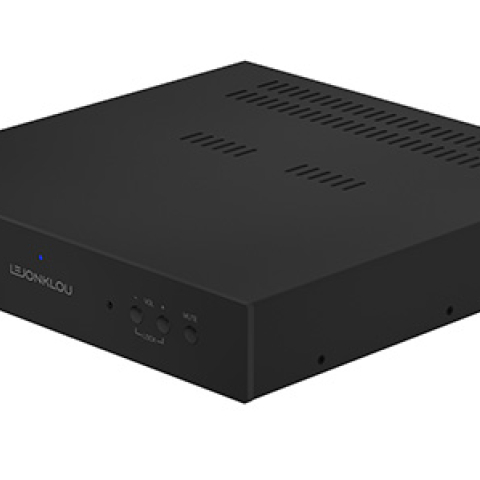
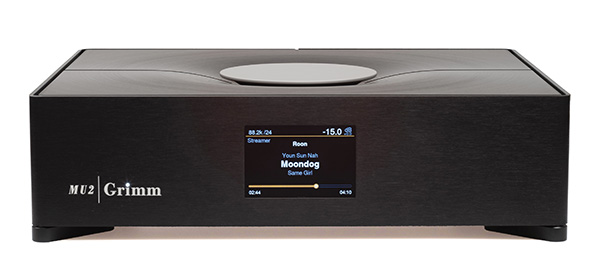
This jumble is just one of the reasons I appreciated the months I spent living with the Grimm MU2, a hugely sophisticated digital player that's simplicity itself to use (footnote 2). It combines a Roon Core, a streamer, a DAC, and an analog volume control, so all I had to do is connect it to my network with an Ethernet cable, find it in my Roon app, and press play. Since its introduction in 2023, a lot has been written about the MU2 (footnote 3), and its ubiquity in exhibitors' systems at audio shows suggests that it's become something of a reference. So I won't take up space here with describing its many features and capabilities and will refer the curious to Kal Rubinson's exhaustive review in this magazine.
But I do want to dwell for a moment on the way it makes music. One of the first tracks I listened to through the Grimm was a Qobuz stream of "My Funny Valentine" from Paul Desmond's Desmond Blue, an album that shouldn't work but does. It features the altoist playing with a string orchestra, a dated format if ever there was one, except that the arrangements, by Bob Prince, are inventive and subtle, and Desmond sounds as inspired as he'd ever been in a studio. The MU2 presented this track with superb timing and separation, making sense of the complicated interplay in the orchestra while keeping Desmond's saxophone separate spatially and musically.
 The sound was full and rich, with admirable color saturation and not a hint of the hollow, etched sound one hears from unconvincing digital. Imaging and soundstaging were as fine as I could have expected from a top-notch source. But what surprised me, given this track's streamed, disembodied origin, was its emotional accessibility. Desmond's improvisation is freighted with more despair than most readings of the Rodgers and Hart standard, and the Grimm conveyed the inward, lacerating quality of the performance with insight and force. Hearing this from a digital file was both unexpected and exciting.
This inspired me to play one of those records I rarely try to listen to on digital: Dreaming My Dreams, the song cycle Waylon Jennings recorded in 1975. It stands alongside Honky Tonk Heroes as one of his twin masterpieces. It also sounds like it was a blast to make: The credits list no fewer than nine guitarists.
Some digital components extract copious detail but do it surgically, without regard for the music's texture, density, and ambience, killing the patient on the table. But on the album's rollicking opener, "Are You Sure Hank Done It This Way," the MU2 illuminated the song's structure without smothering its excitement or scrubbing away its messy energy and drive. And Jennings's blustering guitar solo, one of the most memorable he's recorded, came through without being hollowed out or polished into dullness. The Grimm played back the lovely quiet ballads with just as much skill. On Jack Clement's tongue-in-cheek "Let's All Help the Cowboys (Sing the Blues)," Jennings engages in a little myth making, turning the cowboy into a stand-in for the singer-songwriter:
Through the MU2, Jennings's dream of a baritone voice—whiskey-brown and exhilarating in its size and power—was thoroughly compelling, moving between confession and invention while sounding perpetually amused.
I have never once preferred using a DAC's volume control over a good active line stage. The Grimm's analog volume control may be the sole exception. Operable via a physical remote control or the Roon app's slider, it provided sufficient wallop to drive the Manley Mahis, with their higher-than-average input sensitivity, in a thoroughly satisfying way. While the line stage in the Manley Steelhead lent the music still more punch, the Grimm's onboard volume control drove the amps with more delicacy and transparency. As ever, you can pick your poison, but the MU2's preamp implementation is the most convincing I've encountered in a digital product.
And though I've written about this in a previous column, it bears mentioning that even with the excellent MU2, when installed on the Ethernet line, the nearly free TP-Link Ethernet-to-fiber converters effected a major sonic improvement, resulting in more filigree, a subjectively lower noisefloor, and a more natural presentation. According to some listeners I trust, replacing the TP-Link wall warts with a linear power supply can produce another leap in performance; I hope to put these findings to the test soon.
The Grimm is one of those rare components that nails both functionality and performance while remaining reliable. It offers some of the best—and least musically destructive—sound from streaming I've experienced. In the world I inhabit, no $20,000 audio component can be called affordable, but given that you get four components in one case and a user interface that isn't an afterthought, the price strikes me as, at least, sane. Handing the Grimm back to the FedEx guy was no fun at all.
The sound was full and rich, with admirable color saturation and not a hint of the hollow, etched sound one hears from unconvincing digital. Imaging and soundstaging were as fine as I could have expected from a top-notch source. But what surprised me, given this track's streamed, disembodied origin, was its emotional accessibility. Desmond's improvisation is freighted with more despair than most readings of the Rodgers and Hart standard, and the Grimm conveyed the inward, lacerating quality of the performance with insight and force. Hearing this from a digital file was both unexpected and exciting.
This inspired me to play one of those records I rarely try to listen to on digital: Dreaming My Dreams, the song cycle Waylon Jennings recorded in 1975. It stands alongside Honky Tonk Heroes as one of his twin masterpieces. It also sounds like it was a blast to make: The credits list no fewer than nine guitarists.
Some digital components extract copious detail but do it surgically, without regard for the music's texture, density, and ambience, killing the patient on the table. But on the album's rollicking opener, "Are You Sure Hank Done It This Way," the MU2 illuminated the song's structure without smothering its excitement or scrubbing away its messy energy and drive. And Jennings's blustering guitar solo, one of the most memorable he's recorded, came through without being hollowed out or polished into dullness. The Grimm played back the lovely quiet ballads with just as much skill. On Jack Clement's tongue-in-cheek "Let's All Help the Cowboys (Sing the Blues)," Jennings engages in a little myth making, turning the cowboy into a stand-in for the singer-songwriter:
Through the MU2, Jennings's dream of a baritone voice—whiskey-brown and exhilarating in its size and power—was thoroughly compelling, moving between confession and invention while sounding perpetually amused.
I have never once preferred using a DAC's volume control over a good active line stage. The Grimm's analog volume control may be the sole exception. Operable via a physical remote control or the Roon app's slider, it provided sufficient wallop to drive the Manley Mahis, with their higher-than-average input sensitivity, in a thoroughly satisfying way. While the line stage in the Manley Steelhead lent the music still more punch, the Grimm's onboard volume control drove the amps with more delicacy and transparency. As ever, you can pick your poison, but the MU2's preamp implementation is the most convincing I've encountered in a digital product.
And though I've written about this in a previous column, it bears mentioning that even with the excellent MU2, when installed on the Ethernet line, the nearly free TP-Link Ethernet-to-fiber converters effected a major sonic improvement, resulting in more filigree, a subjectively lower noisefloor, and a more natural presentation. According to some listeners I trust, replacing the TP-Link wall warts with a linear power supply can produce another leap in performance; I hope to put these findings to the test soon.
The Grimm is one of those rare components that nails both functionality and performance while remaining reliable. It offers some of the best—and least musically destructive—sound from streaming I've experienced. In the world I inhabit, no $20,000 audio component can be called affordable, but given that you get four components in one case and a user interface that isn't an afterthought, the price strikes me as, at least, sane. Handing the Grimm back to the FedEx guy was no fun at all.
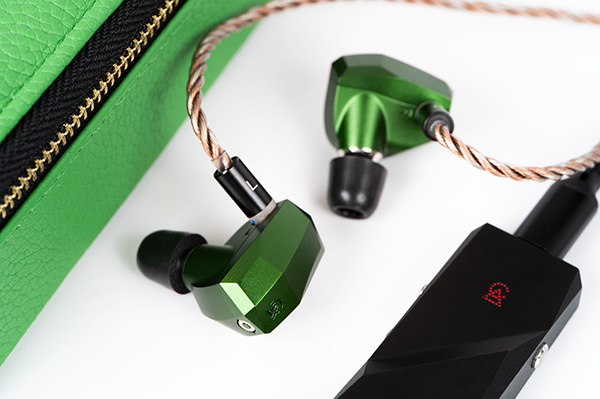 Campfire Audio Andromeda 10 Earphones
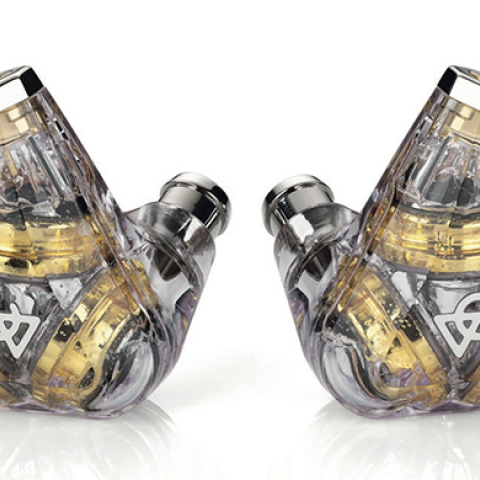
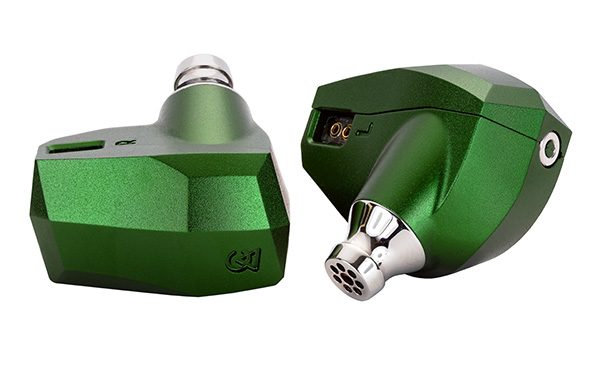
For a while now, I've been a fan of the delightful and sometimes strange earphones from Oregon's Campfire Audio (footnote 4). The three I wrote about in a previous column used dynamic, balanced armature and planar-magnetic drivers in various permutations and were tuned to sound, to say the least, distinctive. According to Campfire CEO Ken Ball, that's the whole point: His products explore specific sonic signatures and are not designed to please all, or even most, listeners. So my encounter with his latest earphone, the Andromeda 10 ($1799), was a genuine surprise. First introduced in 2016, the daddy of the Andromeda series featured five balanced armature drivers and combined the fine detail extraction these drivers are known for with a highly listenable, slightly forgiving tuning. The result was an instant hit that put the company on the radar of earphone listeners. In the following decade, several iterations of the earphone have come and gone, with the latest managing to squeeze 10 balanced armature drivers—four for the lows, four for the mids, and two for the highs—into its mint-green anodized-aluminum shell. "A lot has changed in 10 years, and I wanted to incorporate many of the things we've learned and discovered into the original five-driver version," Ball wrote to me in an email. "So the design of the A10 rolled in a lot of new concepts to the tuning circuit and some of the acoustic systems. But overall, we wanted to bring the elements of the original Andromeda everyone loved but elevate all aspects of it."
 I never experienced a previous iteration of the Andromeda, so I was surprised to hear an earphone that sounded, well, a little conventional. In a good way. On the title track from Beto Guedes's 1977 MPB landmark A Página do Relâmpago Elétrico, the A10 placed Zé Eduardo's acoustic guitar and Guedes's mandolin, panned far right and left respectively, well outside my ears. Guedes's sky-high tenor grazed the top of my head, and when Toninho Horta's electric bass came in, it seemed to emanate from my throat. While this out-of-the-head effect wasn't quite as dramatic as with Campfire's Trifecta, it's an impressive feat of earphone imaging.
It may sound somewhat conventional, but the A10 may sound somewhat conventional, but its way with detail eclipsed that of every other Campfire earphone I've heard. On "Nascente" from the same Guedes album, it allowed me to hear every bit of the band's interplay but also to clearly make out the complex arrangement of the string section, which is mixed fairly low. This searchlight resolution comes with a well-judged, unexaggerated bass, a real sense of body, and a euphonic, mellow tuning that worked even at low volumes and made it easy to listen for hours. Add to this the earphone's comfortable fit, the lovely, thoughtful accessories and cable, and I understood why the Andromeda was the company's breakout. The A10 has become my first-call earphone, too.
I never experienced a previous iteration of the Andromeda, so I was surprised to hear an earphone that sounded, well, a little conventional. In a good way. On the title track from Beto Guedes's 1977 MPB landmark A Página do Relâmpago Elétrico, the A10 placed Zé Eduardo's acoustic guitar and Guedes's mandolin, panned far right and left respectively, well outside my ears. Guedes's sky-high tenor grazed the top of my head, and when Toninho Horta's electric bass came in, it seemed to emanate from my throat. While this out-of-the-head effect wasn't quite as dramatic as with Campfire's Trifecta, it's an impressive feat of earphone imaging.
It may sound somewhat conventional, but the A10 may sound somewhat conventional, but its way with detail eclipsed that of every other Campfire earphone I've heard. On "Nascente" from the same Guedes album, it allowed me to hear every bit of the band's interplay but also to clearly make out the complex arrangement of the string section, which is mixed fairly low. This searchlight resolution comes with a well-judged, unexaggerated bass, a real sense of body, and a euphonic, mellow tuning that worked even at low volumes and made it easy to listen for hours. Add to this the earphone's comfortable fit, the lovely, thoughtful accessories and cable, and I understood why the Andromeda was the company's breakout. The A10 has become my first-call earphone, too.
Footnote 1: Allnic Audio, 1105 Sicox Tower 513-14, Sangdaewon-1dong, Jungwon-gu, Songnam City, Kyungki-do 462-806, South Korea. Tel: (82) 31-777-9447, (82) 70-8708-4468. Fax: (82) 31-777-9448. Web: www.allnicaudio.com. US distributor: Kevalin Audio, 7275 NE Avalon Drive Corvallis, Oregon, 97330. Tel: (503) 292-5592. Email: info@kevalinaudio.com. Web: kevalinaudio.com.
Footnote 2: Grimm Audio BV, Veldhoven, The Netherlands. Tel: (+31) 40 213 1562. Web: grimmaudio.com.
Footnote 3: Including in Stereophile. Jason Victor Serinus was the first Stereophile writer to hear the MU2, at High End Munich 2023; our writers have covered it in several subsequent show reports, which I won't list. Kalman Rubinson evaluated the MU2; his review is here; JA's measurements are linked from the review. In 2024, we named the MU2 a Joint Digital Source Product of the Year. Then Rogier van Bakel interviewed designer Eelco Grimm; you'll find that interview here.
Footnote 4: Campfire Audio, 2400 SE Ankeny Street, Portland, Oregon, 97214. Tel: (971) 279-4357. Email: support@ campfireaudio.com. Web: campfireaudio.com.
Kang Su Park's company's name is a portmanteau of "all" and "nickel," a tribute to the material in the transformer cores he uses in his equipment, often referred to by the trade name Permalloy. (The pedantic will note that the cores are not, in fact, all nickel because they also contain ferrosilicon, otherwise known as electrical steel.) To wit, the user manual that comes with the H-7000 phono stage pours one out for the homies: "Allnic is grateful to Mr. G.W. Elmen of Western Electric for inventing Permalloy for transformer core use, and in so doing, providing an enormous service to recorded music listeners everywhere."
Though the H-7000 isn't Allnic's top-of-the-line phono stage, it happens to be a fanatical attempt to solve the issues in decoding the tiny signals generated by phono cartridges. Its steampunk 35lb chassis is powered by an external 18lb power supply. One reason for this zaftig casework is the unit's LCR circuit, which means that it uses inductors as well as capacitors and resistors to decode the RIAA signal. The Allnic contains two transformer-coupled active gain stages—hey, no coupling capacitors—and in addition to a pair of step-up transformers, features output transformers. And the H-7000 uses a whopping nine tubes: four for gain, four for voltage regulation, and a rectifier, all drawn from a new-old-stock mix originating in the US and the former Soviet Union. The review unit I listened to came with the optional silver step-up transformers, wound in house, which bring its retail price from the $19,800 base price to a formidable $21,300 (footnote 1).
My first impression when listening to music through the Allnic—which I heard with the Ortofon SPU Royal N, the Koetsu Urushi Vermilion, and the Dynavector DRT XV-1s cartridges mounted on my Garrard 301 turntable in either the Schick 12" or Groovemaster 4 12" tonearms—was of wideband response and ample information. While listening to "Bismillahi 'Rrahmani 'Rrahim" from Harold Budd's Pavilion of Dreams, a Brian Eno–produced minimalist classic, the interplay between Richard Bernas's celeste and Marion Brown's alto saxophone was rendered in ultrahigh resolution, the instrumental halos and reverberant trails sounding palpable enough to touch. And on the next track, "Two Songs: 1. Let Us Go into the House of the Lord / 2. Butterfly Sunday," adapted from compositions by Pharoah Sanders and John Coltrane, respectively, Linda Richardson's mezzo-soprano and Maggie Thomas's harp sounded so vividly detailed and present that they nearly startled me out of my seat.
The H-7000 also turned out to be remarkably, consistently quiet. Given the unusually high number of transformers inside, this didn't surprise me, but it lent the copious sonic detail extracted from my records a suitably serene backdrop against which to unfold. Transient response was also superb, portraying music in a quicksilver manner that never impeded its flow. And the soundstage was finely layered and, when called for, both wide and deep.
I was also able to compare the step-up transformers in the H-7000 with the Consolidated Audio Monster Can. (I set the former to the Consolidated's 20× ratio and routed the latter through the Allnic's moving magnet inputs.) This is a punishing challenge; the Monster Can is still the best sounding step-up device I've heard. Nonetheless, the Allnic SUTs came close, equaling the larger transformer from Berlin in both transparency and detail, though not in scale, imaging, or musical communication. Comparatively, they left me wishing for a bit more richness and earth, especially given their very slight tendency to spotlight the upper frequencies, which I associate with silver wire (though my ears tend to be uncommonly allergic to this effect). Still, the SUTs in the H-7000 are undoubtedly top-class units made with evident skill and care.
One of the most fun parts of auditioning the Allnic was a box that arrived from Kevalin Audio's John Ketcham. Inside, I found some of the most exotic rectifier tubes known to humanity, which he suggested I try in the H-7000's power supply. After removing the very many screws holding the power supply's cover in place, I discovered a vintage Sylvania 5U4G. Over a number of months, I took turns substituting the more exotic rectifiers from Ketcham's box, all of which effected an improvement over the stock tube, though sometimes admittedly a subtle one. My favorites included the G.E.C. U52, which lent the Allnic a sweeter, more tactile personality, and the punchy, exciting-sounding Sylvania JAN-CHS-5931. Oddly, I didn't particularly care for the very expensive Takatsuki 274B, a current- production tube that sounded a bit thin in this application. Even more surprisingly, my favorite of the bunch turned out to be a 5U4G from Stradi, a brand I hadn't heard of manufactured in South Korea by a company called ZeroMountain. This beautifully constructed rectifier (which retails for $340) seemed to combine the best sonic qualities of several of the other tubes with the lowest noisefloor. It made me curious to investigate Stradi's other offerings.
The Grimm MU2 Music PlayerRecently, while reassembling my digital front end after moving to a new apartment, I nearly cried. In front of me was a stack of metal boxes and power supplies and a tangle of power cords, umbilical cables, Ethernet cables, USB cables, and various other odds and ends needed to connect this thing together. There was the Small Green Computer SonicTransporter i5 I use as a Roon core, the Sonore ultraRendu streamer with its Vinnie Rossi Mini linear power supply, and the Denafrips Iris digital-to-digital converter that turns the streamer's USB signal into the I2S format preferred by my Sonnet Morpheus DAC. Did I mention the external 2TB hard drive containing my music files? Or the TP-Link MC220L Ethernet-to-fiber converters I use to remove noise on the Ethernet line? This is an excellent-sounding digital source, but it's about as intuitive and straightforward as doing your taxes in Mandarin.
The sound was full and rich, with admirable color saturation and not a hint of the hollow, etched sound one hears from unconvincing digital. Imaging and soundstaging were as fine as I could have expected from a top-notch source. But what surprised me, given this track's streamed, disembodied origin, was its emotional accessibility. Desmond's improvisation is freighted with more despair than most readings of the Rodgers and Hart standard, and the Grimm conveyed the inward, lacerating quality of the performance with insight and force. Hearing this from a digital file was both unexpected and exciting.
He does a little Shakespeare and he sings
He plays the mandolin and other things
He looks for love, beauty and IQ
And that's what makes the cowboy sing the blues
Campfire Audio Andromeda 10 EarphonesFor a while now, I've been a fan of the delightful and sometimes strange earphones from Oregon's Campfire Audio (footnote 4). The three I wrote about in a previous column used dynamic, balanced armature and planar-magnetic drivers in various permutations and were tuned to sound, to say the least, distinctive. According to Campfire CEO Ken Ball, that's the whole point: His products explore specific sonic signatures and are not designed to please all, or even most, listeners. So my encounter with his latest earphone, the Andromeda 10 ($1799), was a genuine surprise. First introduced in 2016, the daddy of the Andromeda series featured five balanced armature drivers and combined the fine detail extraction these drivers are known for with a highly listenable, slightly forgiving tuning. The result was an instant hit that put the company on the radar of earphone listeners. In the following decade, several iterations of the earphone have come and gone, with the latest managing to squeeze 10 balanced armature drivers—four for the lows, four for the mids, and two for the highs—into its mint-green anodized-aluminum shell. "A lot has changed in 10 years, and I wanted to incorporate many of the things we've learned and discovered into the original five-driver version," Ball wrote to me in an email. "So the design of the A10 rolled in a lot of new concepts to the tuning circuit and some of the acoustic systems. But overall, we wanted to bring the elements of the original Andromeda everyone loved but elevate all aspects of it."
I never experienced a previous iteration of the Andromeda, so I was surprised to hear an earphone that sounded, well, a little conventional. In a good way. On the title track from Beto Guedes's 1977 MPB landmark A Página do Relâmpago Elétrico, the A10 placed Zé Eduardo's acoustic guitar and Guedes's mandolin, panned far right and left respectively, well outside my ears. Guedes's sky-high tenor grazed the top of my head, and when Toninho Horta's electric bass came in, it seemed to emanate from my throat. While this out-of-the-head effect wasn't quite as dramatic as with Campfire's Trifecta, it's an impressive feat of earphone imaging.
It may sound somewhat conventional, but the A10 may sound somewhat conventional, but its way with detail eclipsed that of every other Campfire earphone I've heard. On "Nascente" from the same Guedes album, it allowed me to hear every bit of the band's interplay but also to clearly make out the complex arrangement of the string section, which is mixed fairly low. This searchlight resolution comes with a well-judged, unexaggerated bass, a real sense of body, and a euphonic, mellow tuning that worked even at low volumes and made it easy to listen for hours. Add to this the earphone's comfortable fit, the lovely, thoughtful accessories and cable, and I understood why the Andromeda was the company's breakout. The A10 has become my first-call earphone, too.
Footnote 1: Allnic Audio, 1105 Sicox Tower 513-14, Sangdaewon-1dong, Jungwon-gu, Songnam City, Kyungki-do 462-806, South Korea. Tel: (82) 31-777-9447, (82) 70-8708-4468. Fax: (82) 31-777-9448. Web: www.allnicaudio.com. US distributor: Kevalin Audio, 7275 NE Avalon Drive Corvallis, Oregon, 97330. Tel: (503) 292-5592. Email: info@kevalinaudio.com. Web: kevalinaudio.com.