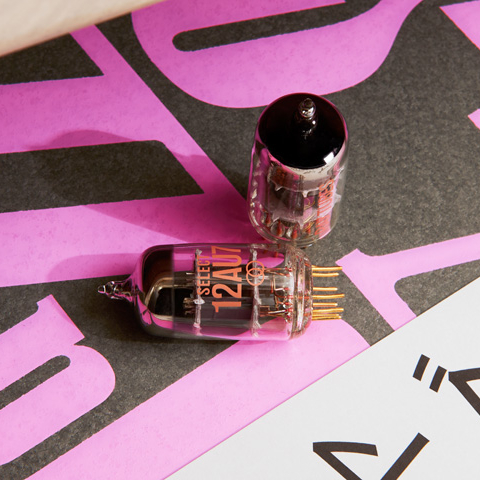
What's in a name?In trademark disputes, enough to justify protracted and expensive litigation, as in the case of New Sensor Corporation v. CE Distributing, LLC, heard recently in US District Court in New York. At issue: the use of the name "Svetlana" on vacuum tubes distributed by both companies, but sourced from different factories.In certain audiophile circles, Svetlana tubes have almost mythical status. Until four years ago, there was no doubt about their authenticity because the brandname applied only to tubes made in the Svetlana plant in St. Petersburg, operated by a Russian corporation known as JSC Svetlana, and distributed from 1992 until 2000 outside the countries of the former Soviet Union by Svetlana Electron Distributors (SED), an American company incorporated in Alabama. Since then, a competing brand using the same name (and according to court documents, built to "equivalent specifications") has been made at the Xpo-pul factory in Saratov, home of Stereophile's man in the Russian heartland, Leonid Korostyshevski. New Sensor Corporation distributes Xpo-pul-built tubes.In the lawsuit, New Sensor sued CE Distributing, the current distributor of JSC Svetlana devices, over the use of the name, charging it with trademark infringement and unfair competition, and asserting that consumers could be confused by the existence of competing products with the same name (also, incidentally, a common Russian female name, roughly translated as "luminosity" or "luminary," similar to "Dawn" or "Stella" in English). Original Svetlana tubes were marked with a "stylized S" logo and the words "Svetlana Electron Devices."
Both marks were registered with the US Patent and Trademark Office in 1997 by SED, and sold to New Sensor in 2001. For marketing purposes in North America, the name belongs to New Sensor. Despite this, JSC sued New Sensor over the use of the name. In 2003, both parties signed an agreement giving New Sensor the exclusive right to the use of "Svetlana" and giving JSC the exclusive right to use the "winged-C" logo (C being the Cyrillic S).CE Distributing now handles St. Petersburg–built Svetlanas. In the 2003 agreement, New Sensor released CE and other customers of JSC "from any claims arising out of the use of the Svetlana mark in connection with the sale of inventory manufactured by JSC and purchased by CE and other customers before March 4, 2003." With New Sensor's approval, JSC sent a letter to its customers stating that tubes formerly branded Svetlana would henceforth be sold under the Winged-C logo, using the new brand name, "SED St. Petersburg, Russia."So which Svetlana is the tube that is true? If you are talking about "new old stock" (NOS)—tubes made before 2000—the words "Svetlana Electron Devices" and the stylized S are what to look for. For recent issues, look for the "winged C." The name Svetlana is still on Saratov-made devices.
Is this case about clearly defining the brand or about lawyers generating billable hours? Several readings of the court documents leave that question unanswered. In his February 3 ruling, Judge J. Glassner found in favor of CE Distributing and granted a summary judgment. No consumer confusion was likely to arise, he decided, because both companies sell only to "professional buyers" who presumably know one tube from another.