

A Visit to Bowers & Wilkins

In August 2015, I visited loudspeaker manufacturer Bowers & Wilkins in England. It was an exciting prospect to see the factory, and meet the people who designed and built the speakers I've been using for years. Of course, as the time of my visit approached, it was impossible not to speculate that something important was afootthere was growing Internet buzz that it was time for B&W to update its 800-series speakers. Nonetheless, B&W remained tight-lipped.
A Visit to RTI & Acoustech

It's said that your first experience on entering a space sets the tone for all that follows. At LP pressing plant Record Technology, Inc. (RTI), that experience is my encounter with veteran pressman Richard Lopez, who responds to my request for direction. As he leaves his vintage record press to lead me to owner Don MacInnis, Lopez reads aloud the sticker on a box of recently pressed LPs. "WORLD'S FINEST PHONOGRAPH RECORDS," he declares with pride. As I reflect on how few workers today feel so connected to the products they make, I sense that something special lies ahead.
A Visit to the DALI Factory

DALI's loudspeaker factory in Nørager, Denmark. (Photo: DALI.)
Seen from the air, Denmark is a vista of farms and wind turbines. But once your plane touches down, it is a land of loudspeakers. Perhaps this is because audio has a long history in Denmarkit was a Dane, Valdemar Poulsen, who developed a magnetic wire recorder in 1898but there are more loudspeaker manufacturers per person than any other country. According to Wikipedia, Denmark is home to 5.75 million people, compared with New York's five boroughs, which have a population of 8.67 million However, as well as drive-unit manufacturers Audio Technology, Peerless, Vifa (which merged with Peerless to form Danish Sound Technology), and ScanSpeak, there are Bang & Olufsen, DALI, Dynaudio, Gamut, Gryphon, Jamo, Lyngdorf Audio, Peak-Consult, and Raidho all making loudspeakers. Lots of loudpeakers.An Amplifier Listening Test
It is always a matter of great interest when a difficult question, in this case the audibility of differences between amplifiers, is put to an empirical test. When the question is tested by such intelligent, knowledgeable, and unbiased investigators as John">http://www.stereophile.com//features/113/">John Atkinson and Will Hammond (see the July issue of Stereophile, Vol.12 No.7, p.5, the interest is even greater. Unfortunately, when the test turns out to have been flawed by errors in design and in use of statistics, as was the case here, the disappointment is also even greater.
Analog Corner #211: Fremer on Tonearms
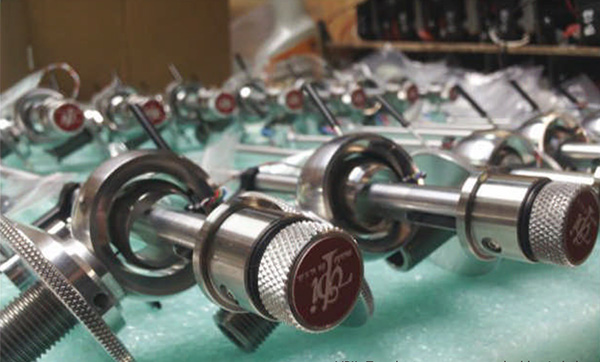
Audiophiles who attend my seminars on turntable setup often ask the most basic questions about tonearms, including the meanings of terms with which I (incorrectly) assume everyone is familiar. This is a good thing—it indicates that new people are entering the ranks of vinyl enthusiasts. This column is for them.
Arc Angles: Optimizing Tonearm Geometry

As Chester Rice, co-inventor of the moving-coil loudspeaker, once ruefully observed: "The ancients have stolen our inventions." So often, what is painted as new and innovative turns out to be something someone thought of long before. We have a habit of forgetting, and that applies not only to inventions, but to knowledge of other kinds as well.
As Reviewers See It
Every summer, I invite a representative sample of Stereophile's equipment reviewers to the magazine's Santa Fe HQ. For the third successive year, I decided to tape some of the free-for-all discussion that takes place and offer readers the opportunity of peeking over the participants' shoulders by publishing a tidied-up version of the transcript.
Audio Engineering: the Next 40 Years

By 2035, the way we produce and consume media will be entirely different from how we experience it now. Today there is still a "fourth wall" between us and the media we consume: within three decades, that line between reality and its recreation will all but disappear. Our media experiences will become fully immersivefrom spherical audio and video that tracks with our body's movements, to gestural computing, to physical-feedback devices, and more. Using tomorrow's technology, our children and grandchildren may find it difficult to distinguish the real thing from reproduced.
Balance: Benefit or Bluff?
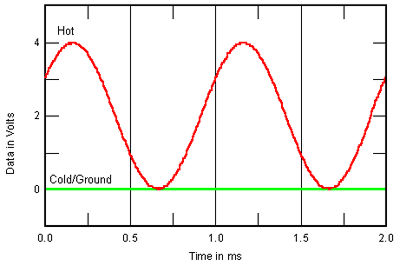
If you read much promotional literature for recently introduced high-quality equipment, you'll notice a common theme emerging: balanced connection. Balanced inputs and outputs are becoming a must for any audio equipment that has any claim to quality. The word itself has promotional value, suggesting moral superiority over the long-established "unbalanced" connection (for the purpose of this discussion, I will call this "normal"). What's my problem with this? Simply this: The High End could be paying dangerous, costly lip service to the received wisdom that balanced operation is the goal for an audio system.
Between the Ears: the art and science of measuring headphones

Headphones get pretty short shrift in much of the hi-fi press, which is puzzling—the headphone market is burgeoning. I don't know what the equivalent US figures are, but in recent years the UK headphone market has increased by an annual 15–20% in both units sold and overall revenue. It's easy to dismiss this as a natural byproduct of the Apple iPod phenomenon, but 20% of the market value is now accounted for by headphones costing over $120; a significant subset of consumers would seem to be looking for quality. When you also consider that many people's first exposure to higher-quality audio comes via headphones, there is ample reason for treating them more seriously.