

Bits is Bits?
High-quality digital audio systems require that all digital interfaces in the signal path exhibit signal transparency. The widely adopted AES/EBU and S/PDIF interfaces have been criticized for a lack of signal transparency; here we (footnote 1) address possible problems with such interfaces and present methods for improving the interface standard.
Blind Listening

John Atkinson sets the stage
Nothing seems to polarize people as much as the vexed question concerning the importance of audible differences between amplifiers. If you think there are subjective differences, you're an audiophile; if you don't, you're not. And as any glance at an appropriate issue of Consumer Reports—the publication for non-audiophiles—will confirm, the established wisdom is that once the price of an amplifier or receiver crosses a certain threshold, any further improvement in sound quality becomes irrelevant, in that it puts the price up for no apparent gain. In other words, when it comes to amplification, there is such a thing as being "too" good. Yet, as a reader of this magazine, I would expect that not only have you been exposed to real subjective quality differences between amplifiers that Consumer Reports would regard as sounding identical, you have made purchasing decisions made on the basis of hearing such differences.
Nothing seems to polarize people as much as the vexed question concerning the importance of audible differences between amplifiers. If you think there are subjective differences, you're an audiophile; if you don't, you're not. And as any glance at an appropriate issue of Consumer Reports—the publication for non-audiophiles—will confirm, the established wisdom is that once the price of an amplifier or receiver crosses a certain threshold, any further improvement in sound quality becomes irrelevant, in that it puts the price up for no apparent gain. In other words, when it comes to amplification, there is such a thing as being "too" good. Yet, as a reader of this magazine, I would expect that not only have you been exposed to real subjective quality differences between amplifiers that Consumer Reports would regard as sounding identical, you have made purchasing decisions made on the basis of hearing such differences.
Book Review: 99% True: Almost a National Bestseller
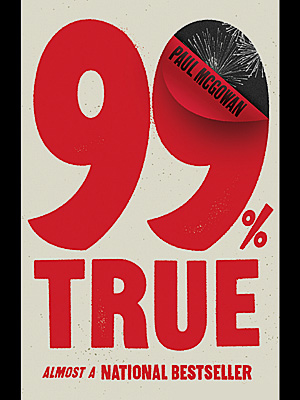 99% True: Almost a National Bestseller, by Paul McGowan. Lioncrest Publishing, 2019. 364pp. $25.00, hard cover; $15.99, paperback; $9.99, Kindle e-book.
To many audiophiles, high-end audio manufacturers must seem like monolithic entities, enduring for what seems like forever, like cliffs beside a familiar path. But as Paul McGowan explains in this unputdownable autobiography (footnote 1), behind the facade of stability things can be in financial turmoil, with success equally as risky as failure.
99% True: Almost a National Bestseller, by Paul McGowan. Lioncrest Publishing, 2019. 364pp. $25.00, hard cover; $15.99, paperback; $9.99, Kindle e-book.
To many audiophiles, high-end audio manufacturers must seem like monolithic entities, enduring for what seems like forever, like cliffs beside a familiar path. But as Paul McGowan explains in this unputdownable autobiography (footnote 1), behind the facade of stability things can be in financial turmoil, with success equally as risky as failure.Book Review: A Love Supreme
A Love Supreme: The Story of John Coltrane's Signature Album
by Ashley Kahn; Foreword by Elvin Jones. New York, Viking Books, 2002; hardcover, 260 pages, 9" by 8". $27.95.
by Ashley Kahn; Foreword by Elvin Jones. New York, Viking Books, 2002; hardcover, 260 pages, 9" by 8". $27.95.
Book Review: A Pair of Wharfedales

This business biography of hi-fi pioneer Gilbert Briggs and his company, Wharfedale, is an exhaustively researched labor of love on the part of his grand-nephew David Briggs. In a sense, the book is a prequel to Ken Kessler's KEF: 50 Years of Innovation in Sound (2011). That's because KEF's founder, Raymond Cooke, worked for Gilbert Briggs at Wharfedale from the early 1950s through mid-1961. But that is getting ahead of ourselves.
Book Review: Audio Research: Making the Music Glow
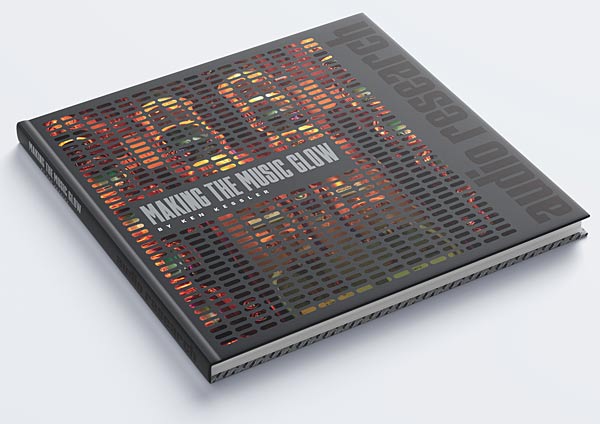
Book Review: Audio Research: Making the Music Glow
Written by Ken Kessler, designed by Henry Nolan. 220pp. $150. Available at Audio Research dealers and online at audioresearch.com. I never met Audio Research Corporation founder William Zane Johnson, who died in 2011. But when he founded his now-legendary company in 1970, I and my ragged troupe of Dynaco modifiers were in the trenches, fighting the sand-warrior hordes during the first transistor onslaught.
Written by Ken Kessler, designed by Henry Nolan. 220pp. $150. Available at Audio Research dealers and online at audioresearch.com. I never met Audio Research Corporation founder William Zane Johnson, who died in 2011. But when he founded his now-legendary company in 1970, I and my ragged troupe of Dynaco modifiers were in the trenches, fighting the sand-warrior hordes during the first transistor onslaught.
Book Review: Backstory in Blue
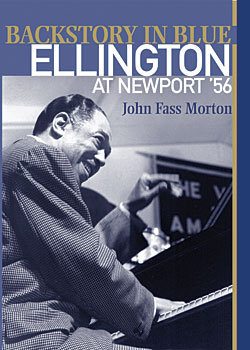
Backstory in Blue: Ellington at Newport '56
by John Fass Morton, foreword by Jonathan Yardley. Rutgers University Press, 2008. Hardcover, 336 pages, 107 B&W photos. $34.95.
by John Fass Morton, foreword by Jonathan Yardley. Rutgers University Press, 2008. Hardcover, 336 pages, 107 B&W photos. $34.95.
Book Review: Chairman at the Board

Chairman at the Board: Recording the Soundtrack of a Generation, by Bill Schnee. Backbeat Books, 2021. 219pp. $24.49, hard cover; $21.49, Kindle e-book.
It was September 2012, and Sasha Matson and I were in Los Angeles to record the singers for his jazz opera, Cooperstown. We had already recorded the instrumental backing with engineer Mike Marciano at Brooklyn's Systems Two studio, and the venue for the vocal tracking sessions was Bill Schnee's studio in North Hollywood.
Book Review: Duke: A Life of Duke Ellington

According to Terry Teachout, Duke Ellington's story is one of "a somewhat better-than-average stride pianist largely devoid of formal musical training [who] managed to turn himself into a great composer." Ellington had ample help from his organization, which included the gifted composer and arranger Billy Strayhorn, who succinctly described his employer's modus operandi: "Each member of his band is to him a distinctive tone color and set of emotions, which he mixes with others equally distinctive to produce a third thing, which I call the Ellington effect." Without standout band members, and without Strayhorn himself, that effect would have been significantly less memorable.
Book Review: How Music Works
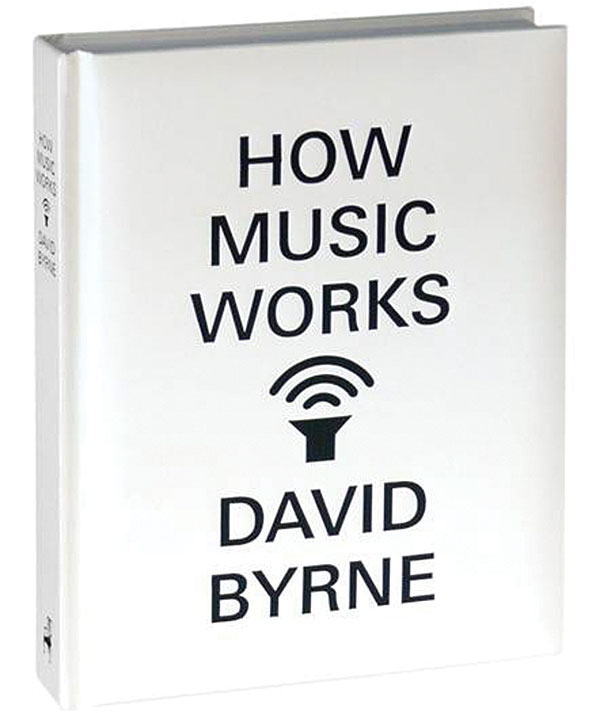
Measuring 7.1" by 1.6" by 9.1" and with an attractive paper-over-board cover, [Talking Heads founder] David Byrne's boldly titled new book resembles the textbooks often found in public-school classrooms. If not for the author's brief lapses into street talkhe uses the word shit just a bit too freely for the youngest readersone gets the impression that Byrne wouldn't mind having his book taught in elementary school. He quotes from Oliver Sacks's brilliant Musicophilia: "For the vast majority of students, music can be every bit as important educationally as reading or writing."