

Book Review: Swiss Precision: The Story of the Thorens TD 124 and Other Classic Turntables

Swiss Precision: The Story of the Thorens TD 124 and Other Classic Turntables
Swiss Precision: The Story of the Thorens TD 124 and Other Classic Turntables
by Joachim Bung. Published by Joachim and Angelika Bung, Schmitten, Germany (info@td-124.de), 2008. Hardcover, 288 pages, four-color, ISBN 978-3-00-021162-1. Price: €59 plus overseas mailing.
Swiss Precision: The Story of the Thorens TD 124 and Other Classic Turntables
by Joachim Bung. Published by Joachim and Angelika Bung, Schmitten, Germany (info@td-124.de), 2008. Hardcover, 288 pages, four-color, ISBN 978-3-00-021162-1. Price: €59 plus overseas mailing.
Book Review: Temples of Sound
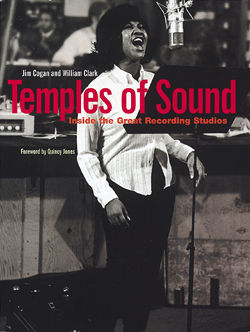
TEMPLES OF SOUND: Inside the Great Recording Studios
by Jim Cogan and William Clark; Foreword by Quincy Jones
San Francisco: Chronicle Books, 2003. Softcover, 7.5" by 10", 224 pp. $24.95. ISBN 0-8118-3394-1.
by Jim Cogan and William Clark; Foreword by Quincy Jones
San Francisco: Chronicle Books, 2003. Softcover, 7.5" by 10", 224 pp. $24.95. ISBN 0-8118-3394-1.
Book Review: The Last Sultan: The Life and Times of Ahmet Ertegun
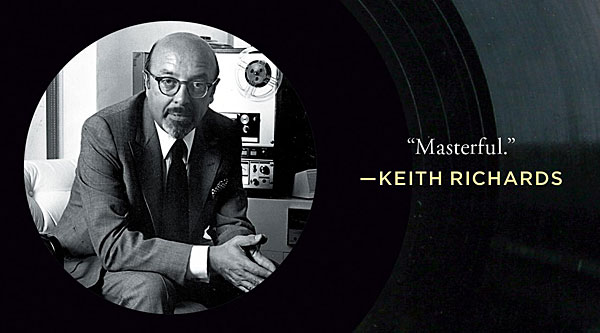
The Last Sultan: The Life and Times of Ahmet Ertegun by Robert Greenfield 431 pages. New York: Simon & Schuster, 2011. Hardcover, $30.
Robert Greenfield's engaging biography shows that Ahmet Ertegun was destined to dominate. The son of a Turkish ambassador, Ertegun (19232006) left his native country at age two, and lived for a decade in Switzerland, France, and England, where he had a nanny who had previously cared for the Princesses Elizabeth and Margaret Rose. His first American home was an architectural gem of a mansion on Washington's Embassy Row. House guests included Cary Grant and his second wife, the Woolworth heiress Barbara Hutton.
Book Review: The New Analog

The New Analog: Listening and Reconnecting in a Digital World, by Damon Krukowski. The New Press, 2017. Hardcover, 240 pp., $24.95. Also available as an e-book.
Defining noise is tricky business.
In high-end audio, noise is often defined as the enemyof music, beauty, truth. Engineers and enthusiasts alike spend significant amounts of time, energy, and money attempting to minimize or control noise so that it has the least possible impact on the source signal: music. In this wayif we are intelligent, careful, and fortunatewe can extract from our stereos cleaner, clearer, more naturally beautiful sound for listening experiences that are enriching, emotionally compelling, and, above all, fun. On the other hand, when noise is allowed to excessively modulate the signal, music can sound relatively abrasive, more mechanical, and, ultimately, less engaging.
Book Review: The Chitlin' Circuit...
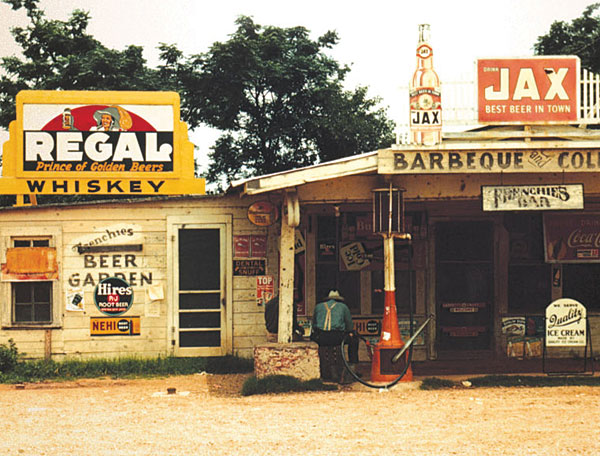
In December 1941, just after Japan's attack on Pearl Harbor and the U.S.'s declaration of war, the state of Indiana unwittingly endorsed a very different conflict by approving the incorporation of a talent agency headed by Denver Ferguson, an Indianapolis-based African-American entrepreneur. The Chitlin' Circuit and the Road to Rock 'n' Roll documents the second of these campaigns, launched by the musical forces Ferguson dispatched to venues throughout the American South where blacks could entertain black audiences. In successive waves, talented musicians hit those stages running. Their performances were often incendiary, and a large chunk of this book chronicles the artistic warfare they waged between the advent of rhythm and blues and the emergence of what became known as rock'n'roll.
Bruckner's Symphony No.9: Finally, a Finale?

I know of only one composer who measures up to Beethoven, and that is Bruckner.—Richard Wagner, 1882
Building a Sound Room: A Personal Journey

By the time we had finished the house tour and admired the quiet beauty of the fir-canopied neighborhood, we sensed that we would follow our hearts from unsafe and increasingly unaffordable East Oakland, CA to the serene hamlet of Port Townsend, WA. We also knew that the only suitable place for my reference/review system would be in the 22' x 22' detached garage
CD Tweaks & Listening Tests

In "Music and Fractals" in the November 1990 issue, I discuss how digital audio's quantization of amplitude information in what was originally a continuous waveform represents a fundamental difference between analog and digital representations of music. In a letter published in the English magazine Hi-Fi Review in January 1990, John Lambshead conjectured that naturally originating sounds were pseudo-fractal in character; that is, their waveforms have a wealth of fine detail, and that detail itself has an even finer-structured wealth of fine detail, and so on, until the crinkliness of the waveform is finally enveloped in the analog noise that accompanies every sound we hear.
China, My China
Note: These photos are a companion scrapbook to Wes Phillips' eNewsletter">http://www.stereophile.com/images/newsletter/405stph.html">eNewsletter report.
Colloms on Cables
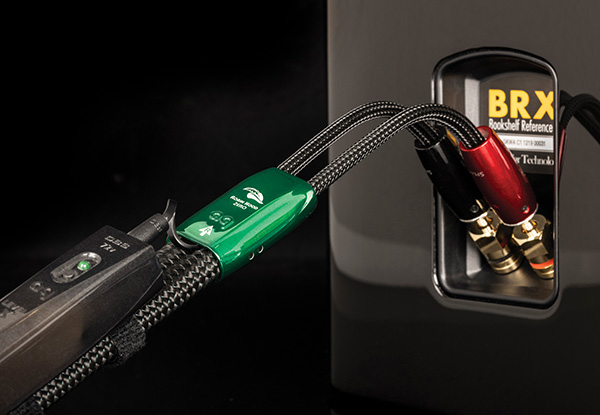
Underpinning a discussion about the merits of potentially costly specialist audio cables is an obvious question: Why do we need them? Doesn't almost all wire conduct audio signals with negligible distortion and very little loss of power? Specialist hi-fi cables seem expensive for what you get. Especially at the upper end, they seem like a worse value than electronics and loudspeakers. Depreciation is greater, too: Cables are almost a consumable.
But if you wish to finesse the quality endeavor of classic separates-based hi-fi systems, you cannot do without them. Fundamentally, it is not the efficient transfer of audio power that's the issue; that is the easy bit. Rather, it is a matter of optimizing the transmission of the more subtle information that describes recorded acoustic, instrumental detail, the performers, and, not least, dynamics and rhythm: Are your feet tapping unconsciously in time to the performance?