

Contingent Dither
If there is one thing I've learned in almost 28 years (ouch) of audio writing, it's that audience reaction is fickle. Sometimes readers will swallow the most contentious pronouncements without indigestion, only to choke on throwaway lines you've invested with little importance. It just goes to confirm that human communication involves senders and receivers, and they aren't always in synchrony.
Controversy: The Single Speaker Dem Myth
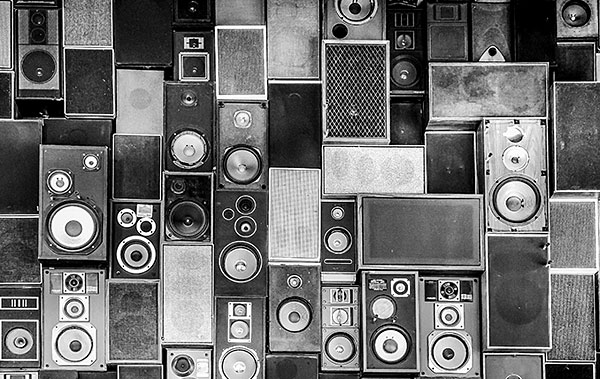
The issue is this business of "single-speaker" listening and demonstration, which has become fashionable in the UK.
The premise: bringing a second pair of loudspeakers into your auditioning room upsets the sound of the pair you're listening so badly that the first speaker's ability to correctly reproduce the timbre of musical instruments is destroyed. This observation is almost surely correct.
Cut and Thrust: RIAA LP Equalization
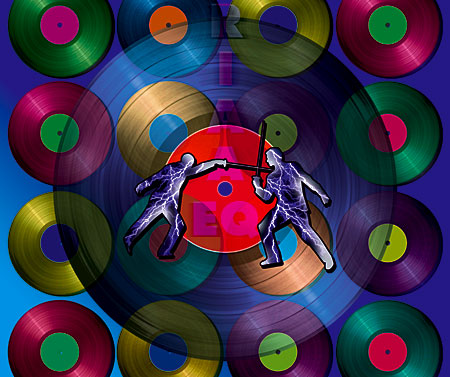
Until the Recording Industry Association of America hit the headlines in recent years with its antipiracy campaign, the initials RIAA meant one thing to seasoned audiophiles: the vinyl-disc equalization characteristic introduced in the 1950s to standardize what had previously been an anarchy of different EQs. Three decades later, as CD gained ascendance, a large proportion of audiophiles still knew what RIAA equalization was, and a good number of them had some idea or better of what the RIAA EQ curve looked like, and why it was applied.
Cutting Up: Stereophile's Liszt Piano Sonata LP
There has been much argument in audiophile circles about whether an LP or a CD is a more faithful representation of a master tape. Although we recorded Robert Silverman's thrilling performance of the Liszt B-Minor Piano Sonata for CD">http://www.stereophile.com//features/131/">CD release, we also had in mind to issue an LP. As the source for both would be the same, the question we can answer is: Will an LP cut straight from a 20-bit master tape via a Class A 20-bit DAC sound closer than a CD noise-shaped to 16 bits from the same 20-bit original?
Dead Man Walking: Jake Heggie and Terrence McNally
People are wrong when they say the opera isn't what it used to be. It is what it used to be. That's what's wrong with it.—Noël Coward
Devialet Diary

It's day five of our planned month-long stay à Paris, late April through most of May. My wife is here for workfor me, it's strictly for pleasureand we're enjoying Paris's rich, sensual goodness: food, museums, architecture, coffee, people, food. And yet, earlier today, when we were out for a walkwe've been walking close to 10 miles each day, exploring the cityI realized that my life here has been missing something important.
Dick Olsher Dahlia speaker

Do-It-Yourself (DIY) loudspeaker projects are quite common in the UK, where details about several excellent designs, including a recent one by Martin Colloms, have been published for public domain consumption. Stateside, the situation is rather grim, where only an occasional subwoofer project (always popular) makes it into the commercial magazines.
Editor's Choice: Stereophile's Sampler & Test CD
The science of recording music is, to apply a metaphor from a very different context, akin to "breaking a butterfly on a wheel" (footnote 1). The art of recording is to make it appear as though that pinned insect could still take wing. I have been devoted to both the science and the art of recording music since 1965, when I was given a Grundig ¼" open-reel tape recorder as a birthday present. You could even say that my evolving interest in audio and my current position at the helm of Stereophile date back to my finding out how different a Shure SM57 dynamic cardioid microphone sounded from a Reslo Ribbon, even in mono, even at 3¾ips, when captured on that Grundig.
Elite DV-05 DVD player (SGHT Review)

When we reviewed Pioneer's flagship Elite DV-09 DVD player in our September 1998 issue, it blew us away so much that it garnered an Editors' Choice award (see the February 1999 issue) as the best DVD player we had reviewed up to that time. This opinion has not changed in the intervening months, but at $2000, the DV-09 is more than many home-theater fans can afford (or justify) for a DVD player. The Elite DV-05, introduced earlier this year, provides many of the features and most of performance capabilities of the DV-09 at a more affordable price.
Elite DV-09 DVD player (SGHT Review)

The new DV-09 is Pioneer's first DVD player in its Elite line. More than simply an upscale version of a standard Pioneer DVD player, the DV-09 was built from the ground up to be a flagship product. It's also the first DVD player I've seen to have been certified under THX's DVD-player certification program (see sidebar, "THX DVD Players").