

Elvis Presley: Baby What You Want Me To Do
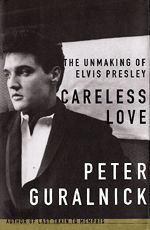
"Here's somebody who just loves to sing." Over the telephone, Peter Guralnick sounds sad, incredulous. "But he's unable at the end of his life to force himself into the recording studio—the fear of completion, fear of exposing your untrammeled idea to execution. What a terrible thing to lose that ability, that faith in yourself."
Fate, I Defy You: The Robert Silverman Liszt CD
"Rarely, if ever, can this densely written sonata have been presented so lucidly with each note precisely in place...the dramatic and lyrical aspects were never slighted or taken for granted."
—Peter G. Davis, writing in the New York Times about Robert Silverman's New York debut in 1978, when he performed the Liszt B-Minor Piano Sonata in Alice Tully Hall.
—Peter G. Davis, writing in the New York Times about Robert Silverman's New York debut in 1978, when he performed the Liszt B-Minor Piano Sonata in Alice Tully Hall.
Getting Real

If you: 1) live in an apartment, condo, townhouse, dorm, or share a house or apartment with someone;
2) are going to, have recently graduated from, or have never gone to college and are not working at all, are working a minimum-wage job, or have just gotten your first job but have loans, Visa/MasterCard/American Express bills, a brand-new car payment, and can't afford to eat anything but macaroni and cheese anyway. . .
God is in the Nuances
This journal has seen a number of thoughtful ruminations on what it is that attracts us to music or to a given audio component, and how we should describe that attraction. The "Letters" pages have been filled by readers who have taken us to task for not adhering to rigorous scientific methods in the evaluation of components, those rigorous scientific methods usually being equated with double-blind listening. Other readers have praised the magazine for its stance that an educated listener in a familiar, relaxed environment will be more accurate in his or her assessment than an average of trained and untrained listeners in unfamiliar, stressful circumstances. Overall, sonic descriptions from diverse reviewers in different publications show a remarkable consensus of observation (not opinion).
Harmonic Convergence: the Effect of Component Tweaking
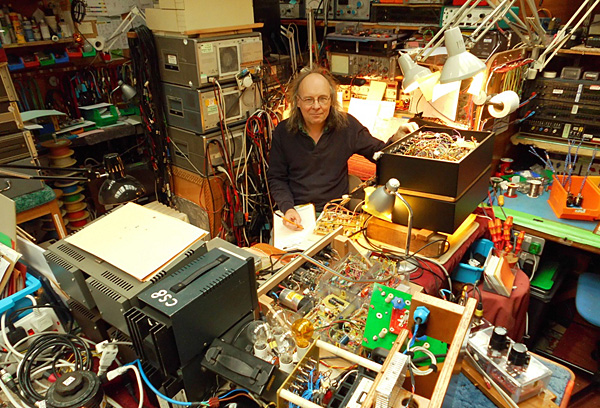
Power amplifiers fascinate me. In the past 15 years I've helped design and build over a dozen advanced models, with output powers ranging from 50 to 2500W, for a number of the UK's professional equipment manufacturers. To learn from others' ideas and mistakes, I've also repaired, measured, used, and reviewed hundreds of makes of amplifier. My experiences have led me to regard the power amplifier as one of the messiest, most imperfect pieces of electronic equipment in the record/replay path.
HDCD: Keith Johnson, Pflash Pflaumer, Michael Ritter
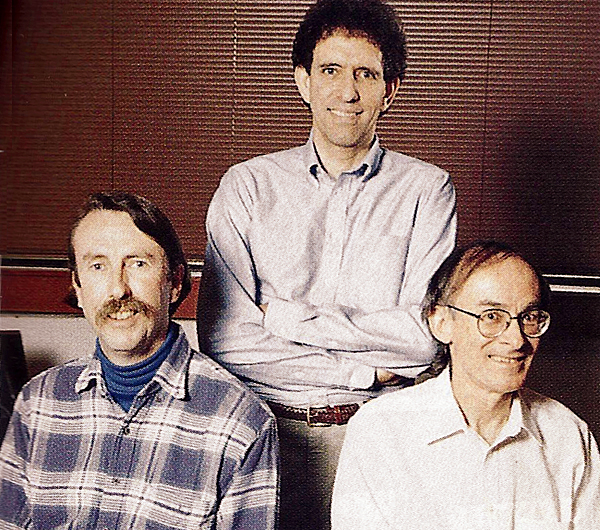
The men behind HDCD (LR: Pflash Pflaumer, Michael Ritter, Keith Johnson
High Definition Compatible Digital® (HDCD®), the proprietary process for improving the sound of 16-bit digital audio, has finally arrived. More than a dozen digital processors using the technology are on the market, and the professional encoder used to master HDCD discs is following closely behind.Hi-Fi Retailing: The Avid Audiophile's Advisory
I hate hi-fi stores.
Hi-Rez Audio Distinguished in Blind Testing
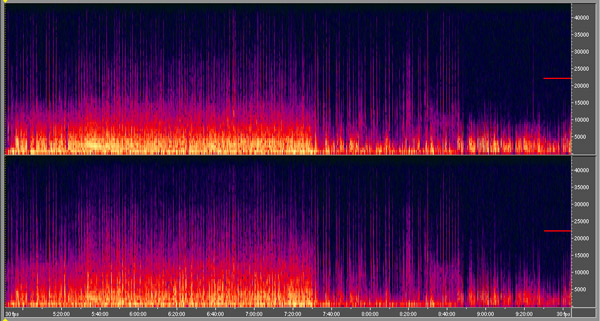
Spectral analysis of a live blues band recording made by John Atkinson, showing content up to 40kHz, from "What's Going On Up There?"
At the October 2019 Audio Engineering Society convention in New York, Yuki Fukuda and Shunsuke Ishimitsu, both of Hiroshima City University, presented results that show quite clearly that listeners can distinguish sounds encoded and reproduced at different sampling frequencies. Their trials differed from the previous ones in one important way: Instead of exposing test subjects to music at different resolutions, they used test tones.High-End Tunes to Go

Photo Credit: Tim Austin Photography
A true story: I got tagged for doing a howling 90mph on the way back to New York on the Jersey Turnpike late one night and got off with a warning.
I was pulled over by a beefy young Trooper, lights blinking furiously. Oops. [heh heh]. He saw Kathleen and I weren't nuts, checked the papers and my license, then checked out the Lexus very carefully with his flashlight. There was much oohing and ahhing.How To Write Manufacturers' Comments
"Equipment Reports," "Record Reviews," "Letters," "Industry Update," "Sam's Space," "As We See It," "The Final Word"---I read and enjoy them all. But the section of Stereophile I especially look forward to reading is "Manufacturers' Comments." How is the manufacturer going to respond to a review that's considerably less than 100% positive? Can they take criticism gracefully, or do they have an attitude? If I were a consumer considering purchase of one of their products, would their comments convince me that they'd be a good company to deal with? Are they uptight beyond reason, or do they have a sense of humor? Can they respond to a positive review without gloating?