

Book Review: Kansas City Lightning
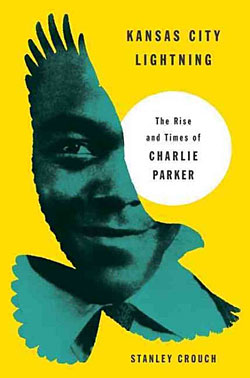 Kansas City Lightning: The Rise and Times of Charlie Parker
by Stanley Crouch (New York: Harper, 2013), 365 pp. Hardcover, $27.99.
A section of this biography, which documents the early life of the dazzling bebop saxophonist Charlie Parker, starts with a four-page meditation on "the truth and myth of railroads" in America: the figurative underground railroad that comprised a web of escape routes for slaves fleeing the South; the "black-smoke-puffing iron horse" that galloped into the West and "would eventually carry the brutal and legendary Apache chief Geronimo and his people . . . to Florida"; the trains "that inspired the legend of Casey Jones"; and the trains steaming through the blues tunes that echoed their melancholy nocturnal sounds.
Crouch views the train as "a vehicle and a dream source" in a culture where children were once tantalized by ads that pictured toy trains looping around "bright ovals of miniature track." As every jazz fan knows, Charlie Parker's playing traveled along bright ovals of its own. So does Crouch's prose, and his intellectual excursions carry readers well into the realm of African-American history, which is a significant dimension of this book.
Kansas City Lightning: The Rise and Times of Charlie Parker
by Stanley Crouch (New York: Harper, 2013), 365 pp. Hardcover, $27.99.
A section of this biography, which documents the early life of the dazzling bebop saxophonist Charlie Parker, starts with a four-page meditation on "the truth and myth of railroads" in America: the figurative underground railroad that comprised a web of escape routes for slaves fleeing the South; the "black-smoke-puffing iron horse" that galloped into the West and "would eventually carry the brutal and legendary Apache chief Geronimo and his people . . . to Florida"; the trains "that inspired the legend of Casey Jones"; and the trains steaming through the blues tunes that echoed their melancholy nocturnal sounds.
Crouch views the train as "a vehicle and a dream source" in a culture where children were once tantalized by ads that pictured toy trains looping around "bright ovals of miniature track." As every jazz fan knows, Charlie Parker's playing traveled along bright ovals of its own. So does Crouch's prose, and his intellectual excursions carry readers well into the realm of African-American history, which is a significant dimension of this book.Book Review: KEF: 50 Years of Innovation in Sound
KEF: 50 Years of Innovation in Sound
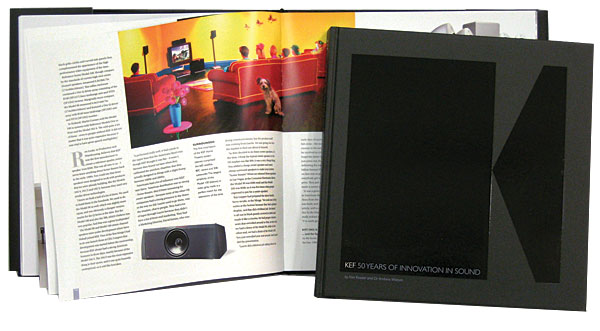
By Ken Kessler and Dr. Andrew Watson. GP Acoustics International Limited, 2011. $89.99. Hardcover, 12" by 12" by 0.9", 216 pp. ISBN 978-988-15427-4-8. Available from selected KEF dealers and Amazon.com. Ken Kessler's latest "coffee-tabler" (my favorite publishing-industry insider neologism) celebrates the 50th anniversary of the founding of KEF Electronics by documenting the history of the venerable loudspeaker manufacturer. While the book doesn't quite start with a bang, it does start with an evocative vignette. The year was 1979, the place the ballroom of Buckingham Palace. Her Majesty the Queen, about to present KEF's founder, Raymond Cooke, with the medal representing his having been made an Officer of the Most Excellent Order of the British Empire (OBE), inquired, perhaps formulaically, "This is for loudspeakers?"
By Ken Kessler and Dr. Andrew Watson. GP Acoustics International Limited, 2011. $89.99. Hardcover, 12" by 12" by 0.9", 216 pp. ISBN 978-988-15427-4-8. Available from selected KEF dealers and Amazon.com. Ken Kessler's latest "coffee-tabler" (my favorite publishing-industry insider neologism) celebrates the 50th anniversary of the founding of KEF Electronics by documenting the history of the venerable loudspeaker manufacturer. While the book doesn't quite start with a bang, it does start with an evocative vignette. The year was 1979, the place the ballroom of Buckingham Palace. Her Majesty the Queen, about to present KEF's founder, Raymond Cooke, with the medal representing his having been made an Officer of the Most Excellent Order of the British Empire (OBE), inquired, perhaps formulaically, "This is for loudspeakers?"
Book Review: Lonely Avenue: The Unlikely Life & Times of Doc Pomus
Lonely Avenue: The Unlikely Life & Times of Doc Pomus
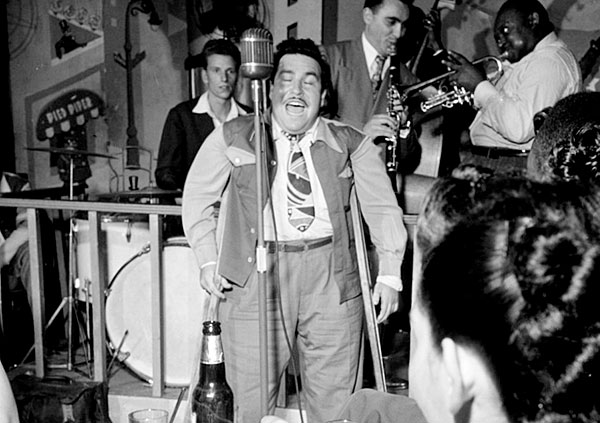
by Alex Halberstadt. Da Capo Press, 2007. Paperback, 272 pp., $16. Available as eBook. Many people, after seeing him repeatedly at Manhattan's Forrest Hotel in the early 1960s, might have described the lyricist and songwriter Doc Pomus as the narrator of a Damon Runyon short story depicts himself: as someone "who is just around." Pomus lived for years in lackluster hotels like the Forrest, which Runyon himself had once called home, and his cronies could be just as colorful as Runyon's creations, including the gamblersfor a time, Pomus gambled for a living.
by Alex Halberstadt. Da Capo Press, 2007. Paperback, 272 pp., $16. Available as eBook. Many people, after seeing him repeatedly at Manhattan's Forrest Hotel in the early 1960s, might have described the lyricist and songwriter Doc Pomus as the narrator of a Damon Runyon short story depicts himself: as someone "who is just around." Pomus lived for years in lackluster hotels like the Forrest, which Runyon himself had once called home, and his cronies could be just as colorful as Runyon's creations, including the gamblersfor a time, Pomus gambled for a living.
Book Review: McIntosh: "...for the love of music..."
McIntosh: "...for the love of music..."
by Ken Kessler. McIntosh Laboratory, Inc., 2006. $150.00. Hardcover, 12" by 12" by 1.25", 315 pp. ISBN 0-9787236-0-0.
Available from McIntosh dealers and McIntosh">http://www.mcintoshlabs.com">McIntosh Laboratory, Inc., 2 Chambers Street, Binghamton, NY 13903. Tel: (800) 538-6576.
by Ken Kessler. McIntosh Laboratory, Inc., 2006. $150.00. Hardcover, 12" by 12" by 1.25", 315 pp. ISBN 0-9787236-0-0.
Available from McIntosh dealers and McIntosh">http://www.mcintoshlabs.com">McIntosh Laboratory, Inc., 2 Chambers Street, Binghamton, NY 13903. Tel: (800) 538-6576.
Book Review: Norman Granz: The Man Who Used Jazz for Justice
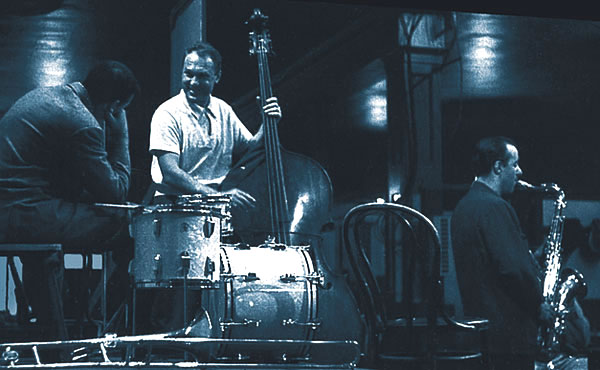
Norman Granz: The Man Who Used Jazz for Justice
By Tad Hershorn. Berkeley: University of California Press, 2011. 470pp. Hardcover, $34.95. One night in 1942, Billie Holiday was singing at a Los Angeles nightclub. Between sets, she crossed the street to have a drink with Norman Granz. She was in tears because some black friends who had come to hear her had been turned away.
By Tad Hershorn. Berkeley: University of California Press, 2011. 470pp. Hardcover, $34.95. One night in 1942, Billie Holiday was singing at a Los Angeles nightclub. Between sets, she crossed the street to have a drink with Norman Granz. She was in tears because some black friends who had come to hear her had been turned away.
Book Review: Pops: A Life of Louis Armstrong
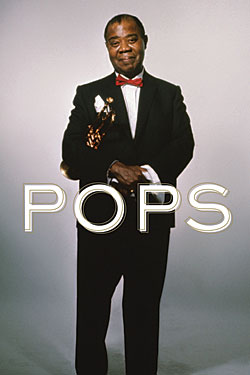 Pops: A Life of Louis Armstrong, by Terry Teachout (Houghton Mifflin Harcourt, 2009): 475pp. Hardcover, $30; paperback, $16.95.
If you plan to read just one book about Louis Armstrong, whose virtuosic cornet solos pushed jazz past rudimentary ensemble playing and launched his phenomenal career as an instrumentalist and singer, make it Pops. Teachout built it on brickwork laid by authors who preceded him, so you'll benefit from their research, as well as from narrative on 650 previously private reels of tape that Armstrong recorded and archived. Moreover, Teachout is a musician and music critic who offers opinions on his subject's discography.
Few people seem to realize that Armstrong (19011971) called himself LOU-iss. "All White Folks call me Louie," he once noted, and in some instances that may have been patronizing. In others, it was surely an instinctive response to the man's infectious warmth and informality.
Pops: A Life of Louis Armstrong, by Terry Teachout (Houghton Mifflin Harcourt, 2009): 475pp. Hardcover, $30; paperback, $16.95.
If you plan to read just one book about Louis Armstrong, whose virtuosic cornet solos pushed jazz past rudimentary ensemble playing and launched his phenomenal career as an instrumentalist and singer, make it Pops. Teachout built it on brickwork laid by authors who preceded him, so you'll benefit from their research, as well as from narrative on 650 previously private reels of tape that Armstrong recorded and archived. Moreover, Teachout is a musician and music critic who offers opinions on his subject's discography.
Few people seem to realize that Armstrong (19011971) called himself LOU-iss. "All White Folks call me Louie," he once noted, and in some instances that may have been patronizing. In others, it was surely an instinctive response to the man's infectious warmth and informality.
Book Review: RA—The Book

RAThe Book: The Recording Architecture Book of Studio Design
By Roger D'Arcy and Hugh Flynn (illustrator), with photographs by Neil Waving. Foreword by Adrian Kerridge. Black Box Limited (London), 2011. $215. Hardcover, 15" by 10.5" by 1.25", 350 pp. ISBN 978-1-907759-16-1. Available from www.ra-thebook.com (ships from within the US). In July 2004, I reviewed Jim Cogan and William Clark's Temples of Sound: Inside the Great Recording Studios, a collection of the business histories of 15 US recording studios. Each chapter covered a particular studio, focusing on its role in the careers of the recording artists most associated with that studio; eg, United Western Recorders and the Beach Boys.
By Roger D'Arcy and Hugh Flynn (illustrator), with photographs by Neil Waving. Foreword by Adrian Kerridge. Black Box Limited (London), 2011. $215. Hardcover, 15" by 10.5" by 1.25", 350 pp. ISBN 978-1-907759-16-1. Available from www.ra-thebook.com (ships from within the US). In July 2004, I reviewed Jim Cogan and William Clark's Temples of Sound: Inside the Great Recording Studios, a collection of the business histories of 15 US recording studios. Each chapter covered a particular studio, focusing on its role in the careers of the recording artists most associated with that studio; eg, United Western Recorders and the Beach Boys.
Book Review: Sam Phillips: The Man Who Invented Rock'n'Roll

In Lost Highway, published soon after he was introduced to Sam Phillips, in 1979, Peter Guralnick said he had long dreamed of meeting the Sun Records founder, who produced the hits that introduced Elvis Presley and other pioneering rock'n'roll performers. He dedicated Lost Highway to Phillips and the blues singer Howlin' Wolf, calling them "the real heroes" of the musical genre, and a quarter-century relationship between Guralnick and Phillips followed. This long, densely detailed biography is its affectionate culmination.
Book Review: Sound Bites: 50 Years of Hi-Fi News

Sound Bites: 50 Years of Hi-Fi News
By Ken Kessler and Steve Harris. London, IPC Media, 2005; paperback, 224 pages, 8.25" by 5.75", indexed. $29.95. Available in the US from Music Direct, www.musicdirect.comhttp://www.musicdirect.com">www.musicdirect.com;, (800) 449-8333.
By Ken Kessler and Steve Harris. London, IPC Media, 2005; paperback, 224 pages, 8.25" by 5.75", indexed. $29.95. Available in the US from Music Direct, www.musicdirect.comhttp://www.musicdirect.com">www.musicdirect.com;, (800) 449-8333.
Book Review: Surround Sound: Up and Running (Second Edition)
Surround Sound: Up and Running (Second Edition)
by Tomlinson Holman. Published by Focal Press, an imprint of Elsevier (footnote 1) (Oxford, England, UK; www.elsevier.comhttp://www.elsevier.com">www.elsevier.com;). 2008. Paperback, 248 pages, ISBN 978-0240808291. $44.95.
by Tomlinson Holman. Published by Focal Press, an imprint of Elsevier (footnote 1) (Oxford, England, UK; www.elsevier.comhttp://www.elsevier.com">www.elsevier.com;). 2008. Paperback, 248 pages, ISBN 978-0240808291. $44.95.