Features

Sort By: Post DateTitle Publish Date

HDCD: Keith Johnson, Pflash Pflaumer, Michael Ritter
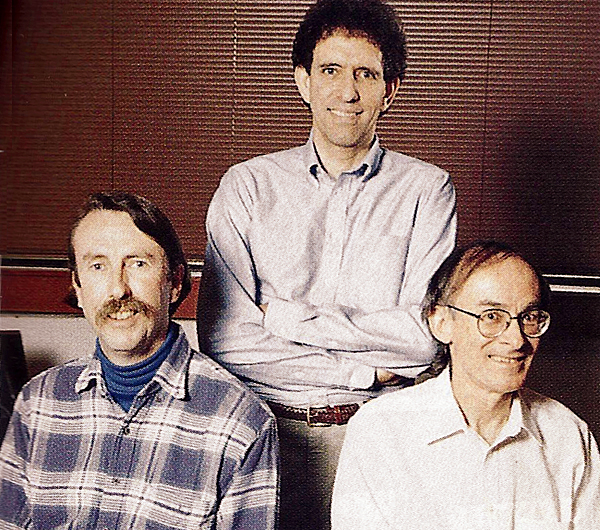

The men behind HDCD (L–R: Pflash Pflaumer, Michael Ritter, Keith Johnson


High Definition Compatible Digital® (HDCD®), the proprietary process for improving the sound of 16-bit digital audio, has finally arrived. More than a dozen digital processors using the technology are on the market, and the professional encoder used to master HDCD discs is following closely behind.

The Unseen Variable

Although I still haven't been able to listen to the Cary Audio Design 805 single-ended tube monoblocks that Stereophile praised so highly a year ago (Vol.17 No.1, p.104), I've recently auditioned many other tubed single-ended designs. Undeniably, a good SE design has a distinctive quality of harmony and atmosphere in the midrange that reaches well beyond the average attainment of its solid-state brethren.


Stereophile Test CD 3

Back in the spring of 1990, Stereophile introduced its first Test">http://www.stereophile.com//reference/176/">Test CD, featuring a mixture of test signals and musical tracks recorded by the magazine's editors and writers. Even as we were working on that first disc, however, we had plans to produce a second disc which would expand on the usefulness of the first and feature a more varied selection of music. The result was our Test">http://www.stereophile.com//features/338/">Test CD 2, released in May 1992.


The Great Record-Club CD Conspiracy?

For a while, I've been hearing rumors that the record-club editions of popular compact discs differ from the original versions produced by the record companies. I've met listeners who claim their club versions are compressed in dynamics, and some have reduced bass. Perhaps the clubs, in their infinite wisdom, think the typical member has a lower-class stereo system (in fact, the opposite may be true). Maybe these lower classes could benefit from some judicious dynamic compression, equalization, and digital remastering.


The Silverman Concert

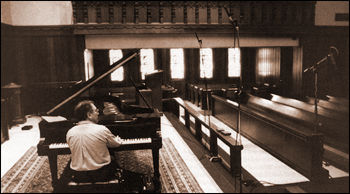
"What's that noise?" Bob Harley and I looked at each other in puzzlement. We thought we'd debugged the heck out of the recording setup, but there, audible in the headphones above the sound of Robert Silverman softly stroking the piano keys in the second Scherzo of Schumann's "Concerto Without Orchestra" sonata, was an intermittent crackling sound. It was almost as if the God of Vinyl was making sure there would be sufficient surface noise on our live recording to endow it with the Official Seal of Audiophile Approval. Bob tiptoed out of the vestry where we'd set up our temporary control room and peeked through a window into the church, where a rapt audience was sitting as appropriately quiet as church mice.

Balance: Benefit or Bluff?

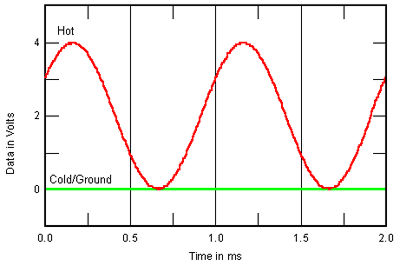
If you read much promotional literature for recently introduced high-quality equipment, you'll notice a common theme emerging: balanced connection. Balanced inputs and outputs are becoming a must for any audio equipment that has any claim to quality. The word itself has promotional value, suggesting moral superiority over the long-established "unbalanced" connection (for the purpose of this discussion, I will call this "normal"). What's my problem with this? Simply this: The High End could be paying dangerous, costly lip service to the received wisdom that balanced operation is the goal for an audio system.


Getting Real

If you: 1) live in an apartment, condo, townhouse, dorm, or share a house or apartment with someone;


2) are going to, have recently graduated from, or have never gone to college and are not working at all, are working a minimum-wage job, or have just gotten your first job but have loans, Visa/MasterCard/American Express bills, a brand-new car payment, and can't afford to eat anything but macaroni and cheese anyway. . .

Jitterbuggin'

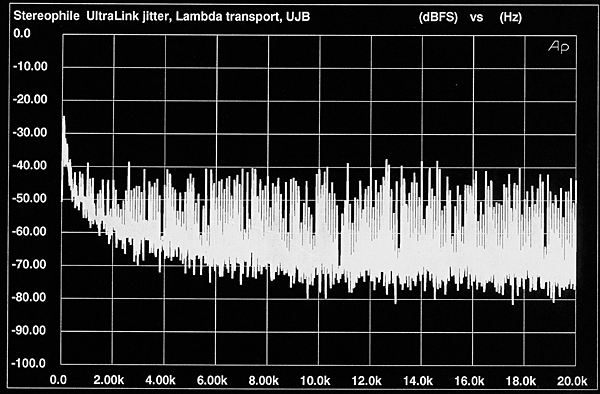
If there's one buzzword in high-end audio for the 1990s, it's undoubtedly jitter. "Jitter" describes timing variations in the clock controlling the ones and zeros that represent the analog audio signal. If that clock isn't stable to an extraordinarily precise degree, the sound quality of the digital processor will be degraded.


A CD transport/digital processor combination introduces jitter in three ways: 1) the transport puts out a jittered signal; 2) the S/PDIF or AES/EBU interface between the transport and processor creates jitter; and 3) the digital processor adds its own jitter to the clock. These additive factors are largely responsible for the great range in sound quality we hear from different transports and interfaces.

Advertisement
Advertisement
Advertisement