Sure, these are foxtrots, most of them suitable for dancing, but they are sophisticated and fascinating. Each disc covers a different geographical area: Austria and the Czech lands; Germany; Central and Eastern Europe; France and Belgium. The composers and arrangers include many great names from the first half of the 20th century—Krenek, Martinu, Hindemith, Gieseking, Weill, Shostakovich, Saint-Saëns, Satie, Milhaud, Ravel, Ibert—and many of the pieces are adaptations of music from opera, concert, stage, and film. I loved them so much that I made them the playlist for a recent birthday party. Wallisch is known to me from his marvelous Mozart recordings; he plays a Steinway D in the Jesus-Christus-Kirche, Berlin-Dahlem, a venue that has hosted more than 1500 recordings. The Blade Two Metas justified the Steinway, delivering dynamic range, percussive punch, and treble sparkle that no dancehall piano could approach but that this music deserves. The deep space of the Kirche spans widely beyond the Blades, but Wallisch and the big Steinway seem unconstrained sitting between them.
I got hooked on Weber's opera Der Freischütz decades ago when I discovered a marvelously dramatic performance on Electrola LPs, conducted by Joseph Keilberth and featuring the golden-age voices of Elisabeth Grümmer, Rudolf Schock, Hermann Prey, and Gottlob Frick. It is available on CD as Warner Classics 9481772. Since then, I've added several more recordings of Der Freischütz to my library, including the consensus favorite, conducted brilliantly by Carlos Kleiber with a stellar cast that includes Gundula Janowitz, Peter Schreier, Theo Adam, and Bernd Weikl (2 CDs + Blu-ray, DG 4838706). Unfortunately, the remastering has not resolved the imbalances between the voices and orchestra; the Keilberth remains beloved, and more modern recordings (stereo and multichannel) have not challenged my preferences—until now.
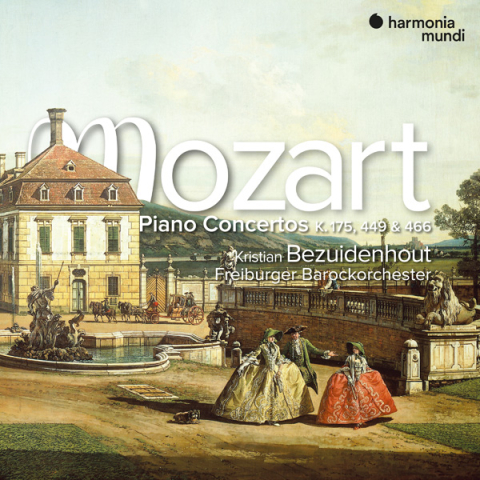
René Jacobs's rethinking of Der Freischütz (2 CDs, Harmonia Mundi HMM90270001) is a revelation and not just because of the refreshing sounds of the Freiburger Barockorchester, which contrast with the more "classic" orchestras, although there's that, too. HM's engineers get everything right, with great clarity and a single acoustic shared by voices (spoken and sung) and the orchestra. Via the Blade Two Metas, I heard lots of delicious detail in the orchestra and impressive impact, despite the smaller forces. In the Wolf's Glen scene, I felt the space close in with the incantations and expand gloriously as chorus, orchestra, and singers approach a climax then fade at the end. I never—not once—thought to myself, "This is great, but it would be even better in multichannel."
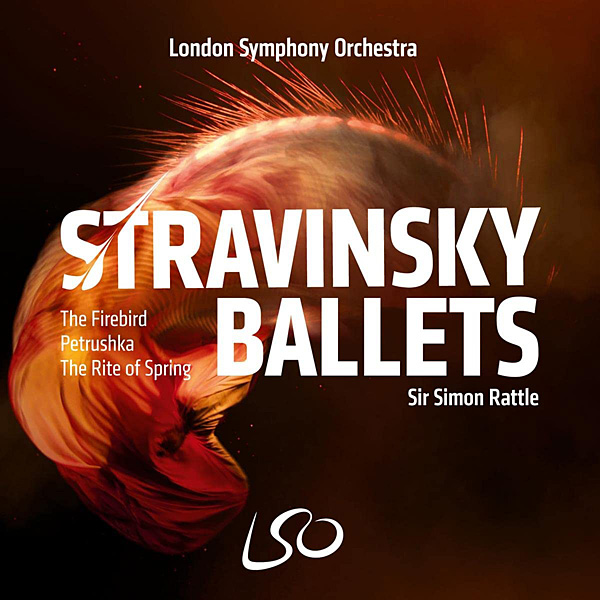 Simon Rattle's tenure with the London Symphony has generated some interesting recordings; none are more impressive than their recent traversal of Stravinsky's big three ballets, The Firebird, Petrushka, and The Rite of Spring (24/96 download, LSO Live LSO5096). These readings are intense and engaging, reminiscent of the young Rattle in Birmingham and among the best-sounding recordings the LSO has produced at the Barbican (footnote 3).
I started with the Firebird, which begins with an almost subliminal rumbling in the lowest strings. Hearing nothing, I turned up the volume and restarted. Now, those deep, deep murmurings, produced by strings but with accents from the lowest winds and brass, were arrayed clearly across a wide, deep stage. Soon came the transition to filling the soundstage with Stravinsky's colorful orchestration, but the clarity of the instruments remained impressive, especially at the low end. For example, in "Danse Infernale de Tous les Sujets de Kastchei," the bass drum accentuates the explosive opening and is the pulse of the accelerating dance. Unlike many other recordings (and speakers that reproduce them), which present the bass drum as floor-shaking but of indeterminate size and location, the Blades place it clearly at the left rear of the orchestra. None of its power is lost.
A spacious, transparent soundstage that integrates well-defined bass is a hallmark of the Blade. From the kickdrums and acoustic bass on Jane Ira Bloom's "Song Patrol," from Early Americans (24/96 PCM rip from a Sono Luminus Blu-ray, SLE-70005), to Buster Williams's solos on "Concierto de Aranjuez" from that bassist's album Griot Libertè (DSD64 rip from High Note SACD HCD 7123) and Jay Bellerose's drum beat on "Sister Rosetta Goes Before Us" from Robert Plant and Alison Krauss's Raising Sand (16/44.1 download, Rounder), I hear them all with great clarity and presence with the Blades.
Simon Rattle's tenure with the London Symphony has generated some interesting recordings; none are more impressive than their recent traversal of Stravinsky's big three ballets, The Firebird, Petrushka, and The Rite of Spring (24/96 download, LSO Live LSO5096). These readings are intense and engaging, reminiscent of the young Rattle in Birmingham and among the best-sounding recordings the LSO has produced at the Barbican (footnote 3).
I started with the Firebird, which begins with an almost subliminal rumbling in the lowest strings. Hearing nothing, I turned up the volume and restarted. Now, those deep, deep murmurings, produced by strings but with accents from the lowest winds and brass, were arrayed clearly across a wide, deep stage. Soon came the transition to filling the soundstage with Stravinsky's colorful orchestration, but the clarity of the instruments remained impressive, especially at the low end. For example, in "Danse Infernale de Tous les Sujets de Kastchei," the bass drum accentuates the explosive opening and is the pulse of the accelerating dance. Unlike many other recordings (and speakers that reproduce them), which present the bass drum as floor-shaking but of indeterminate size and location, the Blades place it clearly at the left rear of the orchestra. None of its power is lost.
A spacious, transparent soundstage that integrates well-defined bass is a hallmark of the Blade. From the kickdrums and acoustic bass on Jane Ira Bloom's "Song Patrol," from Early Americans (24/96 PCM rip from a Sono Luminus Blu-ray, SLE-70005), to Buster Williams's solos on "Concierto de Aranjuez" from that bassist's album Griot Libertè (DSD64 rip from High Note SACD HCD 7123) and Jay Bellerose's drum beat on "Sister Rosetta Goes Before Us" from Robert Plant and Alison Krauss's Raising Sand (16/44.1 download, Rounder), I hear them all with great clarity and presence with the Blades.
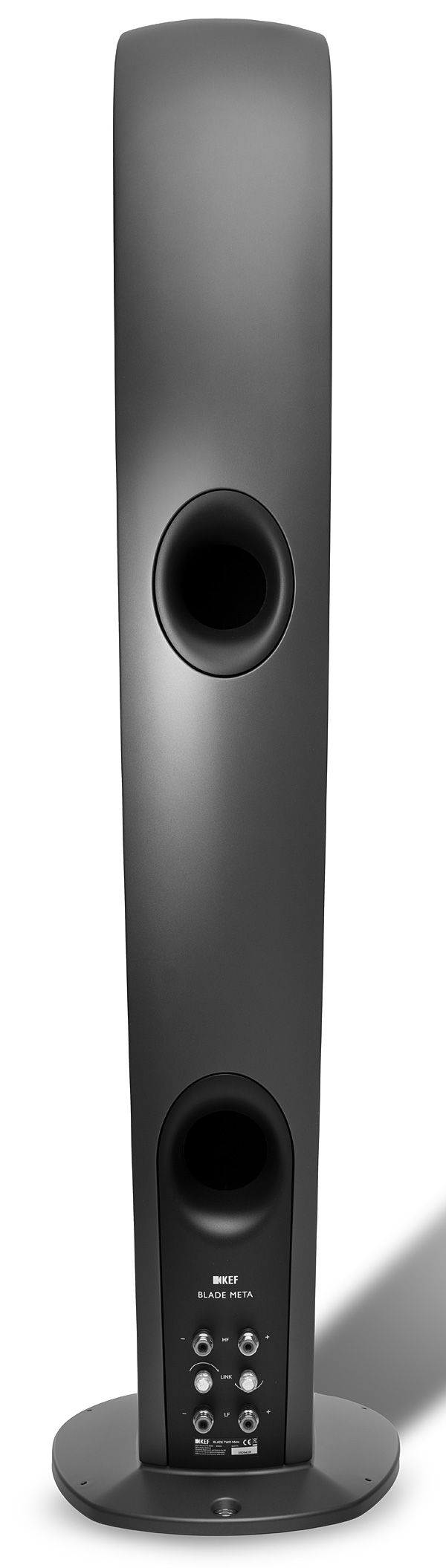 The most impressive experience I had with the Blades was with Bob Belden's kaleidoscopic 12-part symphonic suite, Black Dahlia (DSD64 rip from Blue Note SACD 72435417452). Released in 2001, Black Dahlia was inspired by a brutal, unsolved murder in a very noir 1947 Los Angeles, which has inspired, in addition to this musical work, two novels and a movie. Freed from the literal, Belden's musical account is almost purely emotive. As the first anguished chord burst from the Blades, the spell is cast. Belden guides us through these dark, bluesy, brass-driven pieces with fascinating melodies, Latin-inspired rhythms, and brilliant scoring. The Blades' expansive view went well beyond immersive. It was transporting. Play it loud to complete the illusion and be consumed by the music.
So far, I've offered no criticism of the Blade Two Metas' performance, but lurking in the back of my mind is John Atkinson's observation about the original Blade Two: "In my relatively modest-sized room (greatest dimensions: 27' long by 16.5' wide), the Blade Twos' low frequencies were too generous in absolute terms." My room is slightly smaller than his, nominally 24' long by 14.5' wide, but it's open to two adjacent spaces yielding a total volume that's comparable to John's. Was the Meta's bass overgenerous in my space?
With the familiar "First Tears" by Eriks Eenvalds, from The Doors of Heaven (24/88.2 PCM download, Naxos), performed by the Portland State Chamber Choir under Ethan Sperry (and recorded by John Atkinson), I heard and appreciated more differentiation of individual voices as well as a clearer distinction between those voices and the hall. But I heard no difference in tonal balance. Listening with the Blades to a new recording of Beethoven's Sonatas for Violin and Piano, Nos.1, 5, and 10 from Rachel Podger and Christopher Glynn (DSD256 download of Channel Classics CCS SA 44222), I found Podger's violin and Glynn's Erard fortepiano to be sweet and warm—uncharacteristically warm—but the warmth is on the recording. These performances, which verge on romantic, were ideally balanced in the acoustic of St. John's Church, Upper Norwood.
However, there were indications elsewhere of an excess of bass. Asked to choose between two modern recordings of Fauré's Requiem—Lawrence Equilbey's with Accentus and L'Orchestre National De France (CD, Naive V5137) and Mathieu Romano's with Ensemble Aedes and Les Siècles (24/96 FLAC download, Aparté AP201)—I waffle. I love Romano's pacing and the acoustics of his space, but Equilbey's ensemble is richer as, especially, are the organ tones which are the foundation of several sections. Listening to these recordings on the Blades, I was stunned. For the first time, Romano's opening chord was firmly supported by a deep pedal tone that was distinct from the low tones of the orchestra, and the chorus enters with air and satisfying weight. Switching to the Equilbey, the Blades revealed the organ as excessively powerful, out of keeping with the delicacy of the Requiem—more Saint-Saëns than Fauré—and that impression carried through the piece. Immediately, my preference shifted to the Romano. Later I had second thoughts. Still waffling.
On Nils Lofgren's introduction to "Keith Don't Go," from Acoustic Live (16/44.1 FLAC stream, Vision Music/Qobuz), the lower tones and the spiky upper tones are well-known for their richness and presence. When first played on the Blades, at my usual volume setting, I was stunned at how much larger and riper it sounded. Backing the volume down 2–3dB pulled the guitar down to life-sized while keeping it in good balance with the vocals. Here, as in the Fauré, I will say (with apologies to the great Mae West): A bit too much of a good thing can be wonderful.
Reflections and comparisons
The most impressive experience I had with the Blades was with Bob Belden's kaleidoscopic 12-part symphonic suite, Black Dahlia (DSD64 rip from Blue Note SACD 72435417452). Released in 2001, Black Dahlia was inspired by a brutal, unsolved murder in a very noir 1947 Los Angeles, which has inspired, in addition to this musical work, two novels and a movie. Freed from the literal, Belden's musical account is almost purely emotive. As the first anguished chord burst from the Blades, the spell is cast. Belden guides us through these dark, bluesy, brass-driven pieces with fascinating melodies, Latin-inspired rhythms, and brilliant scoring. The Blades' expansive view went well beyond immersive. It was transporting. Play it loud to complete the illusion and be consumed by the music.
So far, I've offered no criticism of the Blade Two Metas' performance, but lurking in the back of my mind is John Atkinson's observation about the original Blade Two: "In my relatively modest-sized room (greatest dimensions: 27' long by 16.5' wide), the Blade Twos' low frequencies were too generous in absolute terms." My room is slightly smaller than his, nominally 24' long by 14.5' wide, but it's open to two adjacent spaces yielding a total volume that's comparable to John's. Was the Meta's bass overgenerous in my space?
With the familiar "First Tears" by Eriks Eenvalds, from The Doors of Heaven (24/88.2 PCM download, Naxos), performed by the Portland State Chamber Choir under Ethan Sperry (and recorded by John Atkinson), I heard and appreciated more differentiation of individual voices as well as a clearer distinction between those voices and the hall. But I heard no difference in tonal balance. Listening with the Blades to a new recording of Beethoven's Sonatas for Violin and Piano, Nos.1, 5, and 10 from Rachel Podger and Christopher Glynn (DSD256 download of Channel Classics CCS SA 44222), I found Podger's violin and Glynn's Erard fortepiano to be sweet and warm—uncharacteristically warm—but the warmth is on the recording. These performances, which verge on romantic, were ideally balanced in the acoustic of St. John's Church, Upper Norwood.
However, there were indications elsewhere of an excess of bass. Asked to choose between two modern recordings of Fauré's Requiem—Lawrence Equilbey's with Accentus and L'Orchestre National De France (CD, Naive V5137) and Mathieu Romano's with Ensemble Aedes and Les Siècles (24/96 FLAC download, Aparté AP201)—I waffle. I love Romano's pacing and the acoustics of his space, but Equilbey's ensemble is richer as, especially, are the organ tones which are the foundation of several sections. Listening to these recordings on the Blades, I was stunned. For the first time, Romano's opening chord was firmly supported by a deep pedal tone that was distinct from the low tones of the orchestra, and the chorus enters with air and satisfying weight. Switching to the Equilbey, the Blades revealed the organ as excessively powerful, out of keeping with the delicacy of the Requiem—more Saint-Saëns than Fauré—and that impression carried through the piece. Immediately, my preference shifted to the Romano. Later I had second thoughts. Still waffling.
On Nils Lofgren's introduction to "Keith Don't Go," from Acoustic Live (16/44.1 FLAC stream, Vision Music/Qobuz), the lower tones and the spiky upper tones are well-known for their richness and presence. When first played on the Blades, at my usual volume setting, I was stunned at how much larger and riper it sounded. Backing the volume down 2–3dB pulled the guitar down to life-sized while keeping it in good balance with the vocals. Here, as in the Fauré, I will say (with apologies to the great Mae West): A bit too much of a good thing can be wonderful.
Reflections and comparisons
I compared the Blade Two Meta with my Revel Studio2 with an A/B switch box. I found that if I stood directly in front of a Blade Two or a Studio2 and switched from one to the other, they sounded almost exactly the same. So I measured their frequency responses on axis from the same 1m distance and found that, above about 200Hz, they were both flat and matched each other to within ±2dB. Below 200Hz, they varied more.
When I stepped back and sat in my listening seat, things were quite different. In normal listening, even with the speakers aimed directly at the listening position, the bulk of the energy that reaches listeners' ears is reflected sound, but the amount and spectral character of the reflected sound depends on the speaker's dispersion. When, sitting in my usual location, I switched from the Blades to the Studio2s, the latter seemed more forward. The treble was emphasized, and the bass was fuller but not as deep.
When I switched from the Studio2s to the Blades, the latter at first seemed a bit more distant but also more spacious, and the Blade's upper bass was less prominent while its low bass was firmly defined. That said, these differences were not huge. When I turned on the system each day, not remembering which speakers were in use, I sometimes guessed wrong. I had to walk over and look at the switch to be sure, or just sit and listen longer; eventually, those identifying characteristics emerged.
Conclusions
The Blade Two Metas are consistently rewarding and satisfying and gave me great pleasure with all the recordings I played. They offer a remarkably open, transparent, coherent soundstage and taut, extended bass. Are they flawless? That would be a strong claim, but I have not yet found a flaw.
In sum, as of today, the Blade Two Metas are the best speakers I've heard in this room (or perhaps anywhere), and I urge an audition to anyone interested in music reproduction of the highest quality. The Blades were picked up about 24 hours ago, and I miss them already.
Footnote 3: Rattle has announced his departure from London, set to occur in early 2023. An article in the London Times said that one reason for his departure was dissatisfaction with the quality of London's concert halls and the declining prospect that the city will build a new one.—Jim Austin
Simon Rattle's tenure with the London Symphony has generated some interesting recordings; none are more impressive than their recent traversal of Stravinsky's big three ballets, The Firebird, Petrushka, and The Rite of Spring (24/96 download, LSO Live LSO5096). These readings are intense and engaging, reminiscent of the young Rattle in Birmingham and among the best-sounding recordings the LSO has produced at the Barbican (footnote 3).
I started with the Firebird, which begins with an almost subliminal rumbling in the lowest strings. Hearing nothing, I turned up the volume and restarted. Now, those deep, deep murmurings, produced by strings but with accents from the lowest winds and brass, were arrayed clearly across a wide, deep stage. Soon came the transition to filling the soundstage with Stravinsky's colorful orchestration, but the clarity of the instruments remained impressive, especially at the low end. For example, in "Danse Infernale de Tous les Sujets de Kastchei," the bass drum accentuates the explosive opening and is the pulse of the accelerating dance. Unlike many other recordings (and speakers that reproduce them), which present the bass drum as floor-shaking but of indeterminate size and location, the Blades place it clearly at the left rear of the orchestra. None of its power is lost.
A spacious, transparent soundstage that integrates well-defined bass is a hallmark of the Blade. From the kickdrums and acoustic bass on Jane Ira Bloom's "Song Patrol," from Early Americans (24/96 PCM rip from a Sono Luminus Blu-ray, SLE-70005), to Buster Williams's solos on "Concierto de Aranjuez" from that bassist's album Griot Libertè (DSD64 rip from High Note SACD HCD 7123) and Jay Bellerose's drum beat on "Sister Rosetta Goes Before Us" from Robert Plant and Alison Krauss's Raising Sand (16/44.1 download, Rounder), I hear them all with great clarity and presence with the Blades.
The most impressive experience I had with the Blades was with Bob Belden's kaleidoscopic 12-part symphonic suite, Black Dahlia (DSD64 rip from Blue Note SACD 72435417452). Released in 2001, Black Dahlia was inspired by a brutal, unsolved murder in a very noir 1947 Los Angeles, which has inspired, in addition to this musical work, two novels and a movie. Freed from the literal, Belden's musical account is almost purely emotive. As the first anguished chord burst from the Blades, the spell is cast. Belden guides us through these dark, bluesy, brass-driven pieces with fascinating melodies, Latin-inspired rhythms, and brilliant scoring. The Blades' expansive view went well beyond immersive. It was transporting. Play it loud to complete the illusion and be consumed by the music.
So far, I've offered no criticism of the Blade Two Metas' performance, but lurking in the back of my mind is John Atkinson's observation about the original Blade Two: "In my relatively modest-sized room (greatest dimensions: 27' long by 16.5' wide), the Blade Twos' low frequencies were too generous in absolute terms." My room is slightly smaller than his, nominally 24' long by 14.5' wide, but it's open to two adjacent spaces yielding a total volume that's comparable to John's. Was the Meta's bass overgenerous in my space?
With the familiar "First Tears" by Eriks Eenvalds, from The Doors of Heaven (24/88.2 PCM download, Naxos), performed by the Portland State Chamber Choir under Ethan Sperry (and recorded by John Atkinson), I heard and appreciated more differentiation of individual voices as well as a clearer distinction between those voices and the hall. But I heard no difference in tonal balance. Listening with the Blades to a new recording of Beethoven's Sonatas for Violin and Piano, Nos.1, 5, and 10 from Rachel Podger and Christopher Glynn (DSD256 download of Channel Classics CCS SA 44222), I found Podger's violin and Glynn's Erard fortepiano to be sweet and warm—uncharacteristically warm—but the warmth is on the recording. These performances, which verge on romantic, were ideally balanced in the acoustic of St. John's Church, Upper Norwood.
I compared the Blade Two Meta with my Revel Studio2 with an A/B switch box. I found that if I stood directly in front of a Blade Two or a Studio2 and switched from one to the other, they sounded almost exactly the same. So I measured their frequency responses on axis from the same 1m distance and found that, above about 200Hz, they were both flat and matched each other to within ±2dB. Below 200Hz, they varied more.
The Blade Two Metas are consistently rewarding and satisfying and gave me great pleasure with all the recordings I played. They offer a remarkably open, transparent, coherent soundstage and taut, extended bass. Are they flawless? That would be a strong claim, but I have not yet found a flaw.
Footnote 3: Rattle has announced his departure from London, set to occur in early 2023. An article in the London Times said that one reason for his departure was dissatisfaction with the quality of London's concert halls and the declining prospect that the city will build a new one.—Jim Austin