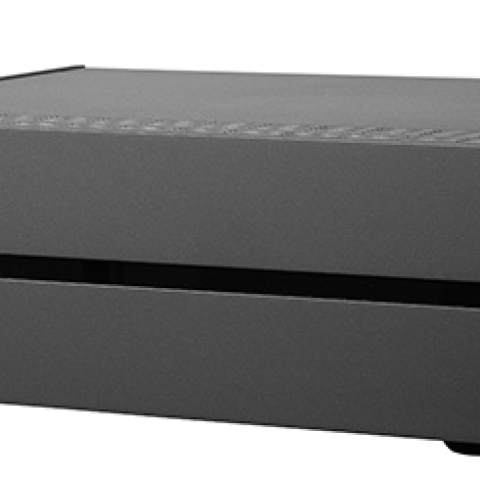
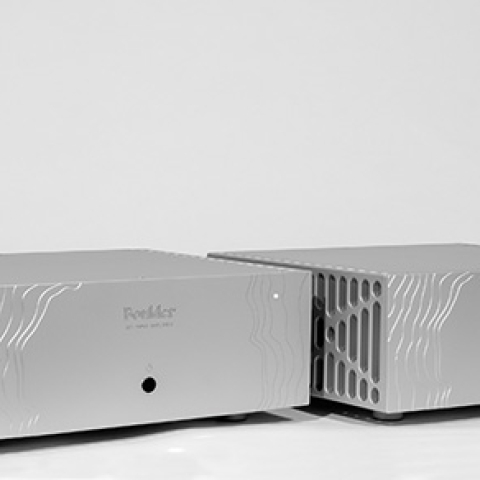
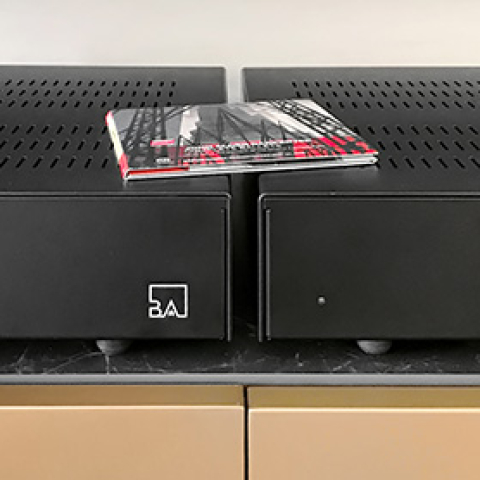
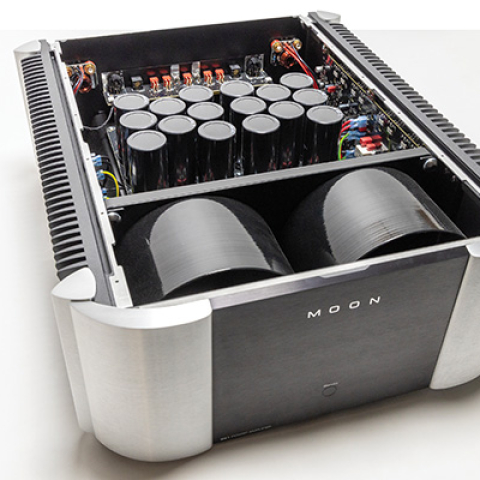
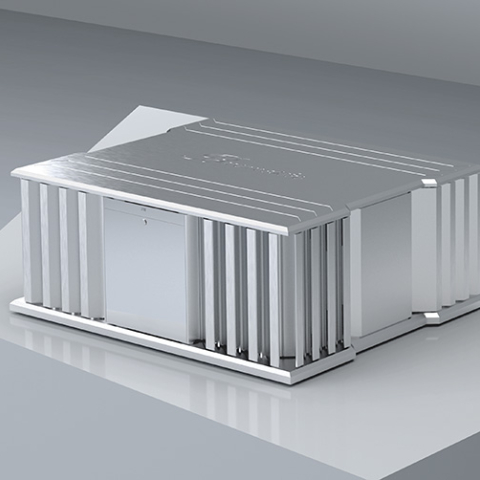
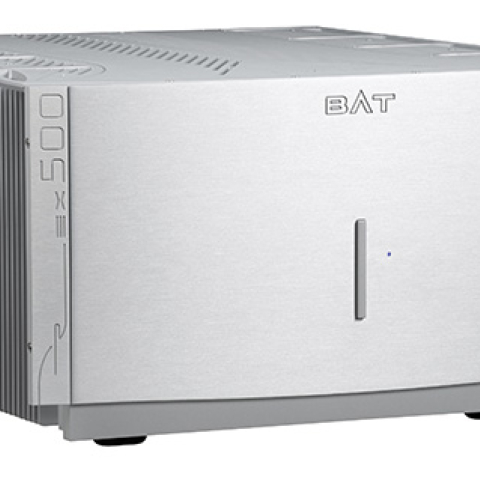
I listened to the Thetas for seven months, alternating them with a Mark Levinson No.334 and a pair of MBL Corona C15s, the latter supplied by JA, who has them on long-term loan. The amplifiers drove my Quad ESL-989 and Revel Ultima Salon2 speakers full range, and were reconfigured to reproduced frequencies above 80Hz when Revel's Rhythm2 subwoofer was in circuit.
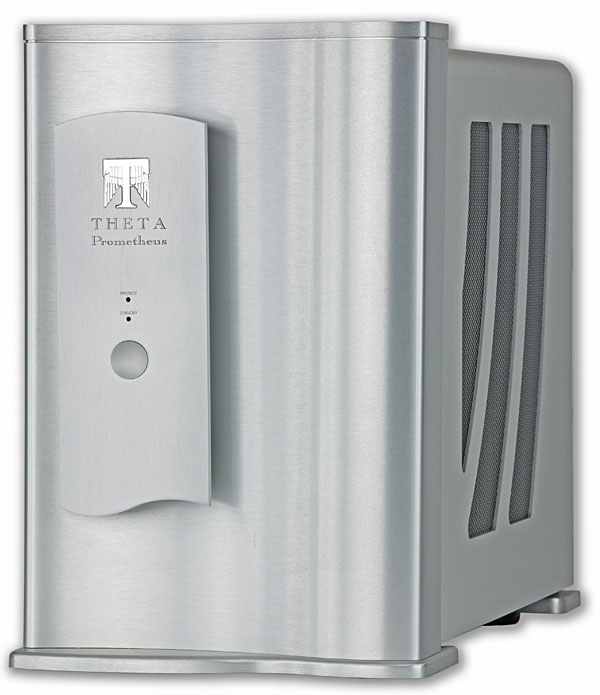
Although setting up a pair of monoblocks seldom requires instructions, I enjoyed reading Theta Digital's well-written and detailed manual. It revealed that the small rear-panel switch that controls the AC mains supply must be flipped on before the front-panel switch can be used to cycle the amp from Standby to full on. This year, I've traveled frequently. When away for more than a few days, I turned off the amp completely with the rear-panel switch. Otherwise I left it in Standby, that LED glowing red, to ensure that the Prometheus was always at its best for listening. As recommended by Jeff Hipps, I played music through the Thetas at a low level for one week before doing any serious listening.
The most striking things about the Prometheus's sound were its huge dynamic range and bass impact. This was even evident during that first, burn-in week, when I played the timpani passage from the recording of Stravinsky's Rite of Spring by Eiji Oue and the Minnesota Orchestra (24-bit/176.4kHz DVD, Reference HRX RR-70). Don Dorsey's synthesizer-based "Ascent," from the Time Warp sampler (CD, Telarc CD-80106), erupted with enormous bass pulses through the Theta amps, followed by a mix of softer pulses, bleeps, whooshes, and high-pitched tones that pan back and forth across the soundstage. The Thetas' high power and dynamics were heard in the stunning synthesizer percussion of struck chimes and thunderous bass drum that tighten the suspense in "Assault on Ryan's House," from James Horner's score for Patriot Games (RCA 66051-2); and the kickdrum at the end of the sleepy opening of David Bowie's "Putting Out Fire," from the Cat People soundtrack (CD, MCA MCAD-1498), exploded at a more energetic and urgent level than I'd heard before.
The Prometheuses projected a broad, detailed, involving, three-dimensional soundstage. I heard this clearly playing one of my 2015 Records to Die For: the live recording of Beethoven's Symphony 9, performed by multiple ensembles and conducted by Leonard Bernstein shortly after the fall of the Berlin Wall (CD, Deutsche Grammophon 429 861-2). The separation of instruments, the passion of the soloists and choirs, and the spaciousness of the soundstage make this recording my favorite Beethoven 9th for choral qualities.
Two other (mostly) orchestral works benefited greatly from the Prometheuses' dynamic range and soundstaging. Pass Labs' XA60.5 monoblocks had proven their dynamic range with Benjamin Zander and the Philharmonia Orchestra's performance of Mahler's Symphony 2 (24/192 FLAC, Linn CKD 452). JA had noted that the "Resurrection" has huge orchestral climaxes contrasted with much softer sections in which a single instrument plays. The Thetas handled both extremely well, reproducing the solo instrumental sections clearly, then easily managing the huge climax 10 minutes into the third movement, In ruhig fliessender Bewegung. The second orchestral recording was our Recording of the Month" for October 2014: the performance of Bruckner's Symphony 9 mentioned at the beginning. In the Scherzo, the Thetas reproduced the full, surging power of the violins' emphatic, fierce fast pattern, coupled with pounding brass and drums. This is one of my favorite movements in the classical repertoire, and the Thetas' reproduction of it was the best I've heard in my listening room.
 The Prometheuses produced excellent imaging and soundstaging with "Breathe," from Pink Floyd's Dark Side of the Moon (SACD/CD, EMI 82136-2). Driving the Revel Salon2s, the Thetas projected the throbbing helicopter rotors, jackhammers, footsteps running across my listening room, dive bombers, and PA announcements on a wide soundstage to cinematic effect. With John Rutter's The Lord Is My Light and My Salvation, from Requiem, performed by Timothy Seelig and the Turtle Creek Chorale (CD, Reference RR-57CD), the sounds of the clarinet, organ, and harp were separate and precisely positioned, and each rank of choristers was spread out in a clearly "visible" arc. A Gaelic Prayer, also from Requiem, had new clarity and balance, with superb pitch definition of the pipe organ's pedal notes.
The Prometheus's bass response was outstanding. Driving the Revel Salon2 towers with the Revel Rhythm2 subwoofer turned on, the Thetas produced tuneful, solid, punchy bass with great pace and jump factor. In the Toccata of Widor's Organ Symphony 5, as recorded by JA (24/88.2 AIFF file), the deepest bass notes were reproduced with unexpected power and mass. The 32Hz pipes produced immense weight, solidity, and room lock. The mountainous, deep pedal note that ends James Busby's performance of Herbert Howells's Master Tallis's Testament, from Pipes Rhode Island (CD, Riago 101), produced incredible room lock. I heard and felt the various pedal ranks underpinning Gnomus, from Jean Guillou's performance of his own transcription of Mussorgsky's Pictures at an Exhibition (CD, Dorian DOR-90117).
The midrange response blossomed when my speakers were driven by the Thetas. Whether the volume was low or high, I heard delicate differences in tone and timbre in male voices, piano, and percussion instruments. The light, clear quality of Keith Jarrett's piano in "Heartland," from his Concerts: Bregenz München (24/96 AIFF, ECM 1227–29)7 was not disrupted by his thudding foot stomps. The lilting tenors of the vocal group Cantus in Edie Hill's A Sound Like This, from their While You Are Alive, recorded by John Atkinson (24/88.2 digital file or CD, Cantus CTS-1208), also exhibited wonderful clarity and timbre.
Similarly, the Prometheus transmitted more of the timbres and harmonics of solo male voices, without tubbiness or midbass emphasis. Chris Martin's plaintive falsetto singing of the simple, intensely romantic words that I find so captivating and urgent in "Yellow," from Coldplay's Parachutes (CD, Parlophone 5 40504 2), appeared behind and separated cleanly from the dense mix of guitar, bass, and drums that supports the song's intoxicatingly slow, dark melody. And José Carreras's light, lyrical tenor remained pure during the Kyrie of Ariel Ramirez's Misa Criolla (CD, Philips 420 955-2).
The Prometheus's reproduction of the upper midrange and treble was especially commendable, especially with cymbals. I heard the harmonic overtones from different areas of single cymbals, as well as from different types of cymbals, in Mark Walker's drum solo in "Nardis," from Patricia Barber's Café Blue (SACD/CD, Premonition/Blue Note/Mobile Fidelity Sound Lab UDSACD 2002)—and the metallic cymbal sheen that opens "The Mooche," from the Jerome Harris Quintet's Rendezvous (CD, Stereophile STPH013-2), was rendered as a shimmering rather than as soft, hissing static.
Comparisons
The Prometheuses produced excellent imaging and soundstaging with "Breathe," from Pink Floyd's Dark Side of the Moon (SACD/CD, EMI 82136-2). Driving the Revel Salon2s, the Thetas projected the throbbing helicopter rotors, jackhammers, footsteps running across my listening room, dive bombers, and PA announcements on a wide soundstage to cinematic effect. With John Rutter's The Lord Is My Light and My Salvation, from Requiem, performed by Timothy Seelig and the Turtle Creek Chorale (CD, Reference RR-57CD), the sounds of the clarinet, organ, and harp were separate and precisely positioned, and each rank of choristers was spread out in a clearly "visible" arc. A Gaelic Prayer, also from Requiem, had new clarity and balance, with superb pitch definition of the pipe organ's pedal notes.
The Prometheus's bass response was outstanding. Driving the Revel Salon2 towers with the Revel Rhythm2 subwoofer turned on, the Thetas produced tuneful, solid, punchy bass with great pace and jump factor. In the Toccata of Widor's Organ Symphony 5, as recorded by JA (24/88.2 AIFF file), the deepest bass notes were reproduced with unexpected power and mass. The 32Hz pipes produced immense weight, solidity, and room lock. The mountainous, deep pedal note that ends James Busby's performance of Herbert Howells's Master Tallis's Testament, from Pipes Rhode Island (CD, Riago 101), produced incredible room lock. I heard and felt the various pedal ranks underpinning Gnomus, from Jean Guillou's performance of his own transcription of Mussorgsky's Pictures at an Exhibition (CD, Dorian DOR-90117).
The midrange response blossomed when my speakers were driven by the Thetas. Whether the volume was low or high, I heard delicate differences in tone and timbre in male voices, piano, and percussion instruments. The light, clear quality of Keith Jarrett's piano in "Heartland," from his Concerts: Bregenz München (24/96 AIFF, ECM 1227–29)7 was not disrupted by his thudding foot stomps. The lilting tenors of the vocal group Cantus in Edie Hill's A Sound Like This, from their While You Are Alive, recorded by John Atkinson (24/88.2 digital file or CD, Cantus CTS-1208), also exhibited wonderful clarity and timbre.
Similarly, the Prometheus transmitted more of the timbres and harmonics of solo male voices, without tubbiness or midbass emphasis. Chris Martin's plaintive falsetto singing of the simple, intensely romantic words that I find so captivating and urgent in "Yellow," from Coldplay's Parachutes (CD, Parlophone 5 40504 2), appeared behind and separated cleanly from the dense mix of guitar, bass, and drums that supports the song's intoxicatingly slow, dark melody. And José Carreras's light, lyrical tenor remained pure during the Kyrie of Ariel Ramirez's Misa Criolla (CD, Philips 420 955-2).
The Prometheus's reproduction of the upper midrange and treble was especially commendable, especially with cymbals. I heard the harmonic overtones from different areas of single cymbals, as well as from different types of cymbals, in Mark Walker's drum solo in "Nardis," from Patricia Barber's Café Blue (SACD/CD, Premonition/Blue Note/Mobile Fidelity Sound Lab UDSACD 2002)—and the metallic cymbal sheen that opens "The Mooche," from the Jerome Harris Quintet's Rendezvous (CD, Stereophile STPH013-2), was rendered as a shimmering rather than as soft, hissing static.
Comparisons
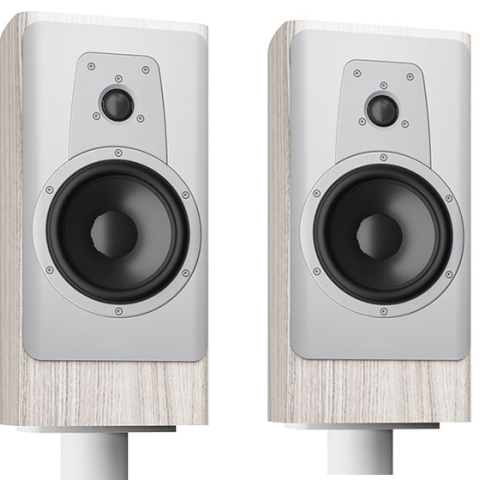
While auditioning the Theta Prometheus monoblocks, I also listened to my Mark Levinson No.334 ($5900 in 1999) and the MBL Corona C15 monoblocks ($25,000/pair). A single Prometheus or Corona C15 tips the scale at less than half the weight of the No.334. The No.334 has softer-, warmer-sounding bass, and delivers 200W less at clipping into 4 ohms than either class-D amp. This might be a problem with less sensitive speakers and bigger rooms. More important, the Levinson, which I've thoroughly enjoyed for 15 years, seemed compressed, shut down, and dark, with a two-dimensional soundstage. In comparison, both class-D amps were faster, more open, more transparent, and produced a greater sense of three-dimensionality. Compared to the Prometheus, the MBL seemed leaner in the midrange and upper bass when driving the Revel Salon2s. The Prometheus had a much more successful integration with the Revel Rhythm2 subwoofer than the other two amps, being able to produce a full, driving midrange, and to reveal layers of three-dimensional detail. Overall, for me, the Theta Prometheus delivered the most emotionally involving sound. Conclusions
The Theta Digital Prometheus's class-D output stage performed as predicted by theory: The monoblocks were still running coolly in my room after hours of full output to Revel's Salon2s, and delivered twice the power of my Mark Levinson No.334 at slightly less than the ML's weight. The Theta's price of $12,000/pair—though less than half the price of the MBL Coronas—puts it in the high-priced range. But the Prometheuses delivered better midrange and treble definition, greater depth of field, greater jump factor, and better imaging than any other amplifier I've heard in years. It let the Revel Salon2s sound more alive and more dynamic than ever, with faster, deeper bass response, and made it possible for the combo of Revel Salon2s and Revel Rhythm2 subwoofer to deliver better synergy than I'd heard before. The Theta Prometheus even delivered sweet, open highs and solid bass from my electrostatic Quad ESL-989s.
My last impression of the Prometheus was the same as my first: It's one of the best-sounding amplifiers I've heard in my listening room. Seven months after I began listening to it, its soundstaging, imaging, depiction of detail and speed and slam, and its exciting dynamic contrasts remain totally addictive. I give it my strongest recommendation for inclusion in Class A of Stereophile's "Recommended Components."
The Prometheuses produced excellent imaging and soundstaging with "Breathe," from Pink Floyd's Dark Side of the Moon (SACD/CD, EMI 82136-2). Driving the Revel Salon2s, the Thetas projected the throbbing helicopter rotors, jackhammers, footsteps running across my listening room, dive bombers, and PA announcements on a wide soundstage to cinematic effect. With John Rutter's The Lord Is My Light and My Salvation, from Requiem, performed by Timothy Seelig and the Turtle Creek Chorale (CD, Reference RR-57CD), the sounds of the clarinet, organ, and harp were separate and precisely positioned, and each rank of choristers was spread out in a clearly "visible" arc. A Gaelic Prayer, also from Requiem, had new clarity and balance, with superb pitch definition of the pipe organ's pedal notes.
While auditioning the Theta Prometheus monoblocks, I also listened to my Mark Levinson No.334 ($5900 in 1999) and the MBL Corona C15 monoblocks ($25,000/pair). A single Prometheus or Corona C15 tips the scale at less than half the weight of the No.334. The No.334 has softer-, warmer-sounding bass, and delivers 200W less at clipping into 4 ohms than either class-D amp. This might be a problem with less sensitive speakers and bigger rooms. More important, the Levinson, which I've thoroughly enjoyed for 15 years, seemed compressed, shut down, and dark, with a two-dimensional soundstage. In comparison, both class-D amps were faster, more open, more transparent, and produced a greater sense of three-dimensionality. Compared to the Prometheus, the MBL seemed leaner in the midrange and upper bass when driving the Revel Salon2s. The Prometheus had a much more successful integration with the Revel Rhythm2 subwoofer than the other two amps, being able to produce a full, driving midrange, and to reveal layers of three-dimensional detail. Overall, for me, the Theta Prometheus delivered the most emotionally involving sound. Conclusions
The Theta Digital Prometheus's class-D output stage performed as predicted by theory: The monoblocks were still running coolly in my room after hours of full output to Revel's Salon2s, and delivered twice the power of my Mark Levinson No.334 at slightly less than the ML's weight. The Theta's price of $12,000/pair—though less than half the price of the MBL Coronas—puts it in the high-priced range. But the Prometheuses delivered better midrange and treble definition, greater depth of field, greater jump factor, and better imaging than any other amplifier I've heard in years. It let the Revel Salon2s sound more alive and more dynamic than ever, with faster, deeper bass response, and made it possible for the combo of Revel Salon2s and Revel Rhythm2 subwoofer to deliver better synergy than I'd heard before. The Theta Prometheus even delivered sweet, open highs and solid bass from my electrostatic Quad ESL-989s.