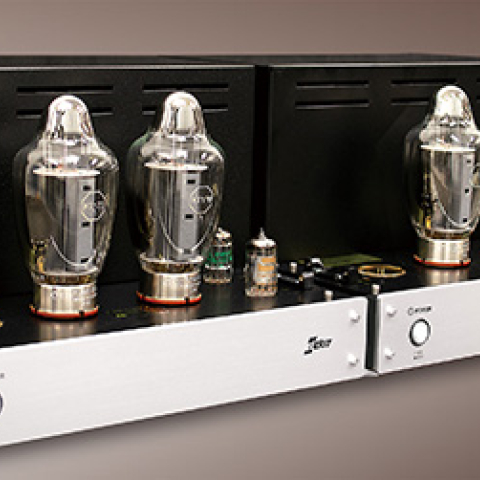
Hayes noted a design advantage an integrated amplifier has over separates: an intimate common ground reference for the amplifier, preamplifier, and phono stage. When done correctly, this can give an integrated amp "that relatively nonelectronic, open, organic sound," he said. I experienced no tube troubles during my time with the Sigma 170i iQ.
Listening
I've heard VAC amplification at many audio shows and a few dealer events over the last several years. But with few exceptions—one being at the Florida Audio Expo in early 2020, where I heard this very amplifier driving Acora SRB speakers—those have always been demos of VAC "Statement" products deployed in extreme systems (driving, often, Von Schweikert Ultra-series loudspeakers) to great effect.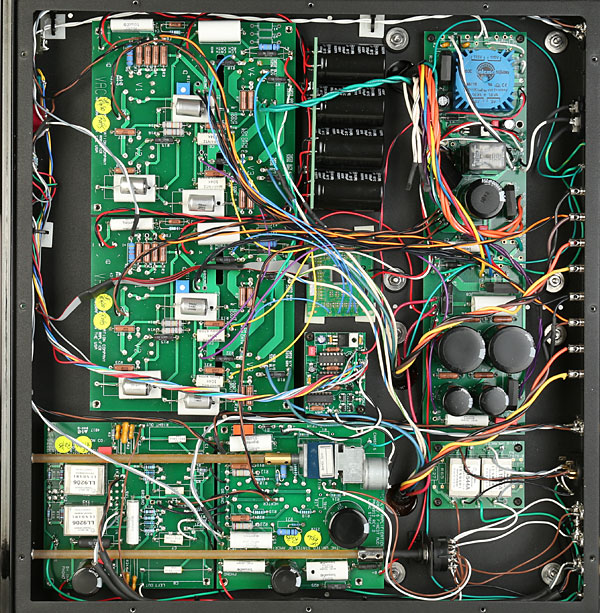 At times, I'd questioned whether tubes could provide the power needed to control large woofers (footnote 2) and deliver slam in certain genres, including loud rock'n'roll. I've often been surprised how well they did.
This is the first time I've had a VAC product in my listening room.
I did most of my listening with the nominally 8 ohm Acora Acoustics SRB standmount speakers (reviewed in the January issue) connected to the 4–8 ohm tap. As noted there, the 170i iQ proved an excellent partner for these exotic granite two-ways. The 170i iQ fleshed out the Acora's precise images, making them more vivid and corporeal. Vocal passages, particularly a cappella or incidental, were compelling in clarity and convincing in detail. The Fela Kuti track "Fefe Naa Efe," on Afro Beat: Hard African Funk, Afro Jazz and Afrobeat (CD, Blow Recordings BlowCD03), opens with Kuti joking, chuckling, then reciting a proverb. I've heard this intro many times, but here the vivid imaging allowed me to sense Kuti's swaggering presence. Horns and honking saxes sounded huge and liquid; rhythms and grooves rock-steady and powerful.
It just feels right to turn up rock'n'roll, so I did, and when I did, the VAC-driven system sounded ever better.
I spun a few tracks from the White Stripes' Elephant (LP, Third Man Records TMR 200) on the Clearaudio Performance DC Wood turntable with Tracer tonearm and Talisman v2 MC cartridge. According to its liner notes, this double album was recorded, mixed, and mastered with all-vintage, all-analog equipment. The album's grungier, dirtier production came through in all its ragged glory: Jack White's growl and searing squeals from his Airline "JB Hutto" Res-O-Gras guitar never became piercing or shrill, the heavy feedback on the bluesy "Ball and Biscuit" was weighty and convincing, and I could almost feel the air moving through Meg White's kickdrum. It hit harder than expected. Almost paradoxically, the 170i iQ's smooth continuity served rough edges well, and with plenty of detail.
At times, I'd questioned whether tubes could provide the power needed to control large woofers (footnote 2) and deliver slam in certain genres, including loud rock'n'roll. I've often been surprised how well they did.
This is the first time I've had a VAC product in my listening room.
I did most of my listening with the nominally 8 ohm Acora Acoustics SRB standmount speakers (reviewed in the January issue) connected to the 4–8 ohm tap. As noted there, the 170i iQ proved an excellent partner for these exotic granite two-ways. The 170i iQ fleshed out the Acora's precise images, making them more vivid and corporeal. Vocal passages, particularly a cappella or incidental, were compelling in clarity and convincing in detail. The Fela Kuti track "Fefe Naa Efe," on Afro Beat: Hard African Funk, Afro Jazz and Afrobeat (CD, Blow Recordings BlowCD03), opens with Kuti joking, chuckling, then reciting a proverb. I've heard this intro many times, but here the vivid imaging allowed me to sense Kuti's swaggering presence. Horns and honking saxes sounded huge and liquid; rhythms and grooves rock-steady and powerful.
It just feels right to turn up rock'n'roll, so I did, and when I did, the VAC-driven system sounded ever better.
I spun a few tracks from the White Stripes' Elephant (LP, Third Man Records TMR 200) on the Clearaudio Performance DC Wood turntable with Tracer tonearm and Talisman v2 MC cartridge. According to its liner notes, this double album was recorded, mixed, and mastered with all-vintage, all-analog equipment. The album's grungier, dirtier production came through in all its ragged glory: Jack White's growl and searing squeals from his Airline "JB Hutto" Res-O-Gras guitar never became piercing or shrill, the heavy feedback on the bluesy "Ball and Biscuit" was weighty and convincing, and I could almost feel the air moving through Meg White's kickdrum. It hit harder than expected. Almost paradoxically, the 170i iQ's smooth continuity served rough edges well, and with plenty of detail.
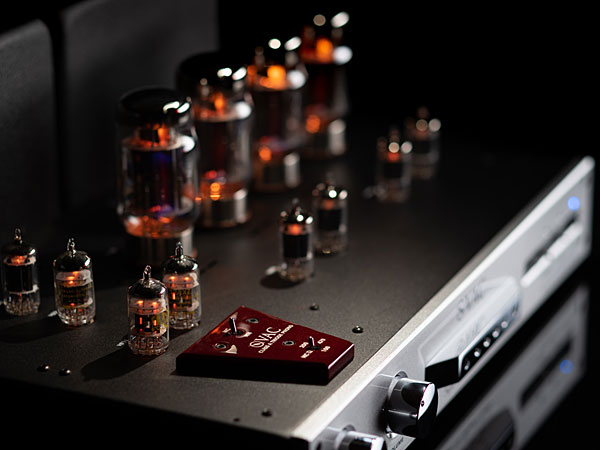 At first, I set the VAC's phono section loading at 200 ohms; later, I switched to 450. (The suggested loading of the Talisman v2 cartridge is 400 ohms.) 450 added substance—and sounded louder—but may have given up a little resolution and crispness, or control.
Even under the weight of heavier fare and higher SPLs, the VAC held up. The Acoras have a neutral to slightly cool character. The 170i iQ's hints of warmth balanced that out while adding body and a feeling of continuity to the music.
There's a lot happening on Big Red Machine (LP, Jagjaguwar JAG335), a collaboration of Bon Iver's Justin Vernon and The National's Aaron Dessner. This album (and act, which shares the name) is filled with some 40 collaborators' worth of musical contributions. The setup with the 170i iQ might not have matched the fleetness of transistors on drum machines, omnichord, OP-1, and other synth beats on complex electronic material, but the quick attacks and driving pulses didn't sound sluggish—or especially tubelike. This folktronica trip contains layered string and choral sections, piano, and more. The quick starts and stops and blips on "Lyla" and "Air Stryp" were fun and exciting.
Later on, as an experiment, I swapped out the Acoras for the MBL 126 Radialstrahler omnidirectional loudspeakers, which have a recommended amplifier power spec of 200Wpc, well above the 170i iQ's 85Wpc. These MBL speakers are a modest (4 ohm nominal) load in impedance terms, but their specified sensitivity is very low, in large part because they distribute energy evenly in the room instead of beaming it straight at the listener.
At first, I set the VAC's phono section loading at 200 ohms; later, I switched to 450. (The suggested loading of the Talisman v2 cartridge is 400 ohms.) 450 added substance—and sounded louder—but may have given up a little resolution and crispness, or control.
Even under the weight of heavier fare and higher SPLs, the VAC held up. The Acoras have a neutral to slightly cool character. The 170i iQ's hints of warmth balanced that out while adding body and a feeling of continuity to the music.
There's a lot happening on Big Red Machine (LP, Jagjaguwar JAG335), a collaboration of Bon Iver's Justin Vernon and The National's Aaron Dessner. This album (and act, which shares the name) is filled with some 40 collaborators' worth of musical contributions. The setup with the 170i iQ might not have matched the fleetness of transistors on drum machines, omnichord, OP-1, and other synth beats on complex electronic material, but the quick attacks and driving pulses didn't sound sluggish—or especially tubelike. This folktronica trip contains layered string and choral sections, piano, and more. The quick starts and stops and blips on "Lyla" and "Air Stryp" were fun and exciting.
Later on, as an experiment, I swapped out the Acoras for the MBL 126 Radialstrahler omnidirectional loudspeakers, which have a recommended amplifier power spec of 200Wpc, well above the 170i iQ's 85Wpc. These MBL speakers are a modest (4 ohm nominal) load in impedance terms, but their specified sensitivity is very low, in large part because they distribute energy evenly in the room instead of beaming it straight at the listener.
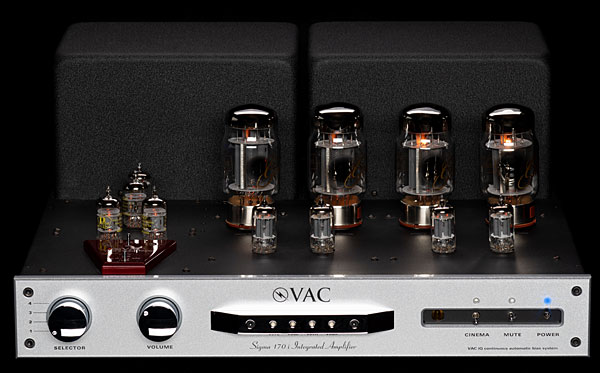 This setup exceeded my expectations on plenty of music, including a recent release from the British "virtual band" Gorillaz. On Song Machine, Season One: Strange Timez (LP, Parlophone), every track features guest artists, from St. Vincent through Elton John to Beck. Peter Hook, the bass player from Joy Division and New Order, appears on "Aries." He often plays his bass more like a lead guitar, with "hooky" melodic lines. Hook's distinctive bass line was solid and easy to follow through the VAC/MBL combo.
Another standout track, "Désolé," showcases lively vocals from Malian singer Fatoumata Diawara amid a wild hubbub of instrumentation. The MBL/VAC system resolved the subtle expressive details of Diawara's spirited, lilting vocals. Percussion, electronic and acoustic, propelled the track forward with plenty of punch and pop. Violin, viola, and cello also sounded lush, lovely, and liquid. The strings serve as an intriguing counterpoint to the track's steady, funky groove; their timbres seemed true. Each vocalist and instrument was individuated within a spacious soundstage.
All this in spite of the 170i iQ being way below MBL's recommended power specs. I wanted a little more bass extension and tautness, but it sounded delightful.
With the VAC in the system, sustains and decays seemed extended. Anouar Brahem's Le pas du chat noir LP (ECM Records 1792), an intimately recorded trio of Brahem on oud, François Couturier on piano, and Jean-Louis Matinier on accordion, provided some of the most compelling listening I experienced during the review period. The players are close-miked, precisely placed on a 3D soundstage. Scale seemed well approximated, and timbres felt natural. Backgrounds were dark as night. Accordion swells sounded so full and had such long decays that they took on an organ-like presence. The instruments' overlapping long sustains created layers and lush textures. The title cut captivated with intensity and clarity. Modal melodies meandered. The tension in the music, as in the oud strings, was palpable. A winner.
This setup exceeded my expectations on plenty of music, including a recent release from the British "virtual band" Gorillaz. On Song Machine, Season One: Strange Timez (LP, Parlophone), every track features guest artists, from St. Vincent through Elton John to Beck. Peter Hook, the bass player from Joy Division and New Order, appears on "Aries." He often plays his bass more like a lead guitar, with "hooky" melodic lines. Hook's distinctive bass line was solid and easy to follow through the VAC/MBL combo.
Another standout track, "Désolé," showcases lively vocals from Malian singer Fatoumata Diawara amid a wild hubbub of instrumentation. The MBL/VAC system resolved the subtle expressive details of Diawara's spirited, lilting vocals. Percussion, electronic and acoustic, propelled the track forward with plenty of punch and pop. Violin, viola, and cello also sounded lush, lovely, and liquid. The strings serve as an intriguing counterpoint to the track's steady, funky groove; their timbres seemed true. Each vocalist and instrument was individuated within a spacious soundstage.
All this in spite of the 170i iQ being way below MBL's recommended power specs. I wanted a little more bass extension and tautness, but it sounded delightful.
With the VAC in the system, sustains and decays seemed extended. Anouar Brahem's Le pas du chat noir LP (ECM Records 1792), an intimately recorded trio of Brahem on oud, François Couturier on piano, and Jean-Louis Matinier on accordion, provided some of the most compelling listening I experienced during the review period. The players are close-miked, precisely placed on a 3D soundstage. Scale seemed well approximated, and timbres felt natural. Backgrounds were dark as night. Accordion swells sounded so full and had such long decays that they took on an organ-like presence. The instruments' overlapping long sustains created layers and lush textures. The title cut captivated with intensity and clarity. Modal melodies meandered. The tension in the music, as in the oud strings, was palpable. A winner.
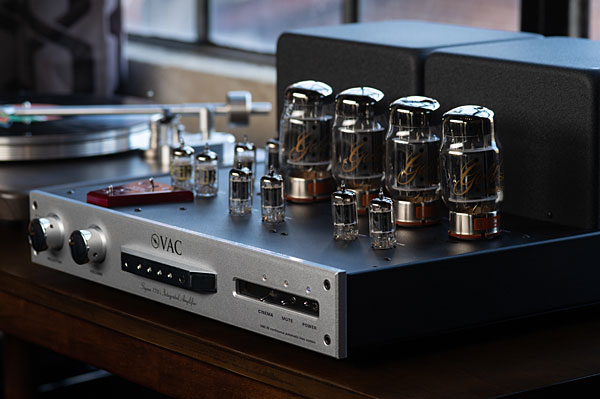 "Miki Dora" by Amen Dunes (44kHz/16-bit Qobuz stream via Roon) is named for a surfer from the '50s and '60s, a world traveler who did time in a US jail and designed the best-selling surfboard of all time even as he decried surfing's increasing commercialization. This mellow indie folk song doesn't have a chorus; instead, its gentle tension builds almost to the end, when a harmonized vocal line gets repeated in an unexpected climax. The repetition feels wavelike, with a sense of bobbing and swaying in an ocean of rhythm. The VAC, paired with this song's slightly lean, lo-fi production, captured well the song's organic vibe.
Conclusion
"Miki Dora" by Amen Dunes (44kHz/16-bit Qobuz stream via Roon) is named for a surfer from the '50s and '60s, a world traveler who did time in a US jail and designed the best-selling surfboard of all time even as he decried surfing's increasing commercialization. This mellow indie folk song doesn't have a chorus; instead, its gentle tension builds almost to the end, when a harmonized vocal line gets repeated in an unexpected climax. The repetition feels wavelike, with a sense of bobbing and swaying in an ocean of rhythm. The VAC, paired with this song's slightly lean, lo-fi production, captured well the song's organic vibe.
Conclusion
The VAC Sigma 170i iQ did well across criteria typically associated with tube amps, and more: sweet treble, excellent midrange, musicality, bloom. Timbres were more natural than warm. Bass was substantial, with good definition. The VAC amp seemed more powerful than its rating suggests, and often delivered solid attacks. It's not inexpensive, but it is luxurious, and all its details are well-considered. It was a pleasure to set up and to use. It's built by hand and meant to last at least one lifetime. There is value here.
Footnote 2: Although in some of those demos, the loudspeakers were equipped with woofers powered by built-in amplifiers.
I've heard VAC amplification at many audio shows and a few dealer events over the last several years. But with few exceptions—one being at the Florida Audio Expo in early 2020, where I heard this very amplifier driving Acora SRB speakers—those have always been demos of VAC "Statement" products deployed in extreme systems (driving, often, Von Schweikert Ultra-series loudspeakers) to great effect.
At times, I'd questioned whether tubes could provide the power needed to control large woofers (footnote 2) and deliver slam in certain genres, including loud rock'n'roll. I've often been surprised how well they did.
At first, I set the VAC's phono section loading at 200 ohms; later, I switched to 450. (The suggested loading of the Talisman v2 cartridge is 400 ohms.) 450 added substance—and sounded louder—but may have given up a little resolution and crispness, or control.
Even under the weight of heavier fare and higher SPLs, the VAC held up. The Acoras have a neutral to slightly cool character. The 170i iQ's hints of warmth balanced that out while adding body and a feeling of continuity to the music.
There's a lot happening on Big Red Machine (LP, Jagjaguwar JAG335), a collaboration of Bon Iver's Justin Vernon and The National's Aaron Dessner. This album (and act, which shares the name) is filled with some 40 collaborators' worth of musical contributions. The setup with the 170i iQ might not have matched the fleetness of transistors on drum machines, omnichord, OP-1, and other synth beats on complex electronic material, but the quick attacks and driving pulses didn't sound sluggish—or especially tubelike. This folktronica trip contains layered string and choral sections, piano, and more. The quick starts and stops and blips on "Lyla" and "Air Stryp" were fun and exciting.
This setup exceeded my expectations on plenty of music, including a recent release from the British "virtual band" Gorillaz. On Song Machine, Season One: Strange Timez (LP, Parlophone), every track features guest artists, from St. Vincent through Elton John to Beck. Peter Hook, the bass player from Joy Division and New Order, appears on "Aries." He often plays his bass more like a lead guitar, with "hooky" melodic lines. Hook's distinctive bass line was solid and easy to follow through the VAC/MBL combo.
Another standout track, "Désolé," showcases lively vocals from Malian singer Fatoumata Diawara amid a wild hubbub of instrumentation. The MBL/VAC system resolved the subtle expressive details of Diawara's spirited, lilting vocals. Percussion, electronic and acoustic, propelled the track forward with plenty of punch and pop. Violin, viola, and cello also sounded lush, lovely, and liquid. The strings serve as an intriguing counterpoint to the track's steady, funky groove; their timbres seemed true. Each vocalist and instrument was individuated within a spacious soundstage.
"Miki Dora" by Amen Dunes (44kHz/16-bit Qobuz stream via Roon) is named for a surfer from the '50s and '60s, a world traveler who did time in a US jail and designed the best-selling surfboard of all time even as he decried surfing's increasing commercialization. This mellow indie folk song doesn't have a chorus; instead, its gentle tension builds almost to the end, when a harmonized vocal line gets repeated in an unexpected climax. The repetition feels wavelike, with a sense of bobbing and swaying in an ocean of rhythm. The VAC, paired with this song's slightly lean, lo-fi production, captured well the song's organic vibe.
The VAC Sigma 170i iQ did well across criteria typically associated with tube amps, and more: sweet treble, excellent midrange, musicality, bloom. Timbres were more natural than warm. Bass was substantial, with good definition. The VAC amp seemed more powerful than its rating suggests, and often delivered solid attacks. It's not inexpensive, but it is luxurious, and all its details are well-considered. It was a pleasure to set up and to use. It's built by hand and meant to last at least one lifetime. There is value here.
Footnote 2: Although in some of those demos, the loudspeakers were equipped with woofers powered by built-in amplifiers.