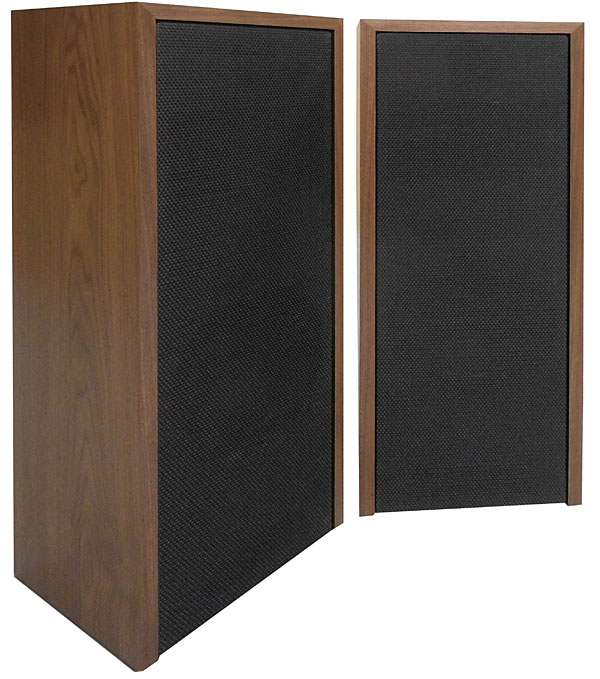
Once everything was ready, Greg used my Android tablet to access some favorite demo music from Tidal and Qobuz. First up was "Chocolate Chip Trip" from Tool's recent album, Fear Inoculum (24/96 FLAC, Volcano/RCA 0886447855874)—essentially a Danny Carey drum solo. As the track began, the sounds I heard—chimes, bells, acoustic and electronic drums—were coming from all around me; some from the walls directly to my sides. The bombast of percussion continued to build, and soon I was enveloped by a soundstage that seemed, well, preternatural, while the music itself seemed natural indeed—very real. It was a striking introduction to the Razz.
Listening
Later, I moved things around a bit. I made sure I'd heard both pairs of speakers—the Razzes and the Zu Omens I was comparing them to—in both the nearfield configuration and from farther afield. Both the PrimaLuna and the Bel Canto amps interfaced marvelously with the Razzes, but there were clear differences in their presentations. With the EVO 300, in Ultralinear mode, there was extra force and midrange emphasis; this midrange boost enhanced vocals and spotlighted particular solo (midrange) instruments. This quality made the PrimaLuna my main amp for much of my listening. The Bel Canto, though, proved quite adept and more realistic and satisfying on large-scale orchestral works and rock.
 The 1960s recordings made at Columbia's 30th Street New York Studio, including It's Monk's Time (16/44.1 FLAC, Columbia 63532), are among the best-sounding and most gimmick-free recordings of that or any decade, even if (like a lot of recordings from the time) they sometimes seem a little too left–right. The album's opener, "Lulu's Back in Town," begins with a rollicking, three-minute piano solo; when the remaining quartet members make their entrance—Ben Riley's drumkit at left, Charlie Rouse on sax front and center, and Butch Warren's upright bass just behind him—the stereo image spread beyond the edges of the loudspeakers. This was not entirely surprising considering how close I was sitting but far more enveloping than the Omens, even in the same configuration. More surprising perhaps was that the soundstage was more of a piece, with great center fill and not nearly as left–right as this recording sounds in my normal setup. The Razzes gave a remarkably real-sounding impression of the players and the big 30th Street Studio space.
When Ben Riley's drum solo kicked in at the six-minute mark, the scale of his kit and the way the drums pressurized the room astounded. And while Rouse's playing has been criticized—the main criticism being that he's not John Coltrane—his performance here is fluid and melodic, a perfect counterpoint to Monk's more mannered style. The PrimaLuna amp in Ultralinear mode proved the perfect foil for the Razz loudspeakers on this track.
Another album recorded at the 30th Street Studio—the orchestral parts at least—is Pink Floyd's 1979 classic, The Wall (16/44.1 FLAC, Columbia 028944). I listened to the tracks that comprise Side One on the 2-LP set; I started with the PrimaLuna amp but soon replaced it with the Bel Canto, which worked better in this large-scale music. When the drums crashed at the beginning of "In the Flesh"—I was listening very loudly—I nearly jumped out of my chair. As the first motif segued into the descent of a WWII bomber crashing into "Thin Ice," the intensity of the crescendo and sense of realism were electrifying.
The late Richard Hickox was among the great interpreters of the music of Ralph Vaughan Williams. Vaughan Williams: A London Symphony (SACD, Chandos CHSA 5001), which features the rarely performed 1913 original version of the symphony that adds about 20 minutes to its length, is great for evaluating a system's ability to reproduce large-scale symphonic works. The opening Lento-Allegro risoluto starts quietly but builds with a majestic crescendo to a brisk, bustling portrait of the London cityscape. The second movement, Lento, is much darker in this original context than in later revisions. Over the movement's 16-minute course, it builds to a series of rolling, percussive climaxes that push the limits of almost any amplifier or loudspeaker.
Here, again, I started with the PrimaLuna but switched to the Bel Canto e1X, which provided the power and control this demanding music needs. With this pairing, the Razzes delivered an impressive re-creation of the orchestral climaxes with high fidelity and realism.
The 1960s recordings made at Columbia's 30th Street New York Studio, including It's Monk's Time (16/44.1 FLAC, Columbia 63532), are among the best-sounding and most gimmick-free recordings of that or any decade, even if (like a lot of recordings from the time) they sometimes seem a little too left–right. The album's opener, "Lulu's Back in Town," begins with a rollicking, three-minute piano solo; when the remaining quartet members make their entrance—Ben Riley's drumkit at left, Charlie Rouse on sax front and center, and Butch Warren's upright bass just behind him—the stereo image spread beyond the edges of the loudspeakers. This was not entirely surprising considering how close I was sitting but far more enveloping than the Omens, even in the same configuration. More surprising perhaps was that the soundstage was more of a piece, with great center fill and not nearly as left–right as this recording sounds in my normal setup. The Razzes gave a remarkably real-sounding impression of the players and the big 30th Street Studio space.
When Ben Riley's drum solo kicked in at the six-minute mark, the scale of his kit and the way the drums pressurized the room astounded. And while Rouse's playing has been criticized—the main criticism being that he's not John Coltrane—his performance here is fluid and melodic, a perfect counterpoint to Monk's more mannered style. The PrimaLuna amp in Ultralinear mode proved the perfect foil for the Razz loudspeakers on this track.
Another album recorded at the 30th Street Studio—the orchestral parts at least—is Pink Floyd's 1979 classic, The Wall (16/44.1 FLAC, Columbia 028944). I listened to the tracks that comprise Side One on the 2-LP set; I started with the PrimaLuna amp but soon replaced it with the Bel Canto, which worked better in this large-scale music. When the drums crashed at the beginning of "In the Flesh"—I was listening very loudly—I nearly jumped out of my chair. As the first motif segued into the descent of a WWII bomber crashing into "Thin Ice," the intensity of the crescendo and sense of realism were electrifying.
The late Richard Hickox was among the great interpreters of the music of Ralph Vaughan Williams. Vaughan Williams: A London Symphony (SACD, Chandos CHSA 5001), which features the rarely performed 1913 original version of the symphony that adds about 20 minutes to its length, is great for evaluating a system's ability to reproduce large-scale symphonic works. The opening Lento-Allegro risoluto starts quietly but builds with a majestic crescendo to a brisk, bustling portrait of the London cityscape. The second movement, Lento, is much darker in this original context than in later revisions. Over the movement's 16-minute course, it builds to a series of rolling, percussive climaxes that push the limits of almost any amplifier or loudspeaker.
Here, again, I started with the PrimaLuna but switched to the Bel Canto e1X, which provided the power and control this demanding music needs. With this pairing, the Razzes delivered an impressive re-creation of the orchestral climaxes with high fidelity and realism.
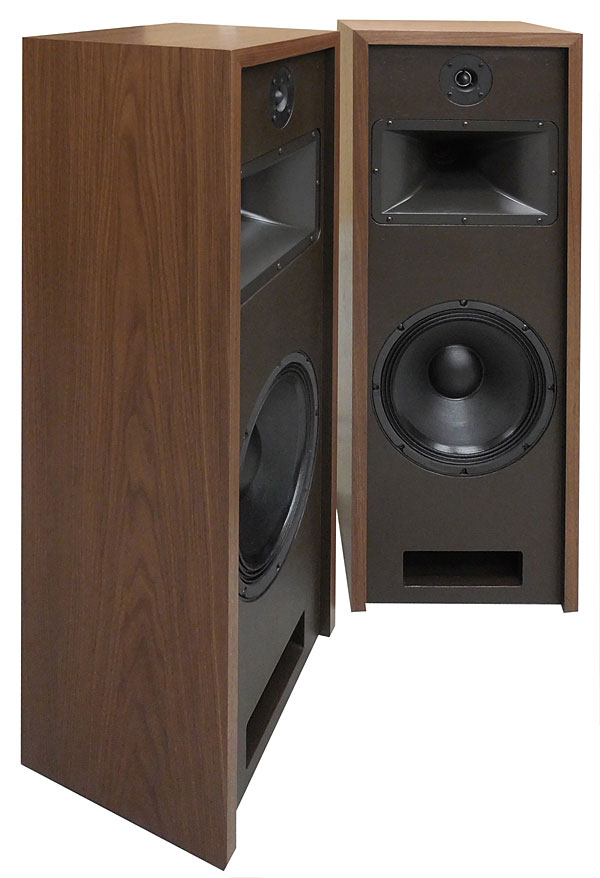 The sensitivity specification of the Zu Omen is only a few decibels lower than that of the Razz, but the Omen is built to a much smaller scale, with a smaller cabinet volume and more modestly sized driver complement, especially the bass driver. Over the course of my audition, I moved the Omens in and out of the system several times, consistently finding that even when I maintained the nearfield arrangement employed by the Razzes, the stereo image projected by the Razzes was proportionately larger, and the musicians (and groups of musicians, including whole orchestras) seemed more real than with the Zus.
The Steve Howe Album (LP, Atlantic SD19243), specifically the solo acoustic track "Meadow Rag," sounded impressive via the Omens, but the leading edges of the steel strings on his vintage Martin 00-18 guitar were more rounded and homogenous. Played through the Razzes, the Martin's strings retained their transient bite and metallic sheen. The differences between the two loudspeakers weren't as pronounced in "Surface Tension," where Howe plays a vintage, nylon-strung Kohno Spanish guitar. Here, the Omens offered a more compelling presentation than they did with the steel-string guitar, but they still couldn't match the realism the Razz loudspeakers delivered.
Conclusions
The sensitivity specification of the Zu Omen is only a few decibels lower than that of the Razz, but the Omen is built to a much smaller scale, with a smaller cabinet volume and more modestly sized driver complement, especially the bass driver. Over the course of my audition, I moved the Omens in and out of the system several times, consistently finding that even when I maintained the nearfield arrangement employed by the Razzes, the stereo image projected by the Razzes was proportionately larger, and the musicians (and groups of musicians, including whole orchestras) seemed more real than with the Zus.
The Steve Howe Album (LP, Atlantic SD19243), specifically the solo acoustic track "Meadow Rag," sounded impressive via the Omens, but the leading edges of the steel strings on his vintage Martin 00-18 guitar were more rounded and homogenous. Played through the Razzes, the Martin's strings retained their transient bite and metallic sheen. The differences between the two loudspeakers weren't as pronounced in "Surface Tension," where Howe plays a vintage, nylon-strung Kohno Spanish guitar. Here, the Omens offered a more compelling presentation than they did with the steel-string guitar, but they still couldn't match the realism the Razz loudspeakers delivered.
Conclusions
The ability of Volti Audio's Razz to portray music of any genre with scale, realism, and thrilling dynamics is unmatched by any loudspeaker I've had in my system. The Razzes demonstrate a lovely midrange liquidity, but there's no sacrifice of detail. The type of amplification—tubed or solid-state—made some difference in the Razz's sonic presentation, but the result was never less than musical. The Razz is also beautifully constructed; the level of craftsmanship and quality is remarkable for a loudspeaker at this price. If you're shopping for a serious, horn-based, high-sensitivity design in this price range, you should add the Volti Audio Razz to your short list.
Later, I moved things around a bit. I made sure I'd heard both pairs of speakers—the Razzes and the Zu Omens I was comparing them to—in both the nearfield configuration and from farther afield. Both the PrimaLuna and the Bel Canto amps interfaced marvelously with the Razzes, but there were clear differences in their presentations. With the EVO 300, in Ultralinear mode, there was extra force and midrange emphasis; this midrange boost enhanced vocals and spotlighted particular solo (midrange) instruments. This quality made the PrimaLuna my main amp for much of my listening. The Bel Canto, though, proved quite adept and more realistic and satisfying on large-scale orchestral works and rock.
The 1960s recordings made at Columbia's 30th Street New York Studio, including It's Monk's Time (16/44.1 FLAC, Columbia 63532), are among the best-sounding and most gimmick-free recordings of that or any decade, even if (like a lot of recordings from the time) they sometimes seem a little too left–right. The album's opener, "Lulu's Back in Town," begins with a rollicking, three-minute piano solo; when the remaining quartet members make their entrance—Ben Riley's drumkit at left, Charlie Rouse on sax front and center, and Butch Warren's upright bass just behind him—the stereo image spread beyond the edges of the loudspeakers. This was not entirely surprising considering how close I was sitting but far more enveloping than the Omens, even in the same configuration. More surprising perhaps was that the soundstage was more of a piece, with great center fill and not nearly as left–right as this recording sounds in my normal setup. The Razzes gave a remarkably real-sounding impression of the players and the big 30th Street Studio space.
When Ben Riley's drum solo kicked in at the six-minute mark, the scale of his kit and the way the drums pressurized the room astounded. And while Rouse's playing has been criticized—the main criticism being that he's not John Coltrane—his performance here is fluid and melodic, a perfect counterpoint to Monk's more mannered style. The PrimaLuna amp in Ultralinear mode proved the perfect foil for the Razz loudspeakers on this track.
Another album recorded at the 30th Street Studio—the orchestral parts at least—is Pink Floyd's 1979 classic, The Wall (16/44.1 FLAC, Columbia 028944). I listened to the tracks that comprise Side One on the 2-LP set; I started with the PrimaLuna amp but soon replaced it with the Bel Canto, which worked better in this large-scale music. When the drums crashed at the beginning of "In the Flesh"—I was listening very loudly—I nearly jumped out of my chair. As the first motif segued into the descent of a WWII bomber crashing into "Thin Ice," the intensity of the crescendo and sense of realism were electrifying.
The sensitivity specification of the Zu Omen is only a few decibels lower than that of the Razz, but the Omen is built to a much smaller scale, with a smaller cabinet volume and more modestly sized driver complement, especially the bass driver. Over the course of my audition, I moved the Omens in and out of the system several times, consistently finding that even when I maintained the nearfield arrangement employed by the Razzes, the stereo image projected by the Razzes was proportionately larger, and the musicians (and groups of musicians, including whole orchestras) seemed more real than with the Zus.
The ability of Volti Audio's Razz to portray music of any genre with scale, realism, and thrilling dynamics is unmatched by any loudspeaker I've had in my system. The Razzes demonstrate a lovely midrange liquidity, but there's no sacrifice of detail. The type of amplification—tubed or solid-state—made some difference in the Razz's sonic presentation, but the result was never less than musical. The Razz is also beautifully constructed; the level of craftsmanship and quality is remarkable for a loudspeaker at this price. If you're shopping for a serious, horn-based, high-sensitivity design in this price range, you should add the Volti Audio Razz to your short list.