

Gini Systems "LS3/5a" loudspeaker

The Gini Systems "LS3/5a" is an unlicensed and inexact replica of the celebrated LS3/5a outside (remote location) broadcast monitoring loudspeaker originally developed by the BBC in the early 1970s. (For a précis of the LS3/5a's history, click herehttp://www.stereophile.com/thefifthelement/690">here;.)
GoldenEar BRX (Bookshelf Reference X) loudspeaker
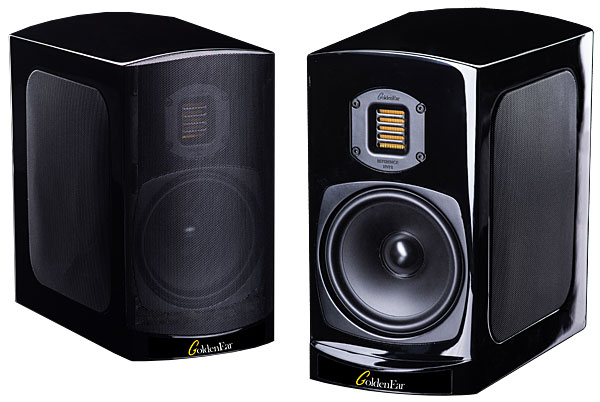
Loudspeaker manufacturer GoldenEar Technology was founded in 2010 by a team led by Sandy Gross, who over the decades was responsible for a succession of affordable high-performance loudspeakers from Polk and Definitive Technology (footnote 1). Gross continued that tradition with GoldenEar: Even the company's flagship, the Triton Reference, which I favorably reviewed in January 2018, was priced a couple of dollars short of $8500/pair. (GoldenEar was acquired by The Quest Group, the parent company of cable company AudioQuest, in January 2020; Gross continued with the brand as president emeritus.)
GoldenEar Technology Aon 2 loudspeaker

I was introduced to audiophilia by my friend Gary Gustavsen. Although I'd known Gary since I was 13, I didn't discover his passion for music until that day in high school physics lab when I blurted out an obscure line from the Doors' "The Soft Parade," and Gary bounced back immediately with the next line. It turns out I shared my friend's passions for the Doors and Frank Zappa, but not for Mahler. Before long, Gary was dragging me to every audio store in our area to listen to potential speakers for his first high-end audio system. At the beginning of each trip he'd say, "Right now I'm partial to the Rectilinear 3s." Although I heard him say that many times, I never actually got to hear a pair of Rectilinear 3s.
Harbeth BBC LS5/12A loudspeaker

In the ice-cream world, chocolate is the universal end of the line. Vanilla experiments that taste great but look foul, maple syrup flavors that are more maple than syrup, tutti-frutti that's too tutti—all are recycled as chocolate flavor, their visual sins permanently hidden from view. In the world of wood, the equivalent of chocolate ice cream is the ubiquitous "black ash" veneer. The original color and character of the wood are irrelevant: it all ends up stained black.
Harbeth HL-P3 loudspeaker

Back in the early 1970s, the BBC needed a physically unobtrusive, nearfield monitor loudspeaker for use in outside-broadcast trucks. Accordingly, they instructed their design department, which at that time featured such luminaries as Dudley Harwood (the "father" of the polypropylene cone, who went on to found Harbeth) and the late Spencer Hughes (the "father" of the Bextrene cone, who went on to found Spendor), to produce such a model. Thus, not only was what was then probably the finest collection of British speaker-design talent involved in its development, there were no commercial constraints placed on the design. The only limitations were intended to be those arising from the necessarily small enclosure and the absence of the need for a wide dynamic range under close monitoring conditions.
Harbeth M40.1 loudspeaker

The best, most enduring audio products have in their favor more than great sound: They have some sense of history as well. Particularly good examples abound from the British companies Spendor, Rogers, and Harbeth, some of whose products were actually commissioned into being by the British Broadcasting Corporation. Better that, I suppose, than existing to fill a price point.
Harbeth Monitor 30.2 40th Anniversary Edition loudspeaker

Everything sounds like what it's made of.
I'm known for saying that, and to me, it's obvious: box speakers with dome tweeters sound like box speakers with dome tweeters. I can hear their tweeters calling to me when I'm in the next room, making a phone call. I can hear their boxes hissing and groaning even after I turn off the stereo. Many a day, I think Edgar Villchur, inventor of the acoustic-suspension loudspeaker and the dome tweeter, ruined audio, and that audiophiles will never stop denying how artificially colored the sounds of domes and cones in boxes really are.
Harbeth P3ESR 40th Anniversary Edition loudspeaker

I promise not to tell you that the 40th Anniversary Edition Harbeth P3ESR loudspeaker sounds like a bigger speaker than it actually is. It does not. Likewise, I won't suggest that it offers a large portion of what Harbeth's bigger, more expensive models doI'll leave that to the happy owners on the Harbeth User Group. But can I tell you it's good value for the money? The current, non-anniversary version of the P3ESR costs $2195/pair (footnote 1), while the souped-up, tarted-up 40th Anniversary Edition goes for $2890/pairprices I think are chickenfeed, considering all the timeless virtues and musical satisfactions I have discovered in both versions.
Harbeth P3ESR loudspeaker
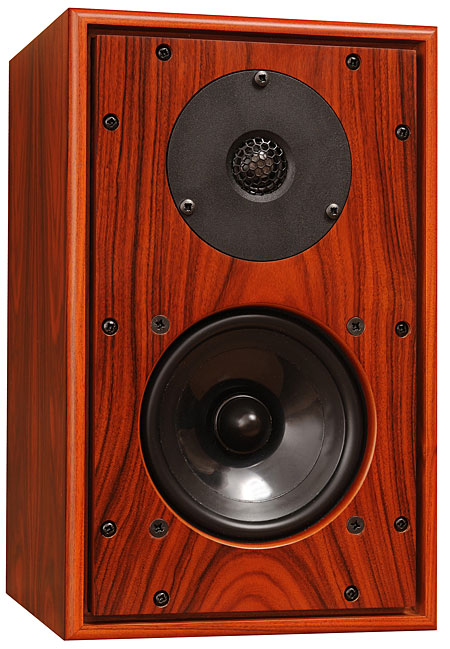
Everyone wants something different from a loudspeaker. Some people value midrange neutrality above all, while others will sacrifice some of that accuracy to get extended lows or a speaker that will play immensely loud with only a few watts of power. Some want stereo imaging that is sufficiently delicate, stable, and accurate that the speakers open a transparent window on the recording's original performing space. Some will sacrifice all of the above to get a speaker whose "jump factor" can jerk zombies out of their stupor. And there are those who are prepared to lose just a little bit of everything in order to have a speaker that may not excel in any of these areas, but communicates what they want from their music in the most effective overall manner.
Harbeth Super HL5plus loudspeaker

To some, the measure of a company has less to do with the amount of money it makes than with the honesty of the things it sells: the assurance that every product in its line is designed not as a marketing exercise but as a straightforward and presumably unique answer to a real consumer need.