

Questions of Impedance Interaction
On a number of occasions we have commented on the effects of an amplifier's output impedance on a system's performance. A high output impedance—such as is found in many tube amplifiers—will interact with the loudspeaker's impedance in a way which directly affects the combination's frequency response. The Cary">http://www.stereophile.com//amplificationreviews/740/">Cary CAD-805, for example, has a lower output impedance than most tube amplifiers, and should be less prone to such interaction. Some months back—before the CAD-805 arrived—I investigated this phenomenon in conjunction with measurements for a forthcoming review of the Melos 400 monoblock amplifier. Since the Melos 400 also had a relatively low output impedance for a tube amplifier (at 0.43 ohms at low and mid frequencies, rising to 1.2 ohms at 20kHz, from its 8 ohm tap), I took that opportunity to run some frequency-response measurements using an actual loudspeaker as the load for the amplifier.
Real-Life Measurements

As mentioned by two readers in this month's "Letters," amplifiers are used to drive loudspeakers but are almost exclusively measured into resistive loads. The reasons for this are twofold: 1) real loudspeakers both produce neighbor-annoying sound levels and tend to break when driven with typical amplifier test signals; and 2) the question as to which "standard" loudspeaker should be used is impossible to answer---at least the conventional resistive loads are consistent and repeatable.
Red Shift: Doppler distortion in loudspeakers
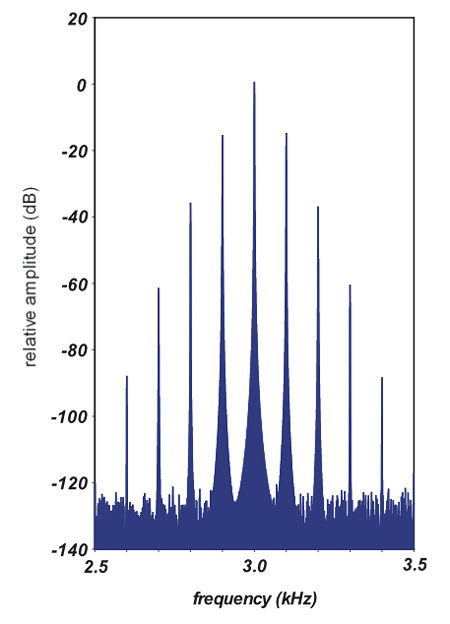
In the world of digital audio, jitter has been a focus of audiophile attention for well over a decade. It is blamed for many of the sonic ills of which CD and other digital media have been accused. But here's a puzzle: The major source of frequency intermodulation distortion in audio systems—the loudspeaker—has largely escaped such withering inquiry. Why?
Ringing False: Digital Audio's Ubiquitous Filter
 Much as I like the prospect of being able to grunt a heartfelt Je ne regrette rien immediately before expiring, I know there will be too many what-ifs and wish-I-hadn'ts to make that even remotely possible. But here is one missed opportunity that won't flash before me, because John Atkinson has granted me a second chance.
Sounds Like? An Audio Glossary
Subjective audio is the evaluation of reproduced sound quality by ear. It is based on the novel idea that, since audio equipment is made to be listened to, what it sounds like is more important than how it measures. This was a natural outgrowth of the 1950s high-fidelity "revolution," which spawned the notion that a component, and an audio system as a whole, should reproduce what is fed into it, without adding anything to it or subtracting anything from it.
Spectral X-Contamination: Problems in Op-Amp Chips

In high-end circles, the sonic repute of integrated-circuit op-amps (from "operational amplifier") is, at best, checkered. Of course, the expertise with which they are used and the parts they're used with can make all the difference. For example, my DIY preamplifier design, "AMP-02," published in Hi-Fi News & Record Review in 198990, and my earlier (198384) AMP-01 (footnote 1), I used the better IC op-amps of the time throughout. Both units were thought to outperform cost-no-object commercial units of the time that employed discrete transistors and even tubes, and only indicate what's possible.
Subjective Loudspeaker Testing
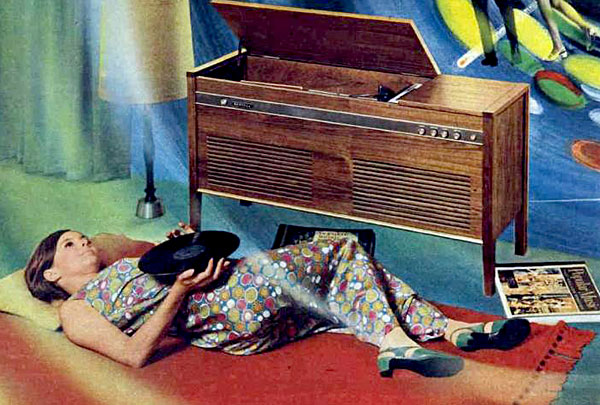
One of the most firmly-established audio platitudes is the one which says "The specs don't tell the whole story." One reason for this, of course, is the fact that most manufacturers, preferring to sell their products on the basis of emotional appeals in ads rather than on hard, cold performance claims, do not attempt to make their specs tell the whole story.
The Essex Echo 1995: Electrical Signal Propagation & Cable Theory

Editor's Note: The matter of whether—and if so, how—speaker cables and interconnects can affect the sound of an audio system has vexed the audiophile community since Jean Hiraga, Robert Fulton, and others first made us aware of the subject in the mid-1970s. Most of the arguments since then have involved a great deal of heat but not much light. Back in August 1985, Professor Malcolm Omar Hawksford Ph.D (of the UK's University of Essex and a Fellow of the Audio Engineering Society) wrote an article for the British magazine Hi-Fi News & Record Review, of which I was then Editor, in which he examined AC signal transmission from first principles. Among his conclusions was the indication that there is an optimal conductor diameter for audio-signal transmission, something that I imagined might lead to something of a conciliation between the two sides in the debate. Or at least when a skeptic proclaimed that "The Laws of Physics" don't allow for cables to affect audio performance, it could be gently pointed out to him or her that "The Laws of Physics" predict exactly the opposite.
The Fifth Element #10
The fundamental object of the invention is to provide...the listener a realistic impression that the intelligence is being communicated to him over two acoustic paths in the same manner as he experiences in listening to everyday acoustic intercourse....—Blumlein, et al, British Patent #394,325, issued June 14, 1933
The Jitter Game
"How sour sweet music is
When time is broke and no proportion kept!"
When time is broke and no proportion kept!"