

It's a Vinyl World After All
It's a Vinyl World, After All: Michael Fremer's Guide to Record Cleaning, Storage, Handling, Collecting, & Manufacturing in the 21st Century
MF Productions mxangle3 (DVD). 2008. Michael Fremer, prod.; Joe Shelesky, Andre Kruger, Jeff Wilerth, dirs.; Joe Shelesky, editor. $30; available from Stereophile's secure">http://ssl.blueearth.net/primedia/home.php">secure e-commerce page.
MF Productions mxangle3 (DVD). 2008. Michael Fremer, prod.; Joe Shelesky, Andre Kruger, Jeff Wilerth, dirs.; Joe Shelesky, editor. $30; available from Stereophile's secure">http://ssl.blueearth.net/primedia/home.php">secure e-commerce page.
A Future Without Feedback?
Over the years as a reviewer, I have tracked the swings of opinion and popularity of various audio ideas and technologies. Amid a sea of advanced designs that achieve powerful technical performance and laudable specifications, I'm reminded of a major blind listening test of 18 power amplifiers that I set up for the long-since-defunct UK magazine Hi-Fi for Pleasure back in 1975. We had "advanced technology" then: the transistor amplifier had matured and was well accepted by audiophiles. Prices of the review samples ranged from $300 to $3000 (equivalent to $1000-$10,000 in today's dollars). The auditioning sessions were graced by the presence of many industry leaders, among them the late Spencer Hughes of Spendor, Julian Vereker of Naim, Philip Swift then of Audiolab, Alan Harris then of retailer Audio T., Bob Stuart of Meridian, and John Wright of IMF (now TDL in the UK).
Absolute Phase: Fact or Fallacy?

Natural sounds produce different waveshapes during their positive and negative phases, and playback-system polarity reversal often changes the reproduced sound. Does this mean our ears are phase-responsive, or is there something else here we've been overlooking?
There has been much discussion recently among perfectionists about the importance of what is called "absolute phase" in sound reproduction. Basically, the contention has been that, since many musical sounds are asymmetrical (having different waveforms during positive and negative phases), it is important that a system make the proper distinctions between positive (compression) and negative (rarefaction) phases in playback.
Analog vs Digital: Home-Brew Science at the Edge of the Art

Publisher's note: The following article, from the early days of Compact Disc, is presented with no claim for absoluteness. (In fact, just as we go to press in the spring of 1986, we received a manuscript from Philip Greenspun, Product Review Editor of Computer Music Journal (Cambridge, MA), who had precisely the opposite result when comparing CD to analog versions of the same recording, though it was unclear that his test procedures were as thorough as in the tests by these authors.) The tests described are neither single- nor double-blind, and the author's decision to forego conversation while listening to the same products does not by any means guarantee lack of mutual influenceespecially because their musical tastes are so well known to each other. Moreover, repeating the test with different phono equipment, a different CD player, and a different replica of the master tape would likely yield somewhat different results.
Nevertheless, I think the basic conclusion is sound: good CD reproduction is remarkably close to a fairly good version of master tape sound; there's a good chance that it's more accurate than what you'll get from the average cartridge, tonearm, and turntable.
Anti-Node: Active Room-Acoustics Correction

Recently, I assessed four disparate room-correction systems based on digital signal processing (DSP): Copland DRC205, Lyngdorf Audio RoomPerfect, Velodyne">http://www.stereophile.com/musicintheround/1105mitr">Velodyne SMS-1, and Meridian">http://www.stereophile.com/musicintheround/706mitr">Meridian DRC. I concluded that Meridian's approach—which applies IIR (Infinite Impulse Response) "anti-resonance" filters to suppress room resonant modes, if only partially—was, in many respects, the best. What I particularly like about Meridian DRC is that, unlike the Copland and Lyngdorf processors, its approach to system tonal balance is largely hands-off. Yes, it lightens up the extreme bass a little, as you'd expect, but it doesn't recast the system balance in any way that might prove undesirable. If you like your system's tonal character as it is, Meridian DRC behaves just as you'd want a room-correction system to behave: it quells room resonance effects while leaving the system's essential sound well alone.
Arc Angles: Optimizing Tonearm Geometry

As Chester Rice, co-inventor of the moving-coil loudspeaker, once ruefully observed: "The ancients have stolen our inventions." So often, what is painted as new and innovative turns out to be something someone thought of long before. We have a habit of forgetting, and that applies not only to inventions, but to knowledge of other kinds as well.
Audio Basics: A Is For Ampere
In the real world, "knowledge is power" means that if I know more about something than you do, I am better able than you to control it or use it to my own advantage. This is no less true in high-end audio, where a gut-level understanding of how a component works can free its owner from the constraints and frequent inaccuracies of instruction manuals, folklore, advertisements, and the nugatory, nullifidian nonsense in the mainstream audio press assuring you that most of what you know damn well you are hearing is really only a figment of your imagination.
Bad Vibes!
A thorough exploration in a magazine article of such a pervasive and complex topic as vibration control in audio systems is next to impossible; vibration and sound are so intimately bonded that it would be very easy to extend this discussion to just about any area of interest in audio. My intention here is simply to lay a foundation for understanding the basic mechanical forces affecting our quest for improved sonic fidelity, and in the process provide the tools for anyone to achieve good, practical vibration control in his or her system.
Basso Profundo

Bass constitutes one of the least understood aspects of sound reproduction. Opinions vary greatly on matters of bass quality, quantity, and perceived frequency range or response. Moreover, the bass region is subject to the most unwanted variation in practical situations due to the great influence listening-room acoustics have on loudspeaker performance. Every room has its different bass characteristic, and changes in the position of speakers or listener also constitute major variables at low frequencies.
Blind Listening at Harman International
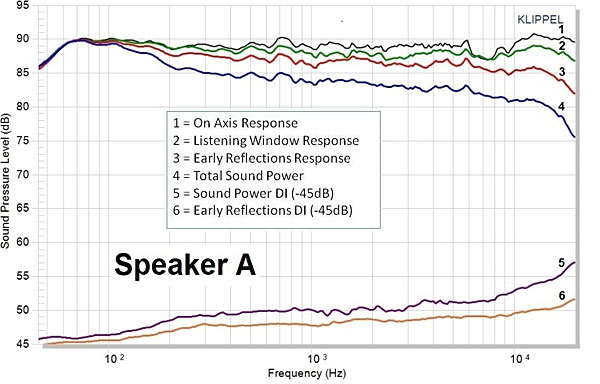
Revel began demonstrating prototypes of the Performa F228Be, reviewed elsewhere in this issue, at the Consumer Electronics Show and other audio events in 2015, though they had yet to settle on the model name. The most salient feature that distinguished the F228Be-to-be from the established Performa3 F208 was the new beryllium tweeter, and while it sounded more than okay under show conditions, I always heard a bit of brightness and harshness. I knew it was still a work in progress, but I wasn't very eager to want to take it home.