

Concert Halls: A View From The Stage
When I decided to write a piece on the subject of concert-hall acoustics, I realized that almost all discussion concerning this topic is based on the viewpoint of the listener in the audience. While this is important (since the primary purpose of any hall is to bring audience and performance together), the criteria that musicians employ in concert-hall evaluation address sonic parameters that are probably not obvious to the casual listener, and may often be at odds with conclusions reached from the other side of the footlights. Some readers might feel that any discussion of concert halls has no place in a publication such as Stereophile; they may have a point, especially if their sole aim through audio is to produce sonic spectacle, rather than to recreate an artistic event. I believe, however, that there are some readers who would like to gain some insights into the specific problems and acoustical considerations presented to performing musicians, and possibly come away with some fresh ideas to incorporate in their listening criteria.
Copying and Sharing Recorded Music (The Dos and Don'ts of Copyright Law)
The introduction in 1982 of the compact disc ushered in the age of digital audio. Audiophiles now have lots of new digital toys and technologies at their disposal, including SACD, DVD-Audio, MP3 players, hard-drive–based CD players, and digital equalization and room correction, to name a few. Videophiles have similarly benefited from digital technology, with an armamentarium that includes high-definition television, DVD-Video, Blu-ray, HD DVD (the latter two still on the horizon), DLP, LCoS, and D-ILA, among others. Action-based films have also benefited from breathtaking, digitally enhanced special effects. Even those of us who still prefer LPs must acknowledge—reluctantly, perhaps—the incredible impact that digital has had on our hobby (footnote 1).
Cutting Corners
If anyone ever thinks to compile a list of the 100 seminal audio papers that should be found in every tech-aware audiophile's filing cabinet, Harry Olson's "Direct Radiator Loudspeaker Enclosures" deserves to feature in it. Originally presented at the second Audio Engineering Society Convention, in October 1950, it was published in Audio Engineering in 1951. In 1969—in a rare and certain acknowledgement of its classic status—the AES republished it in its Journal (footnote 1).
Digital Recordings Audio-CD
I had been with Stereophile only six months and feared my tenure was over—I thought I was losing my hearing. There was pain, ringing, and stuffiness. I couldn't listen to anything.
DTS & Data Compression
In the October 1994 Stereophile (Vol.17 No.10, p.39), I discussed my experiences with the DTS audio data-reduction code/decode switch box, which, briefly, is a two-channel box that makes use of the algorithm DTS has proposed for their version of discrete multichannel sound for laserdiscs.
Enough Room?
Room acoustics, and their importance, may not be subjects which we ponder daily here at Stereophile, but they are never far from our consciousness. Two recent events served to spotlight them yet again: the setting-up of our first-ever panel listening test of moderately priced loudspeakers (Vol.14 No.7), and a letter from a reader requesting advice on room problems. Both reminded us---if a reminder was needed---that although the perfect room does not exist, there are things that can be done to make the most of even an admittedly difficult situation. That reader's letter, in particular, brought home the fact that we cannot really discuss this subject too often. It's easy to forget that comments made here months (or years) ago are beyond the experience of newer readers. A new audiophile's most frequent mistake is to overlook the significance of his or her listening room, while the experienced listener will too often take the room for granted.
Euphonic Distortion: Naughty but Nice?
In 1977, just as I was about to take my first faltering steps in hi-fi journalism, the UK's Hi-Fi News ran two articles, translated from French originals by Jean Hiraga, that seemed to me and many others to turn the audio world we knew upside down. The second of them, "Can We Hear Connecting Wires?" was published in the August issue and is the better remembered because it introduced many English-speaking audiophiles to the contention that cables can sound different. The earlier article, published in the March issue, was less earthshaking but still an eyebrow-raiser of considerable force. Simply titled "Amplifier Musicality," it was a response to the word musicality being increasingly used in subjectivist circles to describe the perceived performance of amplifiers and other audio components. It was implicit that musicality was a quality not captured by conventional measurement procedures—a lack of correlation that Hiraga's article sought to address.
Getting the Best from Your Loudspeakers

Because loudspeakers interact with the acoustics of the room in which they are used, optimizing their positions within that room pays major dividends. Inexpensive speakers, optimally set up, may well outperform more expensive models just plonked down willy-nilly.
Harmonic Convergence: the Effect of Component Tweaking
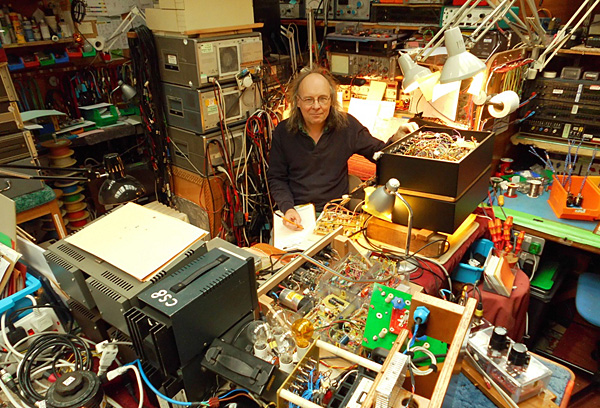
Power amplifiers fascinate me. In the past 15 years I've helped design and build over a dozen advanced models, with output powers ranging from 50 to 2500W, for a number of the UK's professional equipment manufacturers. To learn from others' ideas and mistakes, I've also repaired, measured, used, and reviewed hundreds of makes of amplifier. My experiences have led me to regard the power amplifier as one of the messiest, most imperfect pieces of electronic equipment in the record/replay path.
Heavy Load: How Loudspeakers Torture Amplifiers

Why, in loudspeaker reviews, is impedance measured (assuming that the magazine in question bothers to measure anything)? Generally, for one principal reason only: to establish whether the speaker presents an "easy" or a "difficult" load to its partnering amplifier. In the design context, much more information can be extracted from a graph of speaker impedance vs frequency—such as details of the bass alignment, and indications of internal or structural resonances that can be difficult to identify by acoustical measurements. But for a magazine audience, the principal interest in a loudspeaker's load impedance lies in gaining some indication of its compatibility with a given amplifier.