

Holiday Reading
I recently scoured my shelves and came up with the following list of must-read books for stereophiles, all of which are in print and should be available from specialist bookshops or from the suppliers mentioned in the text. Books marked with an asterisk (*), though too technical for the general reader, will be found rewarding by those who have a good grasp of mathematics and who want to delve deep. Reading the books in the first "general" section of the list will enable readers to understand just about everything that appears in Stereophile, but all the books listed contain between their covers untold treasures.
Hot Stuff: Loudspeaker Voice-Coil Temperatures
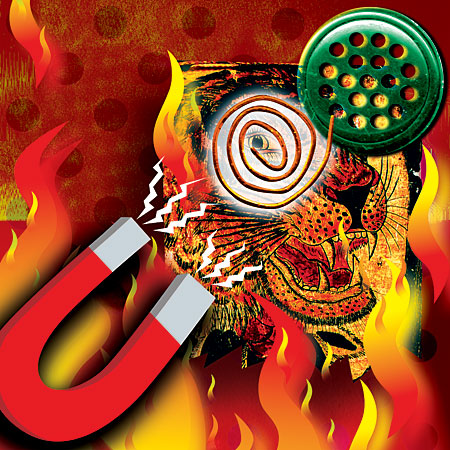
As Hans Christian Oersted, the Danish physicist and founder of electrodynamics, discovered in 1819, an electric current passed through a wire generates a magnetic field. Place that wire close to a permanent magnet and the interaction of the two fields will generate a force. That, in two sentences, summarizes the operating principle of the motor that energizes every moving-coil drive-unit in millions of loudspeakers worldwide. It sounds simple, but—like everything in audio—it isn't.
In Search Of The Audio Abode---The Hi-fi House
When sociologists tell us America is a highly mobile society, they don't just mean we do lot of driving. What they mean is, we do a lot of moving. The good old three-generation family homestead, immortalized in nostalgia TV and literature, is a thing of the past. According to census information, almost 20% of America's population changes its address every year. Of course, it's usually a different 20% every year, but pulling up roots and moving---to a bigger house, a better neighborhood or a nicer city, not to mention a place where your employer decides to transfer you---is almost as commonplace across the US of A as marriage, divorce, and unbridled greed.
JA on Loudspeaker Measurements
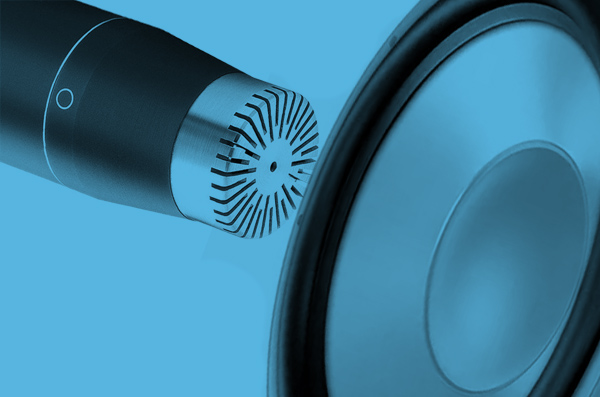
Author's Note: Although I started accompanying Stereophile's loudspeaker reviews with measurements soon after I joined the magazine in 1986, it wasn't until 1989, when we acquired an Audio Precision System One electronics analyzer and the then-new MLSSA speaker measurement system from DRA Labs, that I developed the standardized data presentation that is still featured in our reviews more than three decades later. In this article from October 1991, I summarize the results from the first two years of using MLSSA to test 69 loudspeakers.John Atkinson
Jitter & the Digital Interface
Until recently, all problems in digital audio systems were blamed on either the analog/digital converters (ADCs) used in mastering or the digital/analog converters (DACs) needed for playback (footnote 1). As the performance of both ADCs and DACs improved, however, a previously unrecognized mechanism for distortion was unmasked: jitter. As we shall see, jitter—or, more correctly, word-clock jitter—can be a significant limitation in the technical and sonic performance of digital audio systems (footnote 2).
Jitter, Bits, & Sound Quality
Jitter is not what digital sound quality induces in the listener; rather it is the instability in the clock signal that controls exactly when the analog waveform is sampled in the original A/D conversion, or when the digital word input into a DAC results in an analog voltage being produced at the chip's output. "So what?" is the response of digital advocates, "As long as a digital one is recognized as a one and a digital zero as a zero, then how can there be any difference in sound?" goes their argument, normally culminating in a fervently expressed "Bits is bits!"
Lossy Compression: the Sonic Dangers
Editor's Introduction: In 2013, lossy compression is everywherewithout lossy codecs like MP3, Dolby Digital, DTS, A2DP, AAC, apt-X, and Ogg Vorbis, there would be no Web audio services like Spotify or Pandora, no multichannel soundtracks on DVD, no Bluetooth audio, no DAB and HDradio, no Sirius/XM, and no iTunes, to quote the commercial successes and no Napster, MiniDisc, or DCC, to quote the failures. Despite their potential for damage to the music, the convenience and sometimes drastic reduction in audio file size have made lossy codecs ubiquitous in the 21st century. Stereophile covered the development of lossy compression; following is an article from more than two decades ago warning of the sonic dangers.Editor
Loudspeaker Specifications: What Matters?
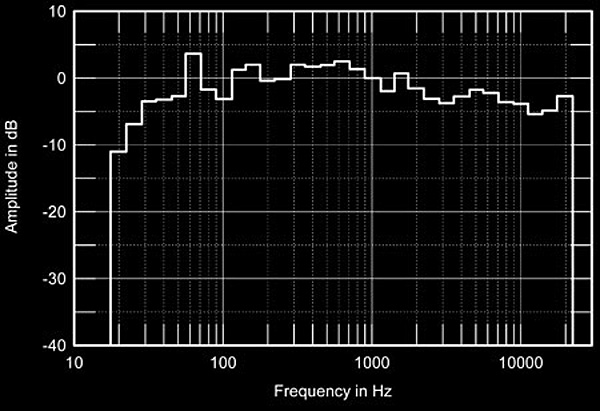
In a recent answer to a reader's letter, I somewhat bluntly stated that Stereophile's reviewers use "hi-fi" adjectives to describe loudspeaker sound because even good loudspeakers are too far removed from sounding "real" to be compared directly with live music. Upon reflection, this may have sounded too dismissive, so I will elaborate a little in this short essay.
Measuring With MLSSA
Wouldn't you just know it. As soon as I decide on a formal regime of measurements to accompany Stereophile's loudspeaker reviews—see Vol.12 No.10, October 1989, p.166—along comes some hot new technology that changes everything. Robert Harley reported in last month's "Industry Update" column how impressed he and I were with the new MLSSA measurement system from DRA Laboratories.
MQA Contextualized

When you come to a fork in the road, take it.Yogi Berra
Over one busy week in 1986, Karlheinz Brandenburg laid the foundation of a technology that a few years later would upend the record business. Brandenburg, a PhD student in electrical engineering at the Friedrich-Alexander University Erlangen-Nuremberg, was figuring out how to code digital music efficiently enough that it could be delivered over digital telephone lines. A patent examiner had concluded that what the application proposed was impossible, so over a week of late nights, Brandenburg produced the proof of concept and more. It was another decade before the technologyMPEG-2 level III, more commonly known as MP3would find its true home, the Internet.