

Copy Rites: Stereophile and the Web
"The idea that intellectual property in a Net-based economy can lose its value horrifies most owners and creators. They'd better get over it."—Esther Dyson, "Intellectual Value" Wired, July 1995, p.136
Copycode & the Future of DAT
Now that Sony has bought CBS's records division, and the infamous Copycode bill seems to be dying in Congress, the way may be clearing at last for the US introduction of the new Digital Audio Tape system. This has sparked renewed speculation in the industry about the impact DAT will have on existing formats, particularly the fledgling CD. Some are convinced DAT will kill CD, because of its ability to record as well as play digital recordings. Others believe DAT won't even gain a foothold in the market, for the same reason quadraphonic sound laid an egg back in the '70s: The public can't handle more than one "standard" format. I feel that both views are wrong, and that—as is usually the case with extreme views—the truth lies in between. I believe DAT will catch on in the marketplace, but never in a big way, and certainly not the way CD has. Here's why.
Copycode: Diminishing DAT
How can you tell when a politician is lying? His lips move. How can you tell when a recording system is perfect? CBS tries to outlaw it.
Cotton Balls & Delicate Precision Instruments
My topic today is not the hardware that we use to reproduce sound, but the delicate precision instruments we use to detect it: our ears. Our enjoyment of musical sound is important enough to justify spending thousands of dollars on recordings, electronics, loudspeakers, and concert tickets. What is it worth to preserve your hearing so that you can continue enjoying great sound 10 or 20 years from now? I've been conducting an experiment for the last 30 years, at a cost of less than a penny a day. It began when I was 17.
Credibility Gap

To audiophiles who are aware that their household line voltage changes under varying loads, and have observed the absolutely fantastic differences in the sound of their system when the next-door neighbor turns on Junior's night light, it may come as a surprise to learn that there are folks out there who think you're full of crap. That's right, Virginia, they don't think you can really hear all those things you pretend to hear. (You are only pretending, aren't you?) They can't hear all those things, so how can you? Well, sometimes they can. They'll even admit that. But those tiny little differences are so trivial that they don't matter no more than a fruitfly's fart. That's the word in scientific circles these days. Or haven't you been following the "establishment" audio press lately?
Current Events
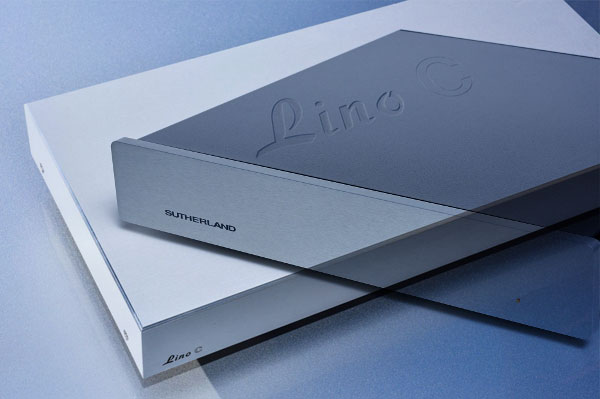
My first exposure to current-mode phono preamplification was maybe a dozen years ago, when such products were new. The one I received, though nicely packaged, was not ready for prime time. I never smelled smoke, but I never heard sound, either: If it wasn't DOA, it was at a minimum DSAADead Soon After Arrival.
Data Density Eats Tweaks for Breakfast
Otto von Bismarck (1815–1898), the Prime Minister of Prussia who brought about the unification of Germany, was not a nice man. But he was no dummy, either. One of his most prophetic remarks was in response to a journalist's question about what Bismarck thought to be the single most decisive factor in modern history: "The fact that the North Americans speak English."
Deeper Meanings
As a card-carrying member of the Audio Engineering Society and an avid audiophile, I was particularly disturbed by the ideas expressed at the 1990 AES Conference entitled "The Sound of Audio." (A report on the papers presented appears in this month's "Industry Update" column.) The tone of the three-day session in May was set during the Conference Chairman's opening remarks. He said that an AES conference on the sound of audio was "unusual" and "out of the mainstream." Further, he expressed a common underlying attitude among the AES that "audiophile claims" (of musical differences between components) have been "nagging us" and are "an annoyance."
Despite What You've Heard, Jazz Lives
On this page in the May 2011 issue of Stereophile, Steve Guttenberg became the latest in a long line of prophets of doom who periodically announce that jazz is deceased. Guttenberg argued that "Digital audio mortally wounded recorded music's creative mojo in 1982" and was "stifling creativity in rock and jazz."
I bring glad tidings to Stereophile readers. When it comes to jazz, Guttenberg is dead wrong. The jazz art form today is rich, diverse, deep, and international.
Different Strokes
In last month's "As We See It," I examined how I decide upon ratings in Stereophile's biannual "Recommended Components" listing. This leads me to talk about who writes our equipment reports. Stereophile currently has a team of 16 active reviewers. The core are professional: J. Gordon Holt, Robert Harley, Thomas J. Norton, Corey Greenberg, and Martin Colloms. The others—Sam Tellig, Jack English, Robert Deutsch, Don Scott, Jonathan Scull, Larry Greenhill, Dick Olsher, Guy Lemcoe, Lewis Lipnick, and Steven Stone—may be enthusiastic amateurs, but they are amateurs only in the sense that they don't earn their livings from writing. I'm the team's catcher, both calling the game and keeping the stray balls from getting away. Why, then, is it this cast of characters (footnote 1) who gets to cast judgments in stone in my magazine?