

Commonsense System Strategies
There's an old Russian folktale about a farmer who goes to a fair. He buys a bread roll from a vendor. He eats it, but he's still hungry. So he buys and eats another roll, and then another. Still hungry. Next, he buys a donut from a different vendor. At last, he's no longer hungry. The farmer then says to himself, "I wasted the money I spent on the rolls—I should have just bought the donut first!"
Communication Breakdown

Classical and jazz notwithstanding, an awful lot of new music is highly compressed, processed, and harsh, and it's about time we got used to it. Musicians, producers, and engineers are, in large part, on board with the sound, and any suggestion of making less-compressed recordings, with a wider dynamic range, is met with confused stares, or worse. One superstar producer didn't take kindly to my suggestion that he make two mixes for his new project: the standard compressed one, and another, less-crushed version. That didn't fly; he said there could be only one, the mix approved by him and the band, and that to them, a less-compressed mix wouldn't sound better. This producer is an audiophile, but he's not the least bit interested in making music for audiophiles. Harshness, it seems, isn't just a byproduct of compression; it's an integral part of the sound of today's music.
Communities
I was having breakfast in my hotel room on December 13, 2008, finally getting down to preparing the presentation I was to give at the Los Angeles and Orange County Audio Society scant hours later (footnote 1). I procrastinated a little more by checking my e-mail one more time. The message from Ivor Humphreys, once my deputy editor at the UK's Hi-Fi News & Record Review magazine (now just plain Hi-Fi News), and for many years technical editor at Gramophone magazine, was typically terse: "John Crabbe has died. He had a fall on the wintry ice a few days ago and broke an arm. He died at home yesterday. He was 79."
Complicated
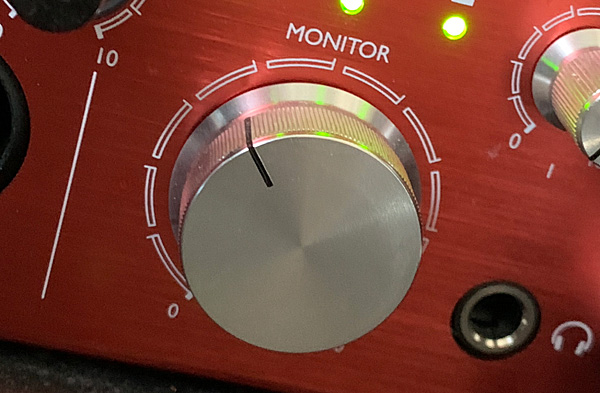
Even though I'm the editor of Stereophile, I sometimes struggle to get my audio system to play. It's a little bit embarrassing. Just last night, I put on a record and there was no sound. I figured out the problem immediately: I'd forgotten to turn on the amplifiers. But the reason isn't always so obvious.
Complicated Stories
In my As We See It column in the January 2021 Stereophile, I wrote about stories we tell ourselves to make our lives and music betterpersonal stories like the one about my relationship to my Thorens TD-124 turntable, or about hanging out with your dad (or mom) listening to records. Also hi-fi stories like the ones about the types of audio components we preferanalog, digital, tubed, solid stateand how they sound. "Stories deepen our relationships," I wrote, "including our relationships with our audio systems and the music they make."
Components, Unite!
Ever since Stereophile took up the cudgels for subjectivity, and had the temerity to insist that even the best products have certain colorations, we have stressed compatibility in choosing components. By compatibility we do not mean merely matching impedances and signal levels, but mating components whose sonic peculiarities tended to offset one another.
Confounding the Circle of Confusion
In last month's As We See It, I offered some reminiscences of my almost half-century of being involved in audio magazine publishing, as well as some thoughts on the Law of Diminishing Returns as it applied to the prices of hi-fi products. As I was compiling this issue's Records 2 Live 4, it struck me that my interest not just in audio but in recording live music started 10 years earlier, when my parents bought me a mono Grundig tape recorder for my birthday. I first used the Grundig to record the high school rock group in which I played bass guitar, then replaced it with a stereo Sony tape recorder as my opportunities to make live recordings expanded.
Although I excelled in the sciences at school and university, music was my first love. I played in bands, first semiprofessionally, then professionally, and I ended up in the mid-1970s as the house bass guitarist at a recording studio in Cornwall, England. Working at that studio with producer Tony Cox and legendary engineer Jerry Boys, I became familiar with the studio environment and how recordings are created.
Conspicuous Consumption?

"At what price does a high-end product cease to exist for the 'normal' audiophile?" This question, which I asked in the February 2017 issue, was a follow-up to one I'd asked in our April 2011 issue: "If all someone is offered is a $150,000 pair of speakers . . . that person will walk away from this hobby, or build his or her system by buying only used equipment. Either consumer choice turns the price spiral into a death spiral for manufacturers."
Conventional Wisdoms & Recommended Components
Conventional wisdom has it that the perfect sculpture is present, but hidden within the raw material. And the same conventional wisdom similarly applies to magazine editing: all it needs is careful chipping away at the extraneous material in the raw text files we receive from our authors—sometimes the barest degree of reshaping, repointing, and restructuring—and you have a finished product that both maximally communicates the writer's message and makes the anonymous artisan-editor proud of a job well done.
Convergence...not just for breakfast!
Not too long ago, the word "convergence" had everyone in the High End ready to duck'n'cover. Asia was on the ropes, and a shakeout was thinning the ranks of high-end audio manufacturers. Some US companies were marketing and selling most of their output to the Pacific Rim. The writing was on the wall: High-end was dead, and we'd all just better get used to listening to music on our computers.