

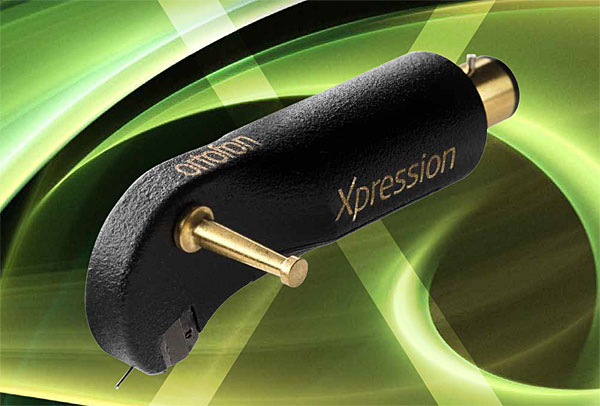
Ortofon Xpression pickup head
I listen to music in all formats, but my most ecstatic home listening experiences have always involved vinyl. It's probably something to do with the fact that, like most people my age and older, I grew up listening to LPsin my case, played on a Technics SL-210 turntable, and through an Aiwa receiver with beautiful green tuner lights and a pair of early Polk Audio studio monitors. I'm drawn, surely, to an improved version of the sound I heard back then. It's a powerful sentimental connection.
Rega Apheta MC phono cartridge

I see a pattern taking shape: Roy Gandy's Rega Research offered their first CD player in 1996, which was 13 years after the medium was introduced to the public. Now, in 2006, some 50 years after Joe Grado designed and sold the first moving-coil phono cartridges, Rega has released one of those. The year 2016 may see the first Rega fluoroscope, or perhaps wire recorder. And it'll be a good one, I'm sure.
Robert Deutsch Upgrades His Record Player
For some time now, I've been thinking that my record player was due for an upgrade. My Linn LP12 turntable and Ittok LVII tonearm are about 25 years old, and my AudioQuest AQ7000nsx cartridge is going on 15. During that time, my listening has become increasingly dominated by CDs, but I am not yet ready to give up on LPs. Updating my LP12for which I have Linn's Lingo power supply but no other upgradeswould involve installing the Keel subchassis, for $3250for which price I could get another maker's new, current-design turntable and still have the LP12 to sell. The Linn Ittok can't be upgraded, and its replacement, the Ekos SE, costs $4950out of my range. AudioQuest no longer makes cartridges. Examining my AQ7000nsx's stylus under a microscope showed no visible wear, and there was no obvious audible problem that could be traced to the cartridge's suspension, but age must be having some sort of effect. Taking all these factors into account, I decided to replace my entire phono front end.
Shure V15-III phono cartridge

The Shure V15-III is the latest of Shure's top-of-the-line "Super-track" pickups, earlier versions of which we scorned because of their dished-down response in the 6kHz range and their consequent "dead" sound. (We were unimpressed with Shure's suggestion that the pickup cable capacitance be increased to a total of around 300pF, since few audiophiles are equipped to measure either cable capacitance or frequency response).
Shure M75E phono cartridge
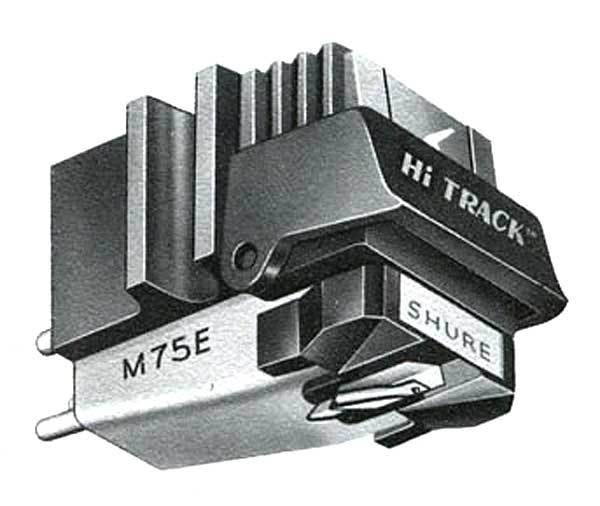
This is one of Shure's new generation of pickups with "trackability" that grew out of research on the Type II V-15 pickup.
At first glance, the V-15-II and the M75E are physically identical. They're the same size, the same shape, and almost the same weight (the M75E weighs 0.8 grams less); and both of them have the same neat little hinged cover that flips down to protect the stylus when the pickup's not in use.
Shure V15 V-MR phono cartridge

I was all set to give up on moving magnets until the new Shure VI5-VMR (MR stands for Micro-Ridge stylus) arrived. In a word, it's terrific. I was slightly disappointed with the original V15-V: I just didn't think it was a significant improvement over the Type IV. What I missed was fine detailespecially in the high frequencies and during heavily modulated passages. The original V was not quite up to the sound of certain moving coils. Which is not to say the original V was a bad buy: moving coils cost twice the price and you need a stepup. I could recommend the original V without hesitation.
Shure V15-IV phono cartridge

The Shure Brothers have been making magnetic cartridges since the early 1950s (they had been exclusively microphone manufacturers prior to then), and their continuing R&D program has resulted in new, improved models every few years rather than every 6 months (as seems to be the rule these days). As a result, Shure has the appearance, to most audiophiles, of a stodgy, plodding, rather "establishment" manufacturer that can be trusted to make a solid, reliable product but nothing brilliantly innovative orfor that matternothing remarkably good either.
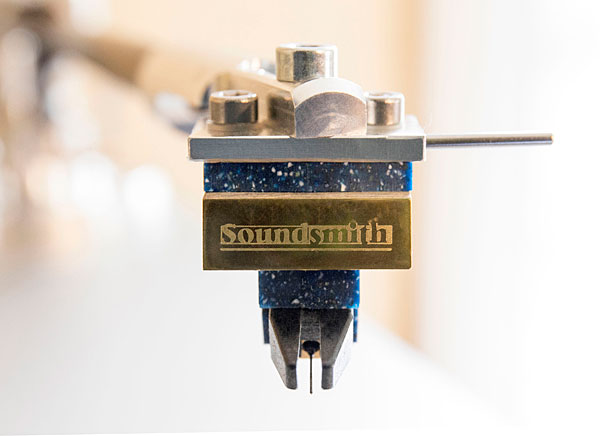
Soundsmith SMMC1 moving-iron phono cartridge

The audio industry may have lost a legend and a prolific innovator in Henry">http://www.stereophile.com/news/11260">Henry Kloss a few years back, but it still has another affable, creative eccentric in Peter">http://blog.stereophile.com/ces2008/011008smith/">Peter Ledermann. In the mid-1970s, Ledermann was director of engineering at Bozakhttp://www.stereophile.com/historical/1005bozak">Bozak;, where, with Rudy Bozak, he helped develop a miniature bookshelf speaker and a miniature powered subwoofer. Before that, Ledermann was a design engineer at RAM Audio Systems, working with Richard Majestic on the designs of everything from high-power, minimal-feedback power amplifiers and preamplifiers to phono cartridge systems. He was also an award-winning senior research engineer at IBM, and the primary inventor of 11 IBM patents.
Soundsmith Strain Gauge SG-200 phono cartridge system
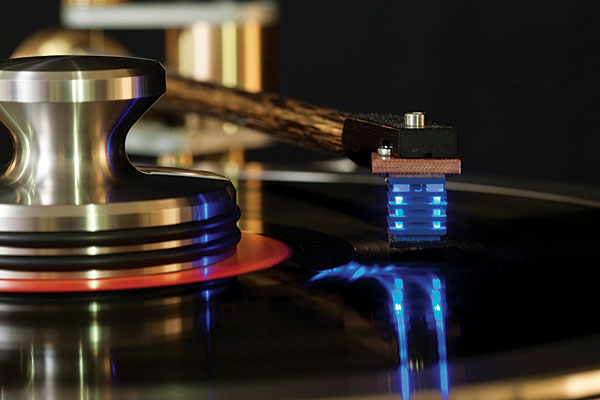
Strain-gauge phono cartridges are rarely made and seldom heard; for most vinyl fans, they are more myth than fact. Panasonic once made one, as did Sao Win, but those were decades ago. I've heard about those two models for years but have never seen, much less heard one.
As if he's not got enough to do building his extensive lines of moving-iron cartridges, preamplifiers, amplifiers, and speakers, Soundsmith's Peter Ledermann also makes a full line of strain-gauge cartridge systems available with a choice of six user-replaceable stylus profiles. I believe the Soundsmith is the only strain-gauge cartridge currently made anywhere in the world. Ledermann says it takes him a full day to build one.
Stanton 681EE & 681A phono cartridges

Superb tracking ability, very good imaging and extremely smooth frequency response, plus unusual freedom from mounting problems make this one of the best pickups available and, quite possibly, the best all-around performer we have encountered.