Reference

Sort By: Post DateTitle Publish Date

Noise, Modulation, & Digital/Analog Conversion

At the February 1991 Audio Engineering Society Convention in Paris, Audio Precision's Dr. Richard Cabot (see my">http://www.stereophile.com/interviews/850">my interview in January 1991, Vol.14 No.1) proposed a new technique for measuring noise modulation in D/A converters (footnote 1). The method, based on psychoacoustic principles, attempts to predict the audible performance of D/A converters. Now that Stereophile has added digital-domain signal generation and analysis to our Audio Precision System One, we can employ Dr. Cabot's technique and see if there are any correlations with subjective performance.

Harmonic Convergence: the Effect of Component Tweaking

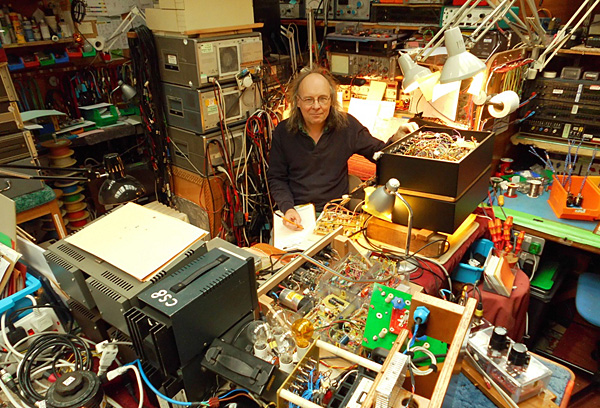
Power amplifiers fascinate me. In the past 15 years I've helped design and build over a dozen advanced models, with output powers ranging from 50 to 2500W, for a number of the UK's professional equipment manufacturers. To learn from others' ideas and mistakes, I've also repaired, measured, used, and reviewed hundreds of makes of amplifier. My experiences have led me to regard the power amplifier as one of the messiest, most imperfect pieces of electronic equipment in the record/replay path.

Basso Profundo

Bass constitutes one of the least understood aspects of sound reproduction. Opinions vary greatly on matters of bass quality, quantity, and perceived frequency range or response. Moreover, the bass region is subject to the most unwanted variation in practical situations due to the great influence listening-room acoustics have on loudspeaker performance. Every room has its different bass characteristic, and changes in the position of speakers or listener also constitute major variables at low frequencies.


Lossy Compression: the Sonic Dangers

Editor's Introduction: In 2013, lossy compression is everywhere—without lossy codecs like MP3, Dolby Digital, DTS, A2DP, AAC, apt-X, and Ogg Vorbis, there would be no Web audio services like Spotify or Pandora, no multichannel soundtracks on DVD, no Bluetooth audio, no DAB and HDradio, no Sirius/XM, and no iTunes, to quote the commercial successes and no Napster, MiniDisc, or DCC, to quote the failures. Despite their potential for damage to the music, the convenience and sometimes drastic reduction in audio file size have made lossy codecs ubiquitous in the 21st century. Stereophile covered the development of lossy compression; following is an article from more than two decades ago warning of the sonic dangers.—Editor

Enough Room?

Room acoustics, and their importance, may not be subjects which we ponder daily here at Stereophile, but they are never far from our consciousness. Two recent events served to spotlight them yet again: the setting-up of our first-ever panel listening test of moderately priced loudspeakers (Vol.14 No.7), and a letter from a reader requesting advice on room problems. Both reminded us---if a reminder was needed---that although the perfect room does not exist, there are things that can be done to make the most of even an admittedly difficult situation. That reader's letter, in particular, brought home the fact that we cannot really discuss this subject too often. It's easy to forget that comments made here months (or years) ago are beyond the experience of newer readers. A new audiophile's most frequent mistake is to overlook the significance of his or her listening room, while the experienced listener will too often take the room for granted.


JA on Loudspeaker Measurements

Author's Note: Although I started accompanying Stereophile's loudspeaker reviews with measurements soon after I joined the magazine in 1986, it wasn't until 1989, when we acquired an Audio Precision System One electronics analyzer and the then-new MLSSA speaker measurement system from DRA Labs, that I developed the standardized data presentation that is still featured in our reviews more than three decades later. In this article from October 1991, I summarize the results from the first two years of using MLSSA to test 69 loudspeakers.—John Atkinson

PASC & Philips' DCC

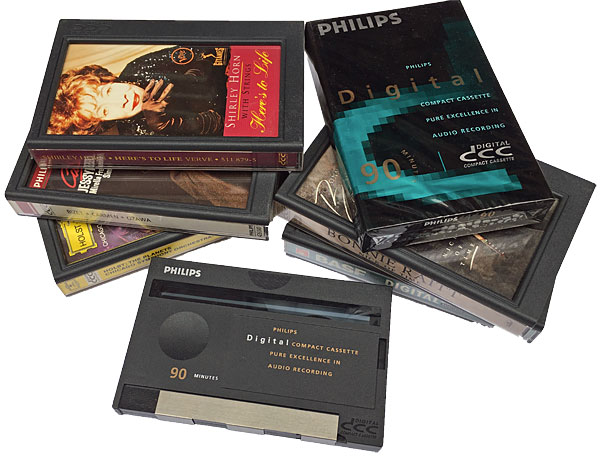
Editor's Note: In the 21st Century, lossy audio data compression, in the form of MP3 and AAC files, Dolby Digital and DTS-encoded soundtracks, and YouTube and Spotify streaming, is ubiquitous. But audiophiles were first exposed to the subject a quarter-century ago, when Philips launched its ill-fated DCC cassette format. What follows is Stereophile's complete coverage on both DCC and its PASC lossy-compression encoding from our April 1991 issue.—John Atkinson

Audio Basics: A Is For Ampere

In the real world, "knowledge is power" means that if I know more about something than you do, I am better able than you to control it or use it to my own advantage. This is no less true in high-end audio, where a gut-level understanding of how a component works can free its owner from the constraints and frequent inaccuracies of instruction manuals, folklore, advertisements, and the nugatory, nullifidian nonsense in the mainstream audio press assuring you that most of what you know damn well you are hearing is really only a figment of your imagination.


Advertisement
Advertisement
Advertisement