Reference

Sort By: Post DateTitle Publish Date

Jitter, Bits, & Sound Quality

Jitter is not what digital sound quality induces in the listener; rather it is the instability in the clock signal that controls exactly when the analog waveform is sampled in the original A/D conversion, or when the digital word input into a DAC results in an analog voltage being produced at the chip's output. "So what?" is the response of digital advocates, "As long as a digital one is recognized as a one and a digital zero as a zero, then how can there be any difference in sound?" goes their argument, normally culminating in a fervently expressed "Bits is bits!"
The Non-tweaker's Guide To Tweaks

Tweaks have acquired a bad reputation in certain sectors of the audio world, probably with some justification. Warming the cartridge to exactly the right temperature, suspending cables from the ceiling (but not with cotton string; it sounds grainy and dry), stroking CD cases with a "magic" brush, drinking "polarized" (or is it de-polarized?) water before a listening session---gimme a break!


Tweaking your Record-Player

While the LP-vs-CD debate continues unabated among high-end audiophiles, the rest of the world has already closed the book on the venerable LP. All but a few specialized classical record companies (footnote 1)(and some weird magazines) have ceased releasing new LPs, few record stores sell them any more, and consumers who wouldn't be caught dead owning something that wasn't trendy have long ago dumped their LP collections for cents on the pound.


CD: Jitter, Errors & Magic

The promise of "perfect sound forever," successfully foisted on an unwitting public by the Compact Disc's promoters, at first seemed to put an end to the audiophile's inexorable need to tweak a playback system's front end at the point of information retrieval. Several factors contributed to the demise of tweaking during the period when CD players began replacing turntables as the primary front-end signal source. First, the binary nature (ones and zeros) of digital audio would apparently preclude variations in playback sound quality due to imperfections in the recording medium. Second, if CD's sound was indeed "perfect," how could digital tweaking improve on perfection? Finally, CD players and discs presented an enigma to audiophiles accustomed to the more easily understood concept of a stylus wiggling in a phonograph groove. These conditions created a climate in which it was assumed that nothing in the optical and mechanical systems of a CD player could affect digital playback's musicality.


In Search Of The Audio Abode---The Hi-fi House

When sociologists tell us America is a highly mobile society, they don't just mean we do lot of driving. What they mean is, we do a lot of moving. The good old three-generation family homestead, immortalized in nostalgia TV and literature, is a thing of the past. According to census information, almost 20% of America's population changes its address every year. Of course, it's usually a different 20% every year, but pulling up roots and moving---to a bigger house, a better neighborhood or a nicer city, not to mention a place where your employer decides to transfer you---is almost as commonplace across the US of A as marriage, divorce, and unbridled greed.


Measuring With MLSSA

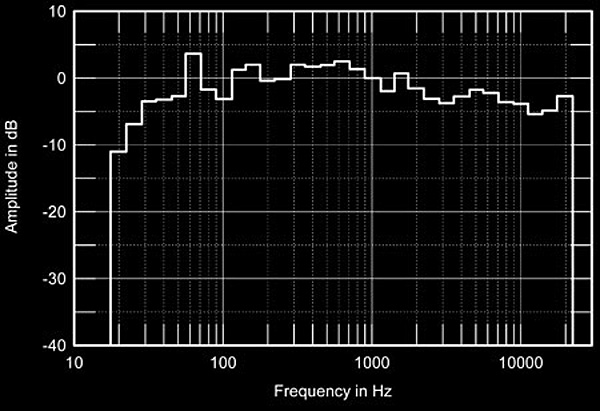
Wouldn't you just know it. As soon as I decide on a formal regime of measurements to accompany Stereophile's loudspeaker reviews—see Vol.12 No.10, October 1989, p.166—along comes some hot new technology that changes everything. Robert Harley reported in last month's "Industry Update" column how impressed he and I were with the new MLSSA measurement system from DRA Laboratories.

PDM, PWM, Delta-Sigma, 1-Bit DACs

Editor's Note: One-bit DAC chips in the 21st century, where the analog output signal is reconstructed from a very high-rate stream of pulses, are ubiquitous. But a quarter-century ago, those chips were only just beginning to stream from the chip foundries. In this feature, we aggregate Stereophile's 1989 coverage of the then-new technology, starting with Peter van Willenswaard on the basics.—John Atkinson.


1989 may well become the year of the D/A converter (DAC). CD-player manufacturers have, almost without exception, launched research projects focusing on this problem area of digital audio; many of these projects are already a year old. This is, however, by no means the only imperfection keeping us away from the high-quality sound we have come to suspect is possible with digital audio media, and maybe not even the most important.

Loudspeaker Specifications: What Matters?

In a recent answer to a reader's letter, I somewhat bluntly stated that Stereophile's reviewers use "hi-fi" adjectives to describe loudspeaker sound because even good loudspeakers are too far removed from sounding "real" to be compared directly with live music. Upon reflection, this may have sounded too dismissive, so I will elaborate a little in this short essay.

Concert Halls: A View From The Stage

When I decided to write a piece on the subject of concert-hall acoustics, I realized that almost all discussion concerning this topic is based on the viewpoint of the listener in the audience. While this is important (since the primary purpose of any hall is to bring audience and performance together), the criteria that musicians employ in concert-hall evaluation address sonic parameters that are probably not obvious to the casual listener, and may often be at odds with conclusions reached from the other side of the footlights. Some readers might feel that any discussion of concert halls has no place in a publication such as Stereophile; they may have a point, especially if their sole aim through audio is to produce sonic spectacle, rather than to recreate an artistic event. I believe, however, that there are some readers who would like to gain some insights into the specific problems and acoustical considerations presented to performing musicians, and possibly come away with some fresh ideas to incorporate in their listening criteria.


Advertisement
Advertisement
Advertisement