Music and Recording Features

Sort By: Post DateTitle Publish Date

Jean-Michel Jarre: Organic meets Electronic

"I have an organic approach toward music but I've always been interested in electronics," says Jean-Michel Jarre, whose luxurious electronic pop conquered the world in 1976 with his hit album Oxygène. Even today, Oxygène's bubbling tones and saturated textures provide a blissful sonic experience. "I love jazz because of its organic approach to sound, and I've been influenced by that. I always thought that jazz and electronic music have much more in common than we think."
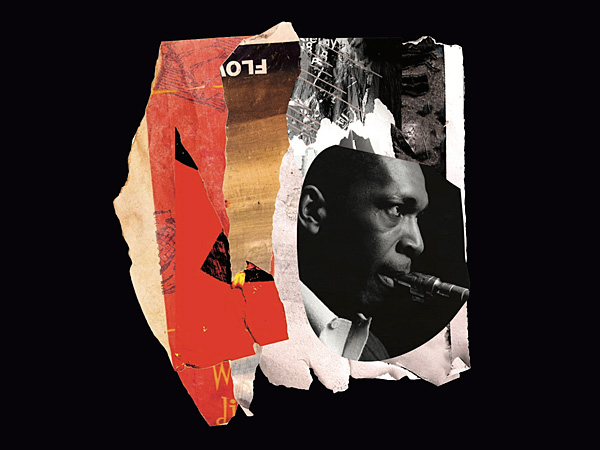
John Coltrane's 1963: New Directions

Only a few months after the extraordinary news and release of John Coltrane's Both Directions at Once: The Lost Album on Impulse! Records, which revealed the tenor and soprano saxophonist deep in transitional mode, comes Universal Music/Verve's attempt to cash in on the Trane fever. Joining music from The Lost Album with selections from other albums recorded by Coltrane in that year, 1963: New Directions brings Coltrane's legacy to our commercially crass, modern marketplace.

Shostakovich's Devastating Impact

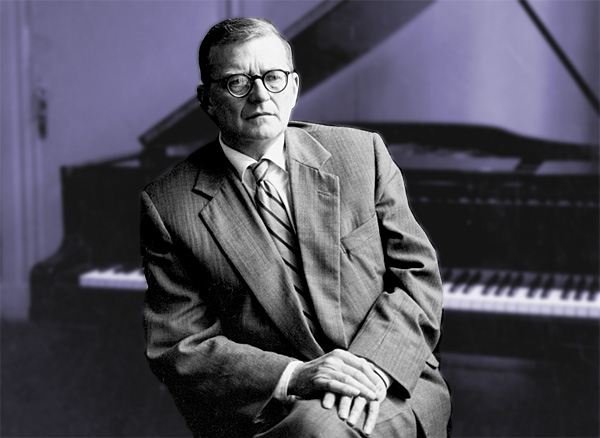
Dmitri Shostakovich (1906–1975) was hardly the first composer to run headfirst into opposition from political authorities. In his case, however, the pushback was so extreme that it affected everything he wrote thereafter.


In early 1936, after the style and subject matter of his opera Lady Macbeth of Mtsensk clashed with the so-called proletarian aesthetic of Russian dictator Joseph Stalin (1878–1953), Shostakovich was denounced by the official state newspaper, Pravda. From then on, his symphonies reflected either his defiance of decades of Socialist realism, or attempts to appease the authorities while still speaking his truth.

Wayne Shorter: How the Future Would Be

Wayne Shorter is 85. His mind moves at warp speed, a million miles from Art Blakey's Jazz Messengers, who rescued him from Newark, New Jersey—or the Miles Davis's second great quintet, for which the saxophonist wrote the compositions that would establish his genius. Shorter's constellation of classic Blue Note recordings from 1964–67—Night Dreamer, JuJu, The All Seeing Eye, ETC, The Soothsayer, Adam's Apple, Speak No Evil, Schizophrenia—is now but a dim cluster of stars in his ever-expanding musical galaxy.

Mission Accomplished: Du Pré's Elgar

The stars lined up.


According to biographer Charles Reid, the British conductor Sir John Barbirolli "burned with Elgarian zeal," attributable in part to Barbirolli's participation, as a young cellist in the London Symphony Orchestra of 1919, in the premiere performance of Edward Elgar's Cello Concerto. That performance, conducted by the composer and with Felix Salmond as soloist, was a disaster—Elgar's rehearsal time had been cut short by a lack of cooperation from another conductor on the bill, a slight the composer never forgave—yet from then on, the 19-year-old Barbirolli regarded Elgar's music with reverence.

New York Tenor Central

Even as hypergentrification runs rampant, enriching financial opportunities for some and crushing small-business dreams for others, New York City remains ground zero for jazz and for the small clubs it thrives in. The New York Times may not cover jazz unless someone of the stature of Wynton Marsalis is on the bill, but the music moves ahead undeterred, taking up residence at such iconic venues as the Blue Note, Cornelia Street Café, Fat Cat, 55 Bar, Jazz Gallery, Mezzrow, Smalls, Smoke, the Village Vanguard, and Zinc Bar.

Van the Man

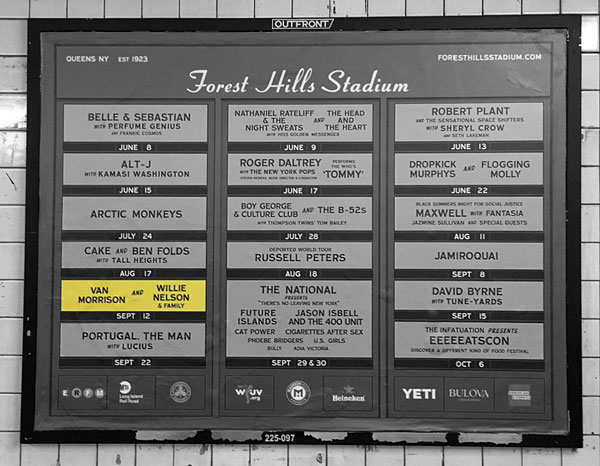
The dingy green-and-ochre poster on the subway-station wall, advertising events at Queens's Forest Hills Stadium, didn't draw attention to itself. But what else is there to do on a subway platform but look at posters? I looked at it. There, near the bottom of the left column, I read: "SEPT 12: VAN MORRISON AND WILLIE NELSON & FAMILY."


Van Morrison. In concert. In Queens.

Four Outstanding Choral Recordings

We who love recordings of massed voices have learned the hard way that some succeed in blending vocal clarity with acoustic resonance, while others deliver echo-muddied jumbles. Happily, some very fine choral recordings have come my way in the last six months. Along with John Atkinson's acoustically stunning engineering of recordings by the vocally gifted Portland State Chamber Choir and the all-male ensemble Cantus, these aural documents do composers proud.

John Coltrane's Both Directions at Once: The Lost Album Debuts at Englewood Cliffs

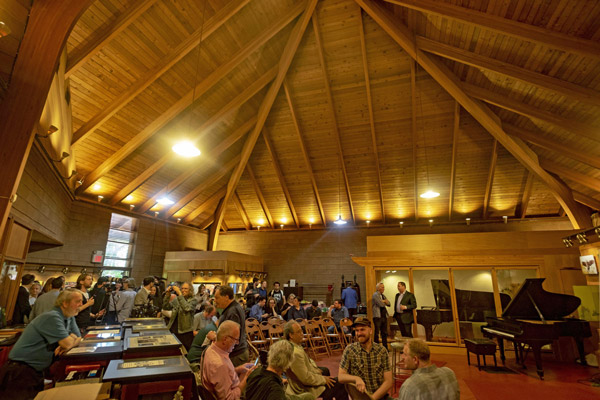
A stunning jazz discovery presented at a historic citadel of recording technology. That event took place June 11, when the new John Coltrane recording, Both Directions at Once: The Lost Album, which will be released June 29, was unveiled at Van Gelder Studio, the fabled location where the celebrated engineer recorded many jazz masterpieces.
Advertisement
Advertisement
Advertisement