
Think Pieces

Sort By: Post DateTitle Publish Date

Vinyl & the Endless Ping-pong Match

Here in Chicago the other day, I was on my way to an appliance store, so audio was the last thing on my mind. But, as if by some miraculous intervention (or just stupidity), I parked and went in the wrong store: "Why does this appliance store have bins and bins of CDs in it?" Realizing my mistake, I found the stoves and ranges I was looking for next door—but not before noticing bins and bins of used LPs behind all those CDs.

"Recommended Components"—the St. Hubbins' Syndrome!

Suppose you've put aside some cash for a new preamp. You survey the field and zero in on the Musical Ecstasy 1000 and the Sonic Nirvana Special. Both got good reviews in all the magazines, they look great, and each will set you back about the same number of mortgage payments. So you visit your dealer and camp out for a weekend or two. You listen, you think, you walk around the store, you listen some more, you recalculate your tax return. You listen some more. Finally, you have a winner. "I want that one," you tell your dealer; "the Sonic Nirvana."


"Vat do you zink of all my toops?"

Pollock, Rothko, Amperex, and Sylvania? Last spring I went to a contemporary art show out on Chicago's Navy Pier. I wanted to get away from things with wires and knobs—you know, rub elbows with Chicago's better-dressed, sip some wine, maybe practice talking about artistic creations that I usually don't understand ("It's so brutally honest...yet, somehow, still deceptive"). But there's no rest for the weary, confused audiophile. Along with artists, paintings, and sculptures from all over the world, thousands of vacuum tubes had descended on the Pier.


Accuracy & Resolution: the Jagger Effect

Back in 1968, nothing sounded better to me than "Penny Lane"—one of my all-time favorite songs—blasting out over my Dad's home-built Eico gear (when no one else was around, of course). For some reason, the various sounds packed into that song grabbed my attention as much as that old integrated amp whose steel case got as hot as the tubes inside—ouch! When the Beatles broke up, I played Magical Mystery Tour over and over for days before I felt I'd paid them sufficient homage. Like everyone else, I heard a lot of the Beatles through the '70s and '80s. (And now, of course, it may as well be the '60s again: if you can stomach another "Magic Carpet Ride" every hour (or so it seems), just tune in your local "classic rock" station and you'll hear lots of "Penny Lane," too.)


Invaded by the Grays

Some folks claim to have actually seen the legendary Bigfoot, the enormous, manlike beast said to roam the backwoods of the Pacific Northwest. Others have stood in his footprints or plucked foul-smelling patches of hair from trees he has recently passed. A few have gotten close enough to take vague snapshots or shaky video clips of the beleaguered creature. One or two attest to frightful chance encounters with him. His size alone has given rise to rumors that he is dangerous, but no firm evidence has ever been produced to substantiate this.

Undercurrents #1

In debates about audio, philosophy, literature, fine art, or whatever, people often adhere to either absolutism or relativism. Absolutism supposes, for example, that either analog or digital is superior and that whichever is better holds for all parties concerned. Michael Fremer, for instance, is not just advertising his opinion about the superiority of analog; he believes that everyone would acknowledge it if they paid attention to the evidence. Relativism, on the other hand, teaches that no such absolute and univocal consensus can be reached. In the end, we all have our own subjective preferences, and that, quite simply, is that. If we disagree about whether tube amps are better than solid-state, or single-ended is better than push-pull, c'est la vie.


Improving on Perfection?

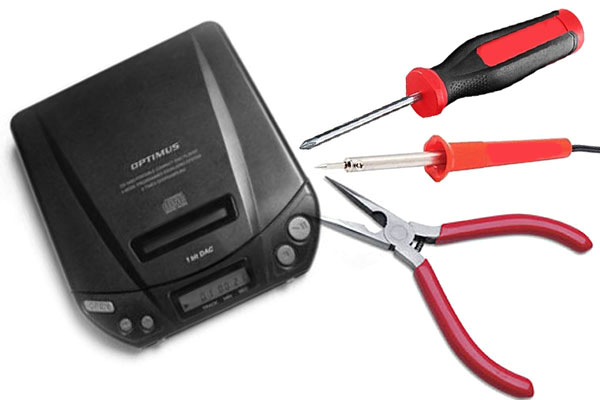
Most audiophiles are aware of the modification and add-on aftermarket. A few have learned the hard way that modifier competence varies from primitive magic and sales hype to real engineering skill. Some modifiers are serious audiophiles who are also good technicians; others are scam artists whose only goal is to make a quick buck on the latest fad. If you have only a rudimentary understanding of electronics, you may not be able to make a distinction. Even the most jaded and battle-hardened among us can still be hooked and reeled in by a slick sales presentation.
Advertisement
Advertisement
Advertisement