
Joint Amplification Components of the Year
 Audio Research Reference 330M monoblock power amplifier
($90,000/pair; reviewed by Jason Victor Serinus in Vol.48 No.12, December 2025 review) Doshi Audio Evolution Stereo power amplifier
($24,995; reviewed by Ken Micallef in Vol.49 No.2, February 2026 review)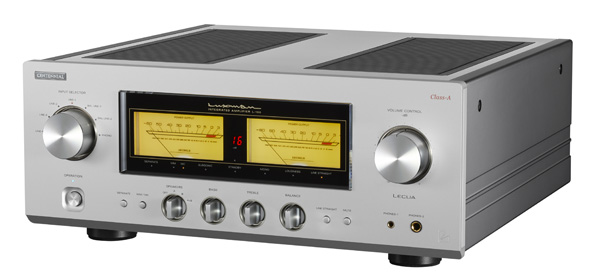 Luxman L-100 Centennial integrated amplifier
($11,995; reviewed by Ken Micallef in Vol.49 No.10, October 2026 review) FINALISTS (in alphabetical order) Ampsandsound Yellowstone preamplifier
($25,000; reviewed by Ken Micallef in Vol.49 No.8, August 2026 review) Linn Klimax Solo 500 monoblock power amplifier
($64,760/pair; reviewed by Sasha Matson in Vol.49 No.8, August 2026 review) T+A Symphonia streaming receiver
($10,990; reviewed by Rogier van Bakel and Tom Fine in Vol.48 No.11, November 2025, and Vol.49 No.1, January 2026 review)
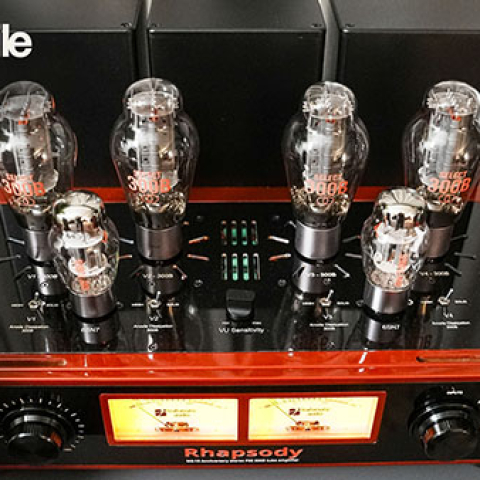
The Audio Research 330M monoblock uses tubes throughout: the front end uses a single 12AX7/ECC83; the voltage-gain stage uses one 6H30; and the output stage uses three matched pairs of KT170 tubes. There is also a 6H30 error amplifier and a 6550 pass tube for the power supply regulator. All the tubes are current production rather than NOS. Maximum power is specified as 330W; the measured clipping powers were 360W into 8 ohms from the 8-ohm transformer tap and 330W into 4 ohms from the 4-ohm tap.
JVS found that his Wilson speakers, which have a 4-ohm nominal impedance, sounded best through Audio Research's 8-ohm taps, so that is how he auditioned the 330Ms. "Detail and dynamics were astonishing, tonalities were thrilling and gorgeous, and bass response was out of sight," he wrote, adding that the 330M excelled in conveying intimacy with the same ease as it reproduced big-boned music. "There's a beauty to the 330M's sound that transformed sitting in the sweet spot into an act of joy. No emotion, no color, no pitch—no musical truth, including those that are heart-wrenchingly painful and filled with despair—seems beyond its reach," he concluded.
The Doshi Audio Evolution Stereo is a push-pull, hybrid solid state/tube power amplifier that operates its first 50Wpc in class-A into 5 ohms and up to 65Wpc in class-AB. (The measured maximum power was 69W into 8 ohms and 80W into 4 ohms, both at 3% THD+noise.) Unusually, the Doshi's EL34/6CA7 pentode output tubes—two pairs strapped in parallel for each channel—are said to act like triodes for the first 10–12W, due to the fact that there are two sets of push-pull primary transformer windings, one set for the output tube plates and one set for their screens. The input/driver stage uses matched dual JFETs, and there is just 5dB of overall negative feedback. Although there are both balanced and single-ended inputs, the latter are preferable because they couple directly to the input stage. (The balanced inputs are converted to single-ended with an additional op-amp circuit.)
After optimizing the tubes' bias—a straightforward process with the buttons on the amplifier's front panel—KM wrote that the Evolution Stereo sounded "clear-headed, dynamic, and frequently revelatory." It framed every record (and associated upstream gear) in its true production milieu. And when the music called for it, the amp delivered a powerful kick. He also noted that the amplifier's noisefloor was low, which helped it uncover previously unheard details. He concluded that the Doshi Evolution Stereo amplifier "combines the resolution, force, and precision of solid state with the tone, spaciousness, sweetness, and splendor of tubes. ... It has more than a touch of magic. It makes music sing."
As its name suggests, the Luxman L-100 Centennial integrated amplifier celebrates the Japanese manufacturer's 100th anniversary. Its output stage uses Darlington-configured bipolar transistors and offers class-A power of 20Wpc into 8 ohms and 40Wpc into 4 ohms with low levels of overall feedback. (Actual clipping powers were 72W into 8 ohms and 122W into 4 ohms.) In addition to line-level inputs, a phono input can be switched between MM and MC modes, and the circuitry features a new version of Luxman's Integrated Feedback Engine System, Luxman's Electronically Controlled Ultimate Attenuator, Luxman's peel-coat circuit boards, a custom EI-core power transformer, and custom filter capacitors.
Playing a favorite Foo Fighters track with the L-100 driving DeVore speakers, KM was wowed by a "seamless wall of hard-rock energy at 200mph." Whatever the genre, he found that the L-100 lent music aliveness and speed, a sense that the music was present and palpable in the room. "True to its class-A lineage, the L-100 conveyed a sense of note purity and note flow, with a real sense of musicians engaged in space. The L-100 seemed to float images into the room, not simply between the speakers," he noted. KM's conclusion? "The L-100's attributes are many, its faults practically nonexistent. It's the best Luxman I've heard."
Notes on the vote
As I received completed second-round ballots from the writing team, it became clear that the Audio Research, Doshi, and Luxman amplifiers were going to be joint winners in this category. The Ampsandsound, Linn, and T+A were not far behind, however.
Audio Research Reference 330M monoblock power amplifier($90,000/pair; reviewed by Jason Victor Serinus in Vol.48 No.12, December 2025 review)
Doshi Audio Evolution Stereo power amplifier($24,995; reviewed by Ken Micallef in Vol.49 No.2, February 2026 review)
Luxman L-100 Centennial integrated amplifier($11,995; reviewed by Ken Micallef in Vol.49 No.10, October 2026 review) FINALISTS (in alphabetical order) Ampsandsound Yellowstone preamplifier
($25,000; reviewed by Ken Micallef in Vol.49 No.8, August 2026 review) Linn Klimax Solo 500 monoblock power amplifier
($64,760/pair; reviewed by Sasha Matson in Vol.49 No.8, August 2026 review) T+A Symphonia streaming receiver
($10,990; reviewed by Rogier van Bakel and Tom Fine in Vol.48 No.11, November 2025, and Vol.49 No.1, January 2026 review)
As I received completed second-round ballots from the writing team, it became clear that the Audio Research, Doshi, and Luxman amplifiers were going to be joint winners in this category. The Ampsandsound, Linn, and T+A were not far behind, however.