Photo by Rogier van BakelTuned in, turned on
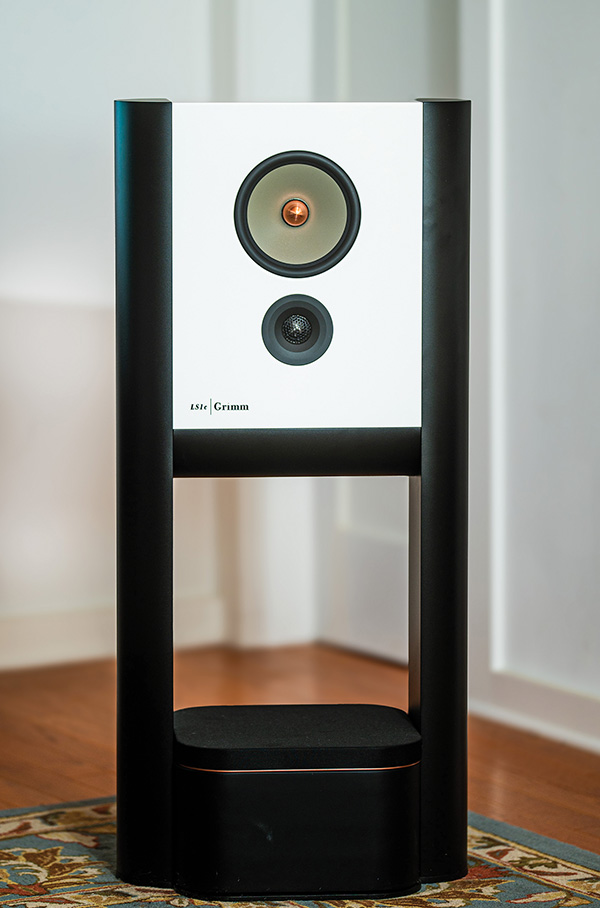
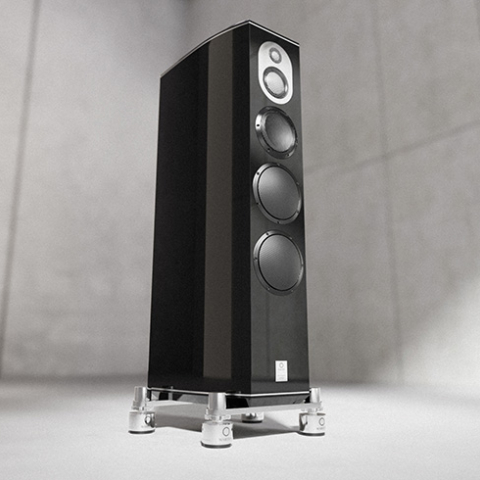
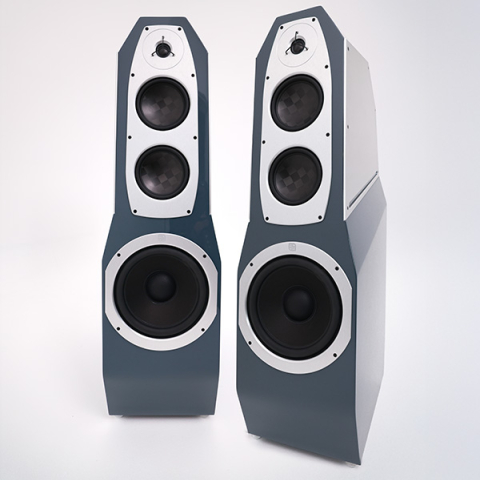
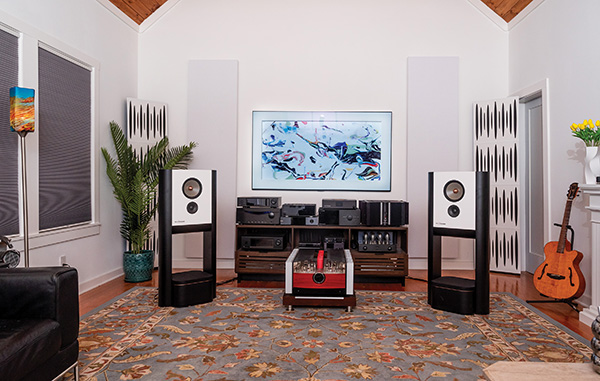
Zeroing in on the ideal location for the LS1c's in my well-treated 15' × 21' listening room meant moving them 7'10" apart, measured from their centers. The backs of the cabinets stood 5'6" from the front wall.
Grimm advises starting with a 45° toe-in and adjusting to taste from there. The web-based software lets you choose DSP settings for either a 45° or a 30° angle, which applies a small correction to the highest treble to make the frequency response of the direct sound as linear as possible when it reaches your ears. (If you need more options than 45° and 30°, you can achieve it with the high-shelf EQ, the same tool Grimm uses for that 30°/45° angle correction.)
On the company's say-so, I toed in the speakers almost 40°, way beyond the usual (for me) 3°–10°. This typically results in a narrower soundstage, but it was the opposite with the Grimm's combination of unusual acoustic principles and electronic wizardry. They sounded as wide as a stage in a medium-to-large club.
Other than panel speakers and electrostats, the LS1cs may be the least boxy-sounding speakers I've ever had in my room. I noticed this especially on some film soundtracks. I'm not sure why—perhaps they'd been recorded in QSound or drew on an especially effective two-channel Atmos downmix. During Grave of the Fireflies, some of the effects and music seemed to come from the back of the room. Surprisingly, this didn't affect intelligibility: All dialog sounded properly crisp. The effect was also there in the opening minute of Gosford Park. The thunderclap during the rain shower was behind me and to my right. I had to play it a second time to make sure I hadn't imagined it.
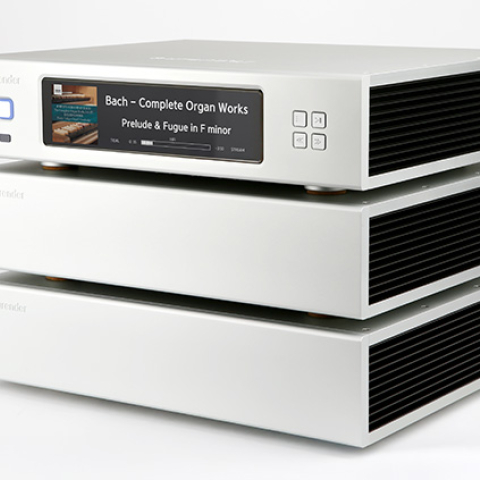
The hi-rez audio files I streamed, with the MU1 performing Roon duties, were cut from similar cloth. The piano on Jaco Pastorius's "Continuum," from his self-titled album (16/44.1 FLAC, Epic-Legacy/Tidal), appeared 4' outside the loudspeaker cones, just beyond the boundaries of the room.
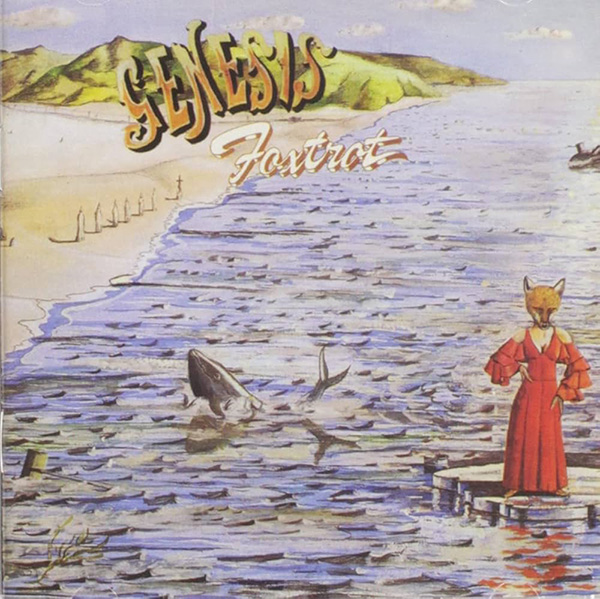
"Supper's Ready," from Foxtrot by Genesis (16/44.1 FLAC, Rhino Atlantic/Qobuz), was presented with a wide, deep soundstage and a slightly silky signature that made the old symphonic-rock nugget a joy to listen to. I hadn't heard it in decades and marveled at how much life there is in this 53-year-old recording. I'd always considered Foxtrot to be sonically and artistically inferior to Selling England by the Pound, but the Grimms' reproduction of the 2007 stereo mix made me reconsider.
My friend Matt noticed that the off-axis response of the LS1cs is exceptionally good. I hadn't picked up on that yet because I almost always sit in my listening chair, but when I moved to the couch 5' to my left, there was no denying it. Matt was right.
Tian Bo's "Ancestral Prosperity," from Taiko Stories (16/44.1 FLAC, Cezanne China/Qobuz), a work for flute and percussion, is one of my go-to tracks for testing transient speed and low-frequency extension (those Taiko drums are hella thunderous). I must've played it more than 100 times in the past couple of years. With the Grimms, the congalike hand percussion, mixed hard left and right, extended to the 15' width of the room. For the first time, I noticed that the first three Taiko strikes are louder than the second three; this remains a constant pattern throughout the recording. These speakers are transparent that way, effortlessly combining spatial and timbral excellence.
When, on "Space Island," from the album of the same name (16/44.1 FLAC, Atlantic Records/Qobuz), Rob Wasserman's bass guitar and Stephen Perkins's drums hit their first joint note together eight seconds in, the low frequencies struck me as wonderfully deep, taut, controlled, and heady. Seismic. Those motional-feedback subwoofers are no joke.
Next, I cued up Ike Quebec's version of "Don't Take Your Love From Me," from Blue and Sentimental (16/44.1 FLAC, Blue Note/Qobuz). Engineer Rudy van Gelder placed the drums all the way to the right, where they share space with the guitar. I don't love hearing the drums so far from the center, but it does let Quebec's romantic, breathy tenor sax blossom all by its lonesome in the left channel, sounding downright glorious. The double bass parts are understated to the point of being simplistic, and we don't get much fireworks from the drummer (for that I'd recommend Quebec's album Heavy Soul, which also features a heavy-swingin' organ), but that tenor sax always shines. Continuing my mellow-jazz playlist, Illinois Jacquet provided another tenor-sax masterclass on "Harlem Nocturne," from Swing's the Thing (24/192 FLAC, Verve/ Tidal). Again, the band gets short shrift sonically (not unusual for recordings of this era), but Jacquet's instrument is up front and alive, with a beautiful, burnished sound that makes me swoon.
Over the weeks and then months, I found that these speakers can do it all. Club music? Affirmative. Metal? Hell yes. Bebop, Americana, solo piano, orchestral, big band, singer-songwriter? There's not a genre that the Grimms couldn't do justice to with their panache and lack of coloration.
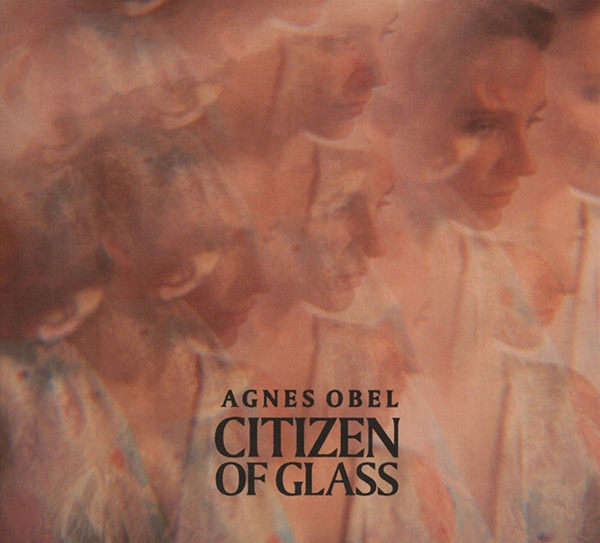
On "Stretch Your Eyes" and "Familiar" by Danish singer-songwriter Agnes Obel, from Citizen of Glass (16/44.1 FLAC, Play It Again Sam/Qobuz), Obel's ethereal voice pulls a bit to the left—a production choice, not a Grimm flaw. Still, I appreciated what amounts to a balance control in the LS1 control interface. Called "Volume offset," it allows you to give either channel a bit of extra volume, in increments of one-eighth of a dB. I chose a right-channel boost of 2.5dB to pull Obel's voice to the middle. Balance controls, once a staple of every pre- and integrated amplifier, have become rare in recent years. Obel's album proves it is still a nice-to-have feature. She sounded enchanting; I kept listening.
On Obel's album Aventine (24/48 FLAC, Play It Again Sam/Qobuz), everything is close-miked in a small room. Despite the added electronic reverb, the Grimms expertly pull back the veil obscuring the recording room, providing access to what felt like the artist's private space.
The LS1c's excelled in coherence. If I owned these speakers—this system—I'd feel liberated from thoughts about what the weak link is. I didn't find one.
Photo by Rogier van Bakel.Closing notes
You know when sometimes you hear a system—perhaps your system—when everything is firing on all cylinders and you'd love to drag your friends out of their homes to share the beauty? There's eventually a comedown. I've rarely had a hi-fi rig that could wow me consistently for days and weeks. Maybe it has to do with mood as much as with the system, or maybe it's the quality—musical and technical—of the source material. Start with stellar gear and great recordings and continue with a feeling of wellbeing and the absence of distractions. Being in a good mindset is vital for the music to bloom.
With the Grimm system, I experienced this rollercoaster less often than usual, and the emotional peaks remained about the same while the valleys weren't half as pronounced. Day upon day, the listening experience was somewhere between satisfying and thrilling.
The LS1c didn't put me in that neurotic state where I need to hear and appreciate every detail. The whole painting is there, each brushstroke exposed if you care to look. But the speakers invite you to stand back and take in the whole canvas. I dug it, immensely.
Is 44 grand too steep a price to pay for a system like this? Consider first that this is a whole digital system including ultralow-distortion amplifiers, fantastically transparent DACs (one for each driver), even subwoofers if you get the three-way setup. The only other thing you need is a source of music data. (It can be a generic computer, though the Grimm MU1 is recommended.) You're forever free from worrying about cables. The Grimms don't even have binding posts.
Which brings up a flipside. Those who like to fiddle and tweak—and that's a lot of audiophiles—should probably steer clear of the LS1c and similar systems. Other than positioning and DSP settings, there isn't much to play with.
The only thing that makes me sad when I think of the LS1c is that, just as it is not an ideal choice for tweakers, it's not a suitable purchase for audio reviewers. If I didn't often have to swap amplifiers, preamps, source components, and cables for a living, I'd hold on to these exceptional monitors and enjoy the hell out of them for the rest of my days. They're that good.


 The hi-rez audio files I streamed, with the MU1 performing Roon duties, were cut from similar cloth. The piano on Jaco Pastorius's "Continuum," from his self-titled album (16/44.1 FLAC, Epic-Legacy/Tidal), appeared 4' outside the loudspeaker cones, just beyond the boundaries of the room.
"Supper's Ready," from Foxtrot by Genesis (16/44.1 FLAC, Rhino Atlantic/Qobuz), was presented with a wide, deep soundstage and a slightly silky signature that made the old symphonic-rock nugget a joy to listen to. I hadn't heard it in decades and marveled at how much life there is in this 53-year-old recording. I'd always considered Foxtrot to be sonically and artistically inferior to Selling England by the Pound, but the Grimms' reproduction of the 2007 stereo mix made me reconsider.
The hi-rez audio files I streamed, with the MU1 performing Roon duties, were cut from similar cloth. The piano on Jaco Pastorius's "Continuum," from his self-titled album (16/44.1 FLAC, Epic-Legacy/Tidal), appeared 4' outside the loudspeaker cones, just beyond the boundaries of the room.
"Supper's Ready," from Foxtrot by Genesis (16/44.1 FLAC, Rhino Atlantic/Qobuz), was presented with a wide, deep soundstage and a slightly silky signature that made the old symphonic-rock nugget a joy to listen to. I hadn't heard it in decades and marveled at how much life there is in this 53-year-old recording. I'd always considered Foxtrot to be sonically and artistically inferior to Selling England by the Pound, but the Grimms' reproduction of the 2007 stereo mix made me reconsider.
 When, on "Space Island," from the album of the same name (16/44.1 FLAC, Atlantic Records/Qobuz), Rob Wasserman's bass guitar and Stephen Perkins's drums hit their first joint note together eight seconds in, the low frequencies struck me as wonderfully deep, taut, controlled, and heady. Seismic. Those motional-feedback subwoofers are no joke.
 On "Stretch Your Eyes" and "Familiar" by Danish singer-songwriter Agnes Obel, from Citizen of Glass (16/44.1 FLAC, Play It Again Sam/Qobuz), Obel's ethereal voice pulls a bit to the left—a production choice, not a Grimm flaw. Still, I appreciated what amounts to a balance control in the LS1 control interface. Called "Volume offset," it allows you to give either channel a bit of extra volume, in increments of one-eighth of a dB. I chose a right-channel boost of 2.5dB to pull Obel's voice to the middle. Balance controls, once a staple of every pre- and integrated amplifier, have become rare in recent years. Obel's album proves it is still a nice-to-have feature. She sounded enchanting; I kept listening.