Sidebar 1: System
I auditioned the three jitter attenuators with high- and low-quality transports, with a processor susceptible to interface jitter (an older PS Audio UltraLink that uses the Yamaha input receiver), and with processors that easily reject jitter, such as the Mark Levinson No.30.5, which has near-total immunity to interface jitter. Since the No.30.5 is the first processor on the market to use the NPC5842 filter, which can pass 20-bit data (actually up to 24-bit data), it was ideal for fully assessing the DTI Pro's 20-bit output word mode and claimed resolution enhancement.
In addition to the UltraLink and Mark Levinson No.30.5, I spent some time with the Adcom GDA-600, which has a good implementation of the Crystal CS8412 input receiver, and the Sonic Frontiers SFD-2 (which uses the UltraAnalog AES20 input receiver). Transports included the Mark Levinson No.31 ($8500), the Counterpoint DA-11 ($1500), and the transport section of an NAD 502 CD player ($299).
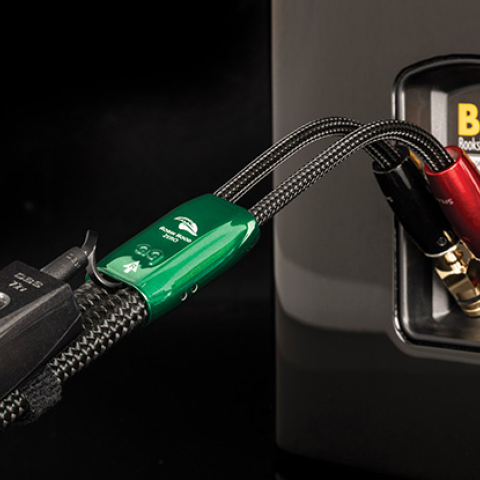
The playback system consisted of the Genesis II.5 loudspeakers driven by the Genesis bass servo amplifier on the woofers and a pair of Audio Research VT150 tubed monoblocks driving the ribbon midrange and planar tweeters—a match made in heaven. The preamp was an Audio Research LS5 Mk.II, and interconnects included Expressive Technologies IC-1, AudioTruth Diamond x3, AudioTruth Lapis, and Transparent interconnect. Loudspeaker cables were Transparent Ultra, and digital interconnects included AudioTruth Diamond x3, Ensemble DigiFlux, NBS, AudioQuest TosLink, and WonderLink.—Robert Harley