Headphones & Headphone Accessories:
A+:
ampsandsound Bigger Ben: $5600
See “Integrated Amplifiers.” (Vol.47 No.11 WWW) Ampsandsound Mogwai SE: $3900
Class A+ is as a headphone amp. Rating is Class A as a power amplifier. See Power Amplifiers. (Vol.48 No.12 WWW) ampsandsound Red October SE: $14,000
ampsandsound Red October XL SE: $18,000
The low-gain, zero-feedback, dual-mono, single-ended triode Red October headphone amplifier uses a 300B tube for each channel’s transformer-couple output, driven by a single 12AX7 double triode. The front panel features a volume control and five headphone outputs, with impedances of 8, 16, 32, 100, and 300 ohms, respectively. The Red October can be switched between the headphone outputs and its 8 ohm speaker outputs with a rear-mounted rocker switch. AH auditioned the Ampsandsound with four sets of cans—the Audeze LCD-3, the Sennheiser HD 650, the HiFiMan HE-R10P, and the Meze Elite—and noted that it imbued the sound with tonal richness, huge dynamic kick, and—with cans that allowed it—wide, out-of-the-head imaging. He reveled in the Red October's reassuring control and lack of strain. The more expensive Red October XL differs from the smaller amp by having larger, more complex output transformers, with more interleaving and 30W cores. AH wrote that listening to the Mezes through the XL “turned out to be among the most exciting experiences I've had with something clamped to my head.” AH also used both amplifiers with the high-sensitivity Klipsch La Scala speakers, noting that with the Red October he was floored by the rock-solid grip the amp had on the speakers, its precise pace and timing, and the prodigious, taut bass. “The saturated colors I heard through headphones were just as evident with the La Scalas, and the music had scads of presence, weight, and body,” he wrote. With the Red October XL powering the Klipsch speakers the XL “proved most obviously different from its smaller sibling in the incredibly specific way it portrayed textures, which seemed to glisten, imbued with uncanny presence, liquidity, and an almost endless array of tone colors. The sound was bigger, airier, and more dynamic, with a surer depiction of space.” (Vol.47 No.11 WWW) Audeze LCD-5: $4500
The open-back LCD-5 is the successor to Audeze’s well-regarded LCD-4 and, like its predecessor, uses planar-magnetic drive units, which feature proprietary, single-sided Fluxor neodymium N50 magnet arrays and a voice-coil concept called Parallel Uniforce. The idea is to vary the width of the conductor to match, or counter, variations in the magnetic flux to achieve uniform force across the membrane. The 90mm diaphragm is just 0.5 microns thick. JMu wrote that whatever source/amplifier setup she used, aspects of the LCD-5’s signature sound seemed consistent: air, spaciousness, and openness combined with copious fine detail. “Live recordings sounded live; well-made studio recordings sounded alive, with sufficient energy and detail to seem real,” she commented. (Vol.46 No.12 WWW)
dCS Bartók APEX: $22,000 including headphone amp $24,100
See “Digital Processors.” Vol.46 No.8 WWW) dCS Lina: $9750
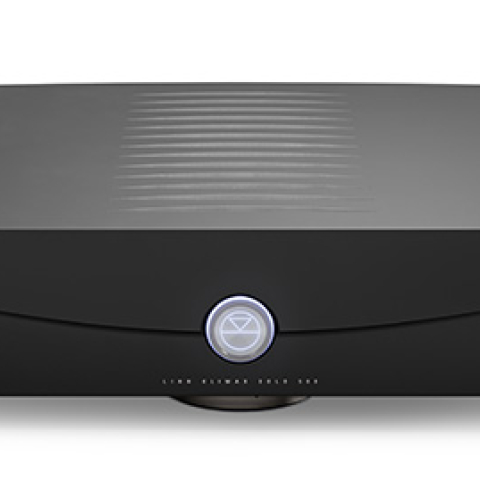
This British, solid state, class-AB headphone amplifier is specified as outputting 2W into 30 ohms and 0.48W into 300 ohms with balanced ’phones, or 1.6W into 30 ohms and 0.2W into 300 ohms with unbalanced. There are three pairs of stereo analog inputs: one unbalanced; one balanced and buffered (high-impedance); and one “unbuffered” balanced for use with low-impedance source components. There are three headphone outputs: two 3-pin XLR—one each for right and left channels—one 4-pin XLR; and one ¼" jack. With HiFiMan’s HE R10P, HR found the sound was “sharp, lucid, and emotionally affecting.” With JPS Labs’ Abyss AB-1266, he noted that the presentation was a touch dry compared to the tubed Feliks Envy and LTA Z10e amplifiers “but well-formed, brisk, and super-transparent, with assertive beat-keeping and state-of-the-art vocal intelligibility.” Compared with the Feliks Envy, the Lina’s overt transparency made the Envy seem hazy. Overall, “the Lina presented performers’ images with a sculpted mass that contrasted with the Envy’s gentler, more holographic presentation.” (Vol.47 No.3 WWW) Feliks Envy: $7995; Performance Edition costs $8795
This moderate-sized, single-ended headphone amp from Poland uses Psvane CV-181 (6SN7) twin-triode driver tubes and either Electro-Harmonix Gold 300B output tubes (standard version) or TJ Full Music 300B output tubes (Performance Edition). Specified output power is 8Wpc. There are three analog inputs, one balanced using transformers and two unbalanced (RCA). In addition to balanced and single-ended preamp-level outputs, there are two headphone jacks, one of them balanced. The gain can be set to three different levels, and HR found that at the Envy’s highest gain setting with the TJ Full Music 300Bs, “it made the famously hard-to-drive HiFiMan Susvaras light up and sing, with great purity and feeling.” With ZMF’s sensitive Verité closed-back headphones, HR used the Envy’s middle gain setting and noted that “beauty and boogie combined forces to make focused listening easy.” He also used the Electro-Harmonix 300Bs and concluded that some users might prefer the E-H’s “earthbound realism over the slightly fuller, marginally more fantastic-sounding Full Music 300Bs.” Overall, with every headphones he tried, the Envy “performed as though it had been engineered to present recordings in the most vivid manner possible, be 100% musically satisfying, and be the last headphone amplifier any of us might need to own.” (Vol.47 No.2 WWW) Focal Utopia: $4999 ★
The fully open-backed, circumaural Focal Utopias are designed around proprietary beryllium-dome full-range drivers that, uniquely, have no voice coil formers: each coil is fastened directly to its dome, in a crease near its surround. The yokes are made of carbon fiber, and the earcups and headband are covered with lambskin. HR described the Utopias as capable of producing “a gut-level realism that is rare in high-end audio,” adding that the Focals are “lightning-fast, extremely open, and profoundly uncolored.” In May 2023, HR compared the original Utopia headphones with the revised 2022 version. The new version offers different cosmetics with less silver trim, more open-looking “honeycomb” inner and outer grilles, and a new lighter-weight, more stylish yoke made from “forged recycled carbon.” The new inner grilles are M-shaped, conforming to the shape of the M-shaped driver but the most important change is to the Utopia’s voice coils, which are now made of 30% copper “to improve reliability” and 70% aluminum, “to reduce weight.” Compared to its predecessor, HR noted, the 2022 Utopia “exhibits a more complete transparency, a quicker, higher bounce, and a more assured way with momentum.” (Vol.39 No.10, Vol.41 No.6, Vol.46 No.5 WWW)
HiFiMan HE-R10P: $5499
The HE-R10P is a wooden closed-back headset with "Supernano" planar-magnetic diaphragms. "When I first tried the HE-R10P," HR wrote, "my brain knew instantly that this headphone was excavating something more, some subtle type of extra information I usually don't experience with headphones." This extra information gave him a feeling of harmonic completeness, and the R10P produced "a crisp, Kodacolored soundscape." The HE-R10P's high-rez, full-color detail reminded him of HiFiMan's $6k Susvara open-backs: "It felt totally grainless; with every compositional element, every individual instrument, all vocal tones, as well as all the air in the room assembled into something that felt perfect in scale and natural order. The more I listened, the more frequently the words 'flawlessly balanced' passed through my mind." Overall, the HE-R10P created the most coherent, tangible, of-one-piece spatial perspective HR had experienced with headphones, whether closed- or open-backed. (Vol.46 No.8 WWW) HiFiMan Susvara: $6000 ★
The HiFiMan Susvaras are over-the-ear headphones with planar-magnetic drivers, built around gold-coated Nanometer Grade diaphragms—their thinnest ever, the company claims. The drivers also use HiFiMan’s Stealth Magnet grids, the individual magnetic strips of which have rounded edges to reduce interference with sound output. The Susvaras weigh 15.9oz and offer an impedance of 60 ohms and a sensitivity of only 83dB. HR later wrote that he thinks the Susvara is a contender for the world’s best headphones. However, when he auditioned the Susvaras with the LTA Z10e amplifier, he found that, with the combination of low impedance and low sensitivity, the Susvara needed more power than the amplifier could deliver. Subsequently though, that amplifier was updated to provide its full available power—10Wpc—to headphones. (Vol.40 No.12, Vol.43 No.5, Vol.45 No.7 WWW) JPS Labs Abyss AB-1266 TC: $5995–$8995 ★
For those who regard the JPS Abyss AB-1266 Phi headphones as prohibitively expensive, HR offers perspective, suggesting that they, like such “notorious legacy products” as the Wilson Audio WAMM loudspeaker of 1983 and the Audio Note Ongaku amplifier of 1993, “exist in categories of price and performance all their own.” The Abyss ’phones are built into black-anodized aluminum frames and use single-magnet planar-magnetic drivers separated from the wearer by rotatable lambskin earpads held in place with magnets. Specs include a sensitivity of 88dB and an impedance of 42 ohms. After listening to a Schoenberg piece through the Abysses driven by the Woo WA5 headphone amp, HR reported: “I scribbled the phrase ‘perfectly natural’ several times. I never felt more kindred or connected to Schoenberg.” He also suggested that the Abysses “delivered detail and soundstage images with an uncannily visual—nay, infinite—depth of field.” HR later wrote that “The amazing part of the Abyss Phi TC ’phones is their complete absence of diaphragm breakup or modulation noise: They are the quietest speaker drivers I’ve ever heard. With the right amp, the AB-1266 ’phones feel like they strip everything away between me and a recording.” (Vol.40 No.8, Vol.43 No.5, Vol.44 No.10 WWW)
Raal-requisite SR-1b: $3450 ★
With Ribbon amp interface: $4200
Described by HR as headphones that will satisfy “headphone connoisseurs and stubborn contrarians” alike, the off-the-ear RAAL-requisite SR1a’s have a physical design that prevents them from covering or putting pressure on your pinnae: Their sound character is not determined in any way by a padded acoustical chamber around the listener's ears. Electrically, the SR1a’s are built using open-baffle ribbon drivers, the very low impedance of which force the need for an impedance-matching box (included) and a 50–150Wpc loudspeaker amplifier (not included). Herb had his best results driving the RAAL-requisite ’phones with solid state amps and said of the SR1a/Pass XA25 amp combo, “No matter what hi-fi you have, it’s unlikely to dig deeper and find more beauty in your recordings.” When he tried the SR1a’s with the Schiit Jotenheim R amplifier, HR commented that “The more I’ve used the SR1a, the more I’ve realized they reproduce recordings with unprecedented levels of musical texture and tactility” and concluded “No headphone images anywhere near as accurately or spectacularly as the SR1a, period.” (Vol.43 Nos.1 & 7 WWW, Vol.44 No.10) Woo Audio 20th Anniversary WA24: $12,999
Woo Audio’s new flagship uses four unusual 3A/109E triode tubes, two for each channel, operated single-ended in parallel. Stereo outputs are balanced (4-pin XLR and 4.4mm Pentaconn) and single-ended (6.3mm and 3.5mm). Listening to The Harry Smith Connection: A Live Tribute to the Anthology of American Folk Music with HiFiMan’s HE-R10P headphones, HR found that the WA24’s slender triodes “seemed right comfortable driving the R10P’s 30 ohm impedance. This record, amp, and headphone combo let me roll enjoyably through all 19 tribute tracks with zero thoughts about sound quality. For that achievement, I gave the Woo a perfect score.” With ZMF Audio’s 300 ohm Vérité closed-backs and a Monique Andrée Serf (aka Barbara) album, HR wrote that “This was the moment when all the WA24’s tube magic came out. I felt like I was hearing this record like no one had ever heard it before. The form and quality of tube beauty that dominated the WA24-Vérité's presentation exceeded any tube beauties I’d previously experienced.” HR summed up his time with the Woo by writing “In my opinion, this transformer-coupled triode amplifier, with no feedback, no resistors, and no capacitors, represents a pinnacle of commercial tube-amp design, one that should be experienced by all audiophiles.” (Vol.48 No.7 WWW) A: Audeze LCD-X: $1199 (travel case included) ★
These large, luxurious, circumaural headphones have planar-magnetic drive-units with a thin-film diaphragm energized by arrays of powerful neodymium magnets on both sides. They employ Audeze-patented Fazor elements, claimed to guide and manage the flow of sound in the headphone. The circular drivers are housed in polished, black-anodized aluminum earpieces cushioned with generously sized foam pads covered in lambskin or leather-free microsuede. Adjustment is via notched, chromed metal rods attached to each earpiece, which fit into the sprung, leather-clad headband. The LCD-Xes produced a seductive, compelling sound with precise imaging, rich mids, smooth highs, and clean bass, JA said. Compared to his longtime reference Sennheiser HD 650s, the LCD-Xes resolved more detail, produced the more convincing sense of recorded ambience, and provided deeper bass. “Highly recommended!” JA concluded. HR found that the Audezes driven by the Schiit Jotunheim “gave reproduced music life and brilliance.” “Creator Special” edition (without travel case) costs $1199. (Vol.37 No.3, Vol.41 No.6, Vol.43 No.7 WWW)
Benchmark HPA4: $3499 w/o remote; $3599 with remote ★
The HPA4 adds a THX888 amplification stage to Benchmark’s LA4 line preamplifier (see “Preamplifiers”) to allow it to drive even low-impedance headphones with aplomb. It keeps the LA4’s balanced and single-ended preamplifier outputs and adds a headphone output on a 4-pin XLR jack and a single-ended headphone output on a 1/4" jack. HR noted that with the hard-to-drive HiFiMan Susvara headphones, the HPA4 “showed each instrument in dramatic bas-relief. It accomplished this by presenting cleaner, better-articulated bass and manufacturing a sharper midrange focus than I had experienced previously with either my solid state reference, the Pass Labs HPA-1, or the tubed Linear Tube Audio Z10e.” With the JPS Labs Abyss AB-1266 Phi TCs driven by the HPA4, “deep bass emerged with great volume and energy.” “My romantic-dreamer mind adapted surprisingly well to the Benchmark HPA4’s presentation," HR concluded. “The more I used the HPA4 to drive high-resolution headphones, the more comfortable I felt with its precise, pro-audio recording-studio aesthetic.” JA noted that the the LA4 preamplifier was “the widest-bandwidth, widest-dynamic-range, lowest-noise, lowest-distortion preamplifier I had encountered at that time. … To those virtues, the HPA4 adds equally superb balanced and single-ended headphone outputs.” Optional remote costs $100. (Vol.44 No.2 WWW) Beyerdynamic DT 1770 MKII: $649.99
Beyerdynamic DT 1990 MKII: $649.99
These two identically priced headphones sport polymer “Tesla.45” diaphragms, have a 30 ohm impedance, and a 95dB/mW sensitivity at 500Hz, and are distinguished by being open-back (1990) or closed-back (1770) designs. Both are supplied with two types of ear pads: “Producing Velours” (which have a touch of bass boost) are fitted as standard; the “Mixing & Mastering Velours” offer “a more analytical sound.” When HR auditioned the DT 1990 with the “Producing Velours,” the bass was “agreeably full, round, and smooth, though the bass sounded uncertain, as it does on many ported box speakers.” When he switched to the “Mixing & Mastering Velours,” the bass sounded more “sealed box,” meaning it didn’t appear to go as low but seemed to roll off more uniformly below 100Hz. The DT 1770 presented recordings in a slightly brighter, purer, larger manner than the DT 1990, sounding more neutral and transparent. HR described both headphones as “bargains,” commenting that they sound “as honest, professional, and modern as they look. Earnestly recommended.” (Vol.48 No.3 WWW) Campfire Astrolith: $2199
The in-ear Astrolith in-ear headphones use two planar magnetic drivers per side. The first thing AH noticed about the Astrolith was its beguiling liquidity, clarity, and speed, accompanied by what sounded like vanishingly low distortion. “Its bass response is bound to please many more listeners, sounding powerful and rich though never bumptious or disruptive,” wrote AH, adding that it has a pleasing top-to-bottom coherence. However, compared to Campfire’s hybrid Clara and especially to the more expensive Trifecta Amber Radiance, the Astrolith sometimes made instrumental and vocal textures sound slightly undifferentiated, disembodied, and electronic. (Vol.48 No.10 WWW)
Campfire Clara: $1999
Designed in collaboration with Alessandro Cortini of Nine Inch Nails, these acrylic-bodied in-ear headphones use Knowles balanced armature drivers for the midrange and high frequencies and dynamic biocellulose drivers for the lows. AH found that the Clara allowed him to hear admirably deep into recorded mixes, but without tizz. “The Clara’s treble balance strikes me as just about right,” he wrote. (Vol.48 No.10 WWW) Campfire Trifecta Amber Radiance: $3299
The Trifecta Amber Radiance in-ear headphones uses three 10mm dynamic drivers for each side, which are stiffened with “Amorphous Diamond-Like Carbon” diaphragms. AH was amazed at just how far beyond the confines of his head the Trifecta was able to project the sound: “It has easily the largest soundstage I’ve heard from any device that sits in one’s ears” adding that the Trifecta “plays with more meat on the bone than any earphones I’ve heard, and with greater dynamics, compounding the sense of presence created by the vast staging. Its gorgeous, colorful midrange, which gives guitars and voices so much vividness, definitely contributes, too. Most importantly, the Trifecta proved matchless at generating engagement and emotion.” (Vol.48 No.10 WWW) Eleven Audio (Xiaudio) Broadway: $2299
The small, unglamorous looking Broadway is specified to output 1.5Wpc into 32 ohms in full, differential-balanced class-A. Its only input is balanced (XLR), and its two outputs are both balanced: 4-pin XLR and 4.4mm Pentaconn. A wallwart supply/charger is provided and the four user-replaceable, 3000mAh, 3.7V Li-ion batteries power the amplifier for up to six hours. HR used the Broadway to compare the Abyss Diana TC with the Abyss AB-1266 and Meze Elite headphones. The sonic signatures of all three were readily revealed. (Vol.46 No.5 WWW)
Focal Stellia: $2999 ★
When he first heard these closed-back headphones, which use 1.5" M-shaped electrodynamic beryllium-dome drivers and have a 35 ohm impedance, HR felt that they “were delivering a very high level of relaxed and refined sound, with no beryllium metallic-ness.” Continued listening with the Feliks Euforia amplifier resulted in “more excitement and colorful energy” than with the Auris Nirvana powering the Focals. HR concluded that with the HoloAudio May DAC and the Euforia, “Focal’s Stellia closed-backs produced vital, exciting sound.” (Vol.43 No.10 WWW) HeadAmp GS-X mini Balanced: $1795
The first HeadAmp product to “deliver balanced headphone drive from all sources, single-ended or balanced,” the GS-X Mini offers potentiometer or optional stepped-attenuator volume controls and is specified to output 6W of power into a 25 ohm load. HR found that this solid state amplifier made clear the sonic differences between the headphones with which he used it. Compared with the considerably more expensive, tubed Felix Envy, HR found that the GS-X Mini made music feel unnecessarily tight and tidy in a way that limited expansiveness and atmosphere. “The Mini is extremely transparent and handles reverb very nicely,” he wrote, “but it hits that old ‘transistor ceiling’ when reproducing tone color, microtextures, and the empty spaces between sounds.” (Vol.45 No.9, Vol.47 No.2 WWW) HiFiMan Audivina: $599
This closed-back, planar-magnetic headphone distinguishes itself visually from HiFi Man's "round" R10 models by its wooden ovoid cups. HR found the Audivana offered a "more sun-soaked sound" than the R10P. "The Audivina not only play bright and clear, it brought sparkle to the eye," he wrote, adding that the Audivina "let the voice of a singer like Natalie Dessay soar and swing and only disappoint you if you're waiting for a bad note or a top-octave flair-out. The entire range of Dessay's voice was reproduced with a riveting, delirium-inducing beauty." He concluded that "never for a moment would I have traded the Audivina's tonal purity and state-of-the-art transparency for whatever spatial effects an open-back headset might offer." (Vol.46 Nos.7 & 8 WWW)
HiFiMan HE-R10D (wired version): $179
The R10D closed-back, planar-magnetic headset looks exactly the same as the more-expensive R10P except that the R10P is made of a darker, heavier wood. (The R10D weighs only 337gm compared with the R10P's 460gm.) HR found that the R10D took a while to break in, but when it did, it was possibly the sweetest, smoothest, most all-natural-sounding headphone anywhere near its price. The R10D excelled on all types of female vocals, HR concluded. (Vol.46 No.8 WWW) Linear Tube Audio Z10e: $6950 ★
The all-tube Z10e integrated amplifier/headphone amplifier/electrostatic headphone amplifier is built around a David Berning–designed, push-pull, output-transformerless (OTL) EL84-tube power amplifier that is rated at 12Wpc into 8 ohms and 13Wpc into 4 ohms. “The Z10e is a distilled, shape-shifted version of the Z10, designed to appeal to today's new breed of headphone collector-connoisseurs,” HR wrote. It also has a five-pin, 580V-energized output to drive Stax electrostatic headphones. Though he liked how this amplifier sounded with high-sensitivity DeVore and Zu loudspeakers, he mostly used it with a variety of headphones. The Z10e got the best from Abyss AB-1266 Phi TC, Focal Clear, and ZMF Vérité Closed dynamic headphones and excelled with Stax SR-009S and Dan Clark Voce electrostatics. At first, Herb found it wasn't powerful enough to drive the demanding HiFiMan Susvaras, but then it was upgraded to deliver the full 10Wpc to headphones. After the update, it reproduced low frequencies that were “delectably large.” HR summed up the revised amplifier by saying, “The LTA Z10e/Susvara combo missed no beats, showed no weaknesses, and kept my head bopping. ... The Z10e amp displayed no hesitations, dullness, or clipping; no smoke from the tires, no engine stalling—only full-traction, high-torque engagement.” With the Audeze CRBN headphones, the Z10e’s “overall timbre and tone were just right and satisfyingly color-saturated.” Compared with the Feliks Envy using HiFiMan's easy-to-drive, closed-back R10P planar magnetics, HR noted that the Z10e sounded slightly warmer with a focus that was slightly less sharp. Comparing the LTA Z10e with the Woo WA24 using HiFiMan’s HE-R10P headphones, HR was immediately struck by its rich flavor and relaxed demeanor. “The Z10e made the WA24 sound lean,” he decided. (Vol.43 No.5, Vol.44 No.2, Vol.45 Nos.1 & 3, Vol.47 No.2, Vol.48 No.7 WWW) Meze Audio 109 Pro: $799
HR found that these elegant-looking dynamic headphones deliver a major portion of the Romanian company’s flagship Elite’s “seductive resolve.” Source impedance is 40 ohms, and the drivers use a 50mm beryllium-coated polymer, cellulose/carbon-fiber composite and copper-zinc alloy diaphragm. With every amplifier he tried, HR wrote that the 109 “exhibited a perfect right-brain/left-brain balance; beautiful sound and musical insight were celebrated equally.” Playing The Barbra Streisand Album, from 1963, HR noted that the 109s powered by the Feliks Envy amplifier “conveyed every eager breath of Streisand’s fresh-faced exuberance.” With ARCAM’s A25 integrated amplifier, he summed up the 109s as “exquisitely balanced tone-wise.” (Vol.47 No.4 WWW)
Naim Uniti Atom HE: $3799 ★
The “Headphone Edition” of Naim’s Uniti Atom streaming D/A integrated amplifier, the Atom HE features both single-ended and balanced headphone outputs as well as a preamplifier output. Inputs include a single unbalanced analog on RCA and digital—two TosLink S/PDIF, one coaxial S/PDIF, USB, Ethernet, and Bluetooth (aptX). Control is via buttons next to the front-panel display, Naim’s iOS and Android apps, or with Roon. Used as a D/A preamplifier, the Atom impressed HR: It reproduced the body and reverberant character of a piano as graphically and completely as his Rogue RP-7 preamp sourced by the dCS Bartók. “That, folks, is saying a lot,” he wrote. With the Atom HE powering the easy-to-drive, low-impedance (35 ohms), high-sensitivity Focal Stellia headphones, HR felt the sound was “squeaky-clean, bass-taut, and superdynamic lively.” After five weeks of auditioning the Uniti Atom HE with a variety of headphones, HR concluded that its best and most obvious trait “was how gracefully and insightfully it danced through one musical genre after another. It was never not enticing. It was never not engaging. It never disappointed.” However, he did caution that the Atom HE plays best with headphones with a sensitivity of 88dB/mW or higher. HR subsequently used the Uniti Atom to compare the 2020 and 2022 versions of Focal’s Utopia headphones. (Vol.44 No.9, Vol.46 No.5 WWW) Sennheiser HD 650: $579.95 ★
Available at www.sennheiser-hearing.com. The HD 650s are an evolution of Sennheiser's very successful HD 600 open-back dynamic headphones, claimed to provide superior results due to hand-selected parts with closer tolerances and the use of a specially developed acoustic silk for the driver diaphragms. Compared to the Grado SR325i, the Sennheisers sounded richer but slightly darker. JM found that their very effective seal created a resonant cavity that produced "bass that is both quite deep and a trifle indistinct." JA's new reference cans. Compared to the Audeze LCD-Xes, the HD650s had a similar overall sound, but lacked bass control, detail resolution, and ambience retrieval, said JA. (Vol.28 No.6, Vol.31 No.9, Vol.37 No.3 WWW) T+A Solitaire T Bluetooth/wired headphones: $1990—$2140
RvB enjoyed his time with these circumaural, closed-back, wired and wireless (Bluetooth) headphones, which offer three levels of active noise cancellation. They are reasonably light, so listening for hours on end was no problem. Even when he wore glasses, the earcups made a solid seal around his pinnae. The DAC in normal operation is a Sony CXD; HQ mode bypasses the Sony chip and uses a 32-bit ESS ES9218P Sabre DAC, but this mode consumes extra power, reducing the T+A’s battery life from 70 to 35 hours. With the T+A headphones in wired mode, using external D/A processors and headphone amplifiers, RvB characterized their midrange as clean and snappy, even brisk, yet somehow gentle at the same time. Kickdrums hit with appealing force and tautness but didn’t sound fattened. In Bluetooth HQ mode, the Solitaire Ts didn’t quite give him the gossamer, airy upper mids and highs of the HiFiMan HE1000se and Audeze LCD-4 open-back planar magnetic headphones he favors at home. But he found the way they rendered fine details, such as the ebbing sparkle of cymbals, to be really satisfying. The Solitaire T may be the most expensive noise-canceling headphone around, but “Nothing leaps out or feels overplayed,” concluded RvB. “The bass isn’t overblown or showy. The music receives no varnish. It’s just … there. That’s what makes these T+A ’phones arresting. In all my months with them, I found them thoroughly wunderbar—well-executed, well-voiced, and well worth a listen.” (Vol.48 No.5 WWW)
B:
Campfire Relay: $225
About the size of AudioQuest’s DragonFly, the Relay D/A processor-headphone amplifier uses an AKM SEQ 4493 DAC chip and offers six digital filters, two gain levels, DSD capability, playback controls, and, in addition to the USB-C input and standard 3.5mm output, a balanced 4.4mm output. “After about 20 hours of listening, AH wrote, “I can report that the dongle sounds thoroughly enjoyable and is a dream to use.” He noted that the Campfire earphones with their included 4.4mm cables gave “a bigger, more impactful sound.” (Vol.48 No.10 WWW) Focal Bathys: $849
These closed-back headphones offer active noise cancellation and can be used with or without wires. Without wires, the Bathys uses Bluetooth 5.1; with wires, it uses USB-C. (While the USB-C connection works natively with Android devices, older iOS devices need Apple’s “Camera Kit” Lightning-to-USB dongle, along with a USB-C–to–USB-A adapter.) The built-in DAC supports PCM audio up to 24/192. Controls are placed on the right-hand cup; as well as power on/off and source selection, these offer three noise-cancellation choices, can summon Amazon Alexa, Google Assistant, or Apple’s Siri, and even operate a hearing test, with the supplied Mimi app, to tailor the headphones’ equalization for the user’s hearing. In Bluetooth mode, even without EQ or Mimi, RvB found the sound of the Bathys “impactful, punchy, and convincing.” He noted that detail retrieval was especially excellent on acoustic instruments and vocals, male voices sounded natural and not overly chesty, and transients were “extraordinary” for ’phones with dynamic drivers. Focal has since introduced the Bathys MG, but the original Bathys is still marketed. (Vol.47 No.2 WWW) C: Apple AirPod Pro 3: $249/pair
Although the new Bluetooth 5.3 standard implemented in the Pro 2 can handle lossless streaming, Apple sticks to its own AAC codec for this noise-canceling wireless in-ear monitor. RvB commented that in terms of convenience and thoughtful touches, the AirPod Pro 2 made the ownership experience second to none—“awe-inspiring, in fact.” An interactive ear test lets you tailor the Pro 2’s sound to your ears and compensate for hearing deficiencies. Additionally, you can engage Personalized Spatial Audio after using your iPhone’s TrueDepth camera to measure your face and each ear, yielding a unique earprint. Although the full noise-canceling mode is best for use in noisy surroundings, RVB preferred the Transparency mode, which lets in a small portion of the room’s environmental sound. “Overall, I found the music a bit more spacious with Transparency turned on, “ he wrote. He concluded that while he had mixed feeling about the spatial audio surround-sound performance—it worked well with Atmos-encoded movie soundtracks but he found it mildly annoying with some music—he admired the AirPod Pro 2 for how well-thought-out it was, and loved how cleverly the pair was integrated with Apple iOS devices. The AirPods Pro 2 have been replaced by the Airpods Pro 3 at the same retail price; the 2 version is still available heavily discounted through various online sellers. Several writers have tried version 3 and found that it sound very similar to version 2 and has an enhanced feature set(Vol.46 No.3 WWW)
Deletions
Dan Clark Audio Stealth, Meze Audio Elite, Warwick Acoustics Bravura, not auditioned in a long time.
See “Integrated Amplifiers.” (Vol.47 No.11 WWW) Ampsandsound Mogwai SE: $3900
Class A+ is as a headphone amp. Rating is Class A as a power amplifier. See Power Amplifiers. (Vol.48 No.12 WWW) ampsandsound Red October SE: $14,000
ampsandsound Red October XL SE: $18,000
The low-gain, zero-feedback, dual-mono, single-ended triode Red October headphone amplifier uses a 300B tube for each channel’s transformer-couple output, driven by a single 12AX7 double triode. The front panel features a volume control and five headphone outputs, with impedances of 8, 16, 32, 100, and 300 ohms, respectively. The Red October can be switched between the headphone outputs and its 8 ohm speaker outputs with a rear-mounted rocker switch. AH auditioned the Ampsandsound with four sets of cans—the Audeze LCD-3, the Sennheiser HD 650, the HiFiMan HE-R10P, and the Meze Elite—and noted that it imbued the sound with tonal richness, huge dynamic kick, and—with cans that allowed it—wide, out-of-the-head imaging. He reveled in the Red October's reassuring control and lack of strain. The more expensive Red October XL differs from the smaller amp by having larger, more complex output transformers, with more interleaving and 30W cores. AH wrote that listening to the Mezes through the XL “turned out to be among the most exciting experiences I've had with something clamped to my head.” AH also used both amplifiers with the high-sensitivity Klipsch La Scala speakers, noting that with the Red October he was floored by the rock-solid grip the amp had on the speakers, its precise pace and timing, and the prodigious, taut bass. “The saturated colors I heard through headphones were just as evident with the La Scalas, and the music had scads of presence, weight, and body,” he wrote. With the Red October XL powering the Klipsch speakers the XL “proved most obviously different from its smaller sibling in the incredibly specific way it portrayed textures, which seemed to glisten, imbued with uncanny presence, liquidity, and an almost endless array of tone colors. The sound was bigger, airier, and more dynamic, with a surer depiction of space.” (Vol.47 No.11 WWW) Audeze LCD-5: $4500
The open-back LCD-5 is the successor to Audeze’s well-regarded LCD-4 and, like its predecessor, uses planar-magnetic drive units, which feature proprietary, single-sided Fluxor neodymium N50 magnet arrays and a voice-coil concept called Parallel Uniforce. The idea is to vary the width of the conductor to match, or counter, variations in the magnetic flux to achieve uniform force across the membrane. The 90mm diaphragm is just 0.5 microns thick. JMu wrote that whatever source/amplifier setup she used, aspects of the LCD-5’s signature sound seemed consistent: air, spaciousness, and openness combined with copious fine detail. “Live recordings sounded live; well-made studio recordings sounded alive, with sufficient energy and detail to seem real,” she commented. (Vol.46 No.12 WWW)
See “Digital Processors.” Vol.46 No.8 WWW) dCS Lina: $9750
This British, solid state, class-AB headphone amplifier is specified as outputting 2W into 30 ohms and 0.48W into 300 ohms with balanced ’phones, or 1.6W into 30 ohms and 0.2W into 300 ohms with unbalanced. There are three pairs of stereo analog inputs: one unbalanced; one balanced and buffered (high-impedance); and one “unbuffered” balanced for use with low-impedance source components. There are three headphone outputs: two 3-pin XLR—one each for right and left channels—one 4-pin XLR; and one ¼" jack. With HiFiMan’s HE R10P, HR found the sound was “sharp, lucid, and emotionally affecting.” With JPS Labs’ Abyss AB-1266, he noted that the presentation was a touch dry compared to the tubed Feliks Envy and LTA Z10e amplifiers “but well-formed, brisk, and super-transparent, with assertive beat-keeping and state-of-the-art vocal intelligibility.” Compared with the Feliks Envy, the Lina’s overt transparency made the Envy seem hazy. Overall, “the Lina presented performers’ images with a sculpted mass that contrasted with the Envy’s gentler, more holographic presentation.” (Vol.47 No.3 WWW) Feliks Envy: $7995; Performance Edition costs $8795
This moderate-sized, single-ended headphone amp from Poland uses Psvane CV-181 (6SN7) twin-triode driver tubes and either Electro-Harmonix Gold 300B output tubes (standard version) or TJ Full Music 300B output tubes (Performance Edition). Specified output power is 8Wpc. There are three analog inputs, one balanced using transformers and two unbalanced (RCA). In addition to balanced and single-ended preamp-level outputs, there are two headphone jacks, one of them balanced. The gain can be set to three different levels, and HR found that at the Envy’s highest gain setting with the TJ Full Music 300Bs, “it made the famously hard-to-drive HiFiMan Susvaras light up and sing, with great purity and feeling.” With ZMF’s sensitive Verité closed-back headphones, HR used the Envy’s middle gain setting and noted that “beauty and boogie combined forces to make focused listening easy.” He also used the Electro-Harmonix 300Bs and concluded that some users might prefer the E-H’s “earthbound realism over the slightly fuller, marginally more fantastic-sounding Full Music 300Bs.” Overall, with every headphones he tried, the Envy “performed as though it had been engineered to present recordings in the most vivid manner possible, be 100% musically satisfying, and be the last headphone amplifier any of us might need to own.” (Vol.47 No.2 WWW) Focal Utopia: $4999 ★
The fully open-backed, circumaural Focal Utopias are designed around proprietary beryllium-dome full-range drivers that, uniquely, have no voice coil formers: each coil is fastened directly to its dome, in a crease near its surround. The yokes are made of carbon fiber, and the earcups and headband are covered with lambskin. HR described the Utopias as capable of producing “a gut-level realism that is rare in high-end audio,” adding that the Focals are “lightning-fast, extremely open, and profoundly uncolored.” In May 2023, HR compared the original Utopia headphones with the revised 2022 version. The new version offers different cosmetics with less silver trim, more open-looking “honeycomb” inner and outer grilles, and a new lighter-weight, more stylish yoke made from “forged recycled carbon.” The new inner grilles are M-shaped, conforming to the shape of the M-shaped driver but the most important change is to the Utopia’s voice coils, which are now made of 30% copper “to improve reliability” and 70% aluminum, “to reduce weight.” Compared to its predecessor, HR noted, the 2022 Utopia “exhibits a more complete transparency, a quicker, higher bounce, and a more assured way with momentum.” (Vol.39 No.10, Vol.41 No.6, Vol.46 No.5 WWW)
The HE-R10P is a wooden closed-back headset with "Supernano" planar-magnetic diaphragms. "When I first tried the HE-R10P," HR wrote, "my brain knew instantly that this headphone was excavating something more, some subtle type of extra information I usually don't experience with headphones." This extra information gave him a feeling of harmonic completeness, and the R10P produced "a crisp, Kodacolored soundscape." The HE-R10P's high-rez, full-color detail reminded him of HiFiMan's $6k Susvara open-backs: "It felt totally grainless; with every compositional element, every individual instrument, all vocal tones, as well as all the air in the room assembled into something that felt perfect in scale and natural order. The more I listened, the more frequently the words 'flawlessly balanced' passed through my mind." Overall, the HE-R10P created the most coherent, tangible, of-one-piece spatial perspective HR had experienced with headphones, whether closed- or open-backed. (Vol.46 No.8 WWW) HiFiMan Susvara: $6000 ★
The HiFiMan Susvaras are over-the-ear headphones with planar-magnetic drivers, built around gold-coated Nanometer Grade diaphragms—their thinnest ever, the company claims. The drivers also use HiFiMan’s Stealth Magnet grids, the individual magnetic strips of which have rounded edges to reduce interference with sound output. The Susvaras weigh 15.9oz and offer an impedance of 60 ohms and a sensitivity of only 83dB. HR later wrote that he thinks the Susvara is a contender for the world’s best headphones. However, when he auditioned the Susvaras with the LTA Z10e amplifier, he found that, with the combination of low impedance and low sensitivity, the Susvara needed more power than the amplifier could deliver. Subsequently though, that amplifier was updated to provide its full available power—10Wpc—to headphones. (Vol.40 No.12, Vol.43 No.5, Vol.45 No.7 WWW) JPS Labs Abyss AB-1266 TC: $5995–$8995 ★
For those who regard the JPS Abyss AB-1266 Phi headphones as prohibitively expensive, HR offers perspective, suggesting that they, like such “notorious legacy products” as the Wilson Audio WAMM loudspeaker of 1983 and the Audio Note Ongaku amplifier of 1993, “exist in categories of price and performance all their own.” The Abyss ’phones are built into black-anodized aluminum frames and use single-magnet planar-magnetic drivers separated from the wearer by rotatable lambskin earpads held in place with magnets. Specs include a sensitivity of 88dB and an impedance of 42 ohms. After listening to a Schoenberg piece through the Abysses driven by the Woo WA5 headphone amp, HR reported: “I scribbled the phrase ‘perfectly natural’ several times. I never felt more kindred or connected to Schoenberg.” He also suggested that the Abysses “delivered detail and soundstage images with an uncannily visual—nay, infinite—depth of field.” HR later wrote that “The amazing part of the Abyss Phi TC ’phones is their complete absence of diaphragm breakup or modulation noise: They are the quietest speaker drivers I’ve ever heard. With the right amp, the AB-1266 ’phones feel like they strip everything away between me and a recording.” (Vol.40 No.8, Vol.43 No.5, Vol.44 No.10 WWW)
With Ribbon amp interface: $4200
Described by HR as headphones that will satisfy “headphone connoisseurs and stubborn contrarians” alike, the off-the-ear RAAL-requisite SR1a’s have a physical design that prevents them from covering or putting pressure on your pinnae: Their sound character is not determined in any way by a padded acoustical chamber around the listener's ears. Electrically, the SR1a’s are built using open-baffle ribbon drivers, the very low impedance of which force the need for an impedance-matching box (included) and a 50–150Wpc loudspeaker amplifier (not included). Herb had his best results driving the RAAL-requisite ’phones with solid state amps and said of the SR1a/Pass XA25 amp combo, “No matter what hi-fi you have, it’s unlikely to dig deeper and find more beauty in your recordings.” When he tried the SR1a’s with the Schiit Jotenheim R amplifier, HR commented that “The more I’ve used the SR1a, the more I’ve realized they reproduce recordings with unprecedented levels of musical texture and tactility” and concluded “No headphone images anywhere near as accurately or spectacularly as the SR1a, period.” (Vol.43 Nos.1 & 7 WWW, Vol.44 No.10) Woo Audio 20th Anniversary WA24: $12,999
Woo Audio’s new flagship uses four unusual 3A/109E triode tubes, two for each channel, operated single-ended in parallel. Stereo outputs are balanced (4-pin XLR and 4.4mm Pentaconn) and single-ended (6.3mm and 3.5mm). Listening to The Harry Smith Connection: A Live Tribute to the Anthology of American Folk Music with HiFiMan’s HE-R10P headphones, HR found that the WA24’s slender triodes “seemed right comfortable driving the R10P’s 30 ohm impedance. This record, amp, and headphone combo let me roll enjoyably through all 19 tribute tracks with zero thoughts about sound quality. For that achievement, I gave the Woo a perfect score.” With ZMF Audio’s 300 ohm Vérité closed-backs and a Monique Andrée Serf (aka Barbara) album, HR wrote that “This was the moment when all the WA24’s tube magic came out. I felt like I was hearing this record like no one had ever heard it before. The form and quality of tube beauty that dominated the WA24-Vérité's presentation exceeded any tube beauties I’d previously experienced.” HR summed up his time with the Woo by writing “In my opinion, this transformer-coupled triode amplifier, with no feedback, no resistors, and no capacitors, represents a pinnacle of commercial tube-amp design, one that should be experienced by all audiophiles.” (Vol.48 No.7 WWW) A: Audeze LCD-X: $1199 (travel case included) ★
These large, luxurious, circumaural headphones have planar-magnetic drive-units with a thin-film diaphragm energized by arrays of powerful neodymium magnets on both sides. They employ Audeze-patented Fazor elements, claimed to guide and manage the flow of sound in the headphone. The circular drivers are housed in polished, black-anodized aluminum earpieces cushioned with generously sized foam pads covered in lambskin or leather-free microsuede. Adjustment is via notched, chromed metal rods attached to each earpiece, which fit into the sprung, leather-clad headband. The LCD-Xes produced a seductive, compelling sound with precise imaging, rich mids, smooth highs, and clean bass, JA said. Compared to his longtime reference Sennheiser HD 650s, the LCD-Xes resolved more detail, produced the more convincing sense of recorded ambience, and provided deeper bass. “Highly recommended!” JA concluded. HR found that the Audezes driven by the Schiit Jotunheim “gave reproduced music life and brilliance.” “Creator Special” edition (without travel case) costs $1199. (Vol.37 No.3, Vol.41 No.6, Vol.43 No.7 WWW)
The HPA4 adds a THX888 amplification stage to Benchmark’s LA4 line preamplifier (see “Preamplifiers”) to allow it to drive even low-impedance headphones with aplomb. It keeps the LA4’s balanced and single-ended preamplifier outputs and adds a headphone output on a 4-pin XLR jack and a single-ended headphone output on a 1/4" jack. HR noted that with the hard-to-drive HiFiMan Susvara headphones, the HPA4 “showed each instrument in dramatic bas-relief. It accomplished this by presenting cleaner, better-articulated bass and manufacturing a sharper midrange focus than I had experienced previously with either my solid state reference, the Pass Labs HPA-1, or the tubed Linear Tube Audio Z10e.” With the JPS Labs Abyss AB-1266 Phi TCs driven by the HPA4, “deep bass emerged with great volume and energy.” “My romantic-dreamer mind adapted surprisingly well to the Benchmark HPA4’s presentation," HR concluded. “The more I used the HPA4 to drive high-resolution headphones, the more comfortable I felt with its precise, pro-audio recording-studio aesthetic.” JA noted that the the LA4 preamplifier was “the widest-bandwidth, widest-dynamic-range, lowest-noise, lowest-distortion preamplifier I had encountered at that time. … To those virtues, the HPA4 adds equally superb balanced and single-ended headphone outputs.” Optional remote costs $100. (Vol.44 No.2 WWW) Beyerdynamic DT 1770 MKII: $649.99
Beyerdynamic DT 1990 MKII: $649.99
These two identically priced headphones sport polymer “Tesla.45” diaphragms, have a 30 ohm impedance, and a 95dB/mW sensitivity at 500Hz, and are distinguished by being open-back (1990) or closed-back (1770) designs. Both are supplied with two types of ear pads: “Producing Velours” (which have a touch of bass boost) are fitted as standard; the “Mixing & Mastering Velours” offer “a more analytical sound.” When HR auditioned the DT 1990 with the “Producing Velours,” the bass was “agreeably full, round, and smooth, though the bass sounded uncertain, as it does on many ported box speakers.” When he switched to the “Mixing & Mastering Velours,” the bass sounded more “sealed box,” meaning it didn’t appear to go as low but seemed to roll off more uniformly below 100Hz. The DT 1770 presented recordings in a slightly brighter, purer, larger manner than the DT 1990, sounding more neutral and transparent. HR described both headphones as “bargains,” commenting that they sound “as honest, professional, and modern as they look. Earnestly recommended.” (Vol.48 No.3 WWW) Campfire Astrolith: $2199
The in-ear Astrolith in-ear headphones use two planar magnetic drivers per side. The first thing AH noticed about the Astrolith was its beguiling liquidity, clarity, and speed, accompanied by what sounded like vanishingly low distortion. “Its bass response is bound to please many more listeners, sounding powerful and rich though never bumptious or disruptive,” wrote AH, adding that it has a pleasing top-to-bottom coherence. However, compared to Campfire’s hybrid Clara and especially to the more expensive Trifecta Amber Radiance, the Astrolith sometimes made instrumental and vocal textures sound slightly undifferentiated, disembodied, and electronic. (Vol.48 No.10 WWW)
Designed in collaboration with Alessandro Cortini of Nine Inch Nails, these acrylic-bodied in-ear headphones use Knowles balanced armature drivers for the midrange and high frequencies and dynamic biocellulose drivers for the lows. AH found that the Clara allowed him to hear admirably deep into recorded mixes, but without tizz. “The Clara’s treble balance strikes me as just about right,” he wrote. (Vol.48 No.10 WWW) Campfire Trifecta Amber Radiance: $3299
The Trifecta Amber Radiance in-ear headphones uses three 10mm dynamic drivers for each side, which are stiffened with “Amorphous Diamond-Like Carbon” diaphragms. AH was amazed at just how far beyond the confines of his head the Trifecta was able to project the sound: “It has easily the largest soundstage I’ve heard from any device that sits in one’s ears” adding that the Trifecta “plays with more meat on the bone than any earphones I’ve heard, and with greater dynamics, compounding the sense of presence created by the vast staging. Its gorgeous, colorful midrange, which gives guitars and voices so much vividness, definitely contributes, too. Most importantly, the Trifecta proved matchless at generating engagement and emotion.” (Vol.48 No.10 WWW) Eleven Audio (Xiaudio) Broadway: $2299
The small, unglamorous looking Broadway is specified to output 1.5Wpc into 32 ohms in full, differential-balanced class-A. Its only input is balanced (XLR), and its two outputs are both balanced: 4-pin XLR and 4.4mm Pentaconn. A wallwart supply/charger is provided and the four user-replaceable, 3000mAh, 3.7V Li-ion batteries power the amplifier for up to six hours. HR used the Broadway to compare the Abyss Diana TC with the Abyss AB-1266 and Meze Elite headphones. The sonic signatures of all three were readily revealed. (Vol.46 No.5 WWW)
When he first heard these closed-back headphones, which use 1.5" M-shaped electrodynamic beryllium-dome drivers and have a 35 ohm impedance, HR felt that they “were delivering a very high level of relaxed and refined sound, with no beryllium metallic-ness.” Continued listening with the Feliks Euforia amplifier resulted in “more excitement and colorful energy” than with the Auris Nirvana powering the Focals. HR concluded that with the HoloAudio May DAC and the Euforia, “Focal’s Stellia closed-backs produced vital, exciting sound.” (Vol.43 No.10 WWW) HeadAmp GS-X mini Balanced: $1795
The first HeadAmp product to “deliver balanced headphone drive from all sources, single-ended or balanced,” the GS-X Mini offers potentiometer or optional stepped-attenuator volume controls and is specified to output 6W of power into a 25 ohm load. HR found that this solid state amplifier made clear the sonic differences between the headphones with which he used it. Compared with the considerably more expensive, tubed Felix Envy, HR found that the GS-X Mini made music feel unnecessarily tight and tidy in a way that limited expansiveness and atmosphere. “The Mini is extremely transparent and handles reverb very nicely,” he wrote, “but it hits that old ‘transistor ceiling’ when reproducing tone color, microtextures, and the empty spaces between sounds.” (Vol.45 No.9, Vol.47 No.2 WWW) HiFiMan Audivina: $599
This closed-back, planar-magnetic headphone distinguishes itself visually from HiFi Man's "round" R10 models by its wooden ovoid cups. HR found the Audivana offered a "more sun-soaked sound" than the R10P. "The Audivina not only play bright and clear, it brought sparkle to the eye," he wrote, adding that the Audivina "let the voice of a singer like Natalie Dessay soar and swing and only disappoint you if you're waiting for a bad note or a top-octave flair-out. The entire range of Dessay's voice was reproduced with a riveting, delirium-inducing beauty." He concluded that "never for a moment would I have traded the Audivina's tonal purity and state-of-the-art transparency for whatever spatial effects an open-back headset might offer." (Vol.46 Nos.7 & 8 WWW)
The R10D closed-back, planar-magnetic headset looks exactly the same as the more-expensive R10P except that the R10P is made of a darker, heavier wood. (The R10D weighs only 337gm compared with the R10P's 460gm.) HR found that the R10D took a while to break in, but when it did, it was possibly the sweetest, smoothest, most all-natural-sounding headphone anywhere near its price. The R10D excelled on all types of female vocals, HR concluded. (Vol.46 No.8 WWW) Linear Tube Audio Z10e: $6950 ★
The all-tube Z10e integrated amplifier/headphone amplifier/electrostatic headphone amplifier is built around a David Berning–designed, push-pull, output-transformerless (OTL) EL84-tube power amplifier that is rated at 12Wpc into 8 ohms and 13Wpc into 4 ohms. “The Z10e is a distilled, shape-shifted version of the Z10, designed to appeal to today's new breed of headphone collector-connoisseurs,” HR wrote. It also has a five-pin, 580V-energized output to drive Stax electrostatic headphones. Though he liked how this amplifier sounded with high-sensitivity DeVore and Zu loudspeakers, he mostly used it with a variety of headphones. The Z10e got the best from Abyss AB-1266 Phi TC, Focal Clear, and ZMF Vérité Closed dynamic headphones and excelled with Stax SR-009S and Dan Clark Voce electrostatics. At first, Herb found it wasn't powerful enough to drive the demanding HiFiMan Susvaras, but then it was upgraded to deliver the full 10Wpc to headphones. After the update, it reproduced low frequencies that were “delectably large.” HR summed up the revised amplifier by saying, “The LTA Z10e/Susvara combo missed no beats, showed no weaknesses, and kept my head bopping. ... The Z10e amp displayed no hesitations, dullness, or clipping; no smoke from the tires, no engine stalling—only full-traction, high-torque engagement.” With the Audeze CRBN headphones, the Z10e’s “overall timbre and tone were just right and satisfyingly color-saturated.” Compared with the Feliks Envy using HiFiMan's easy-to-drive, closed-back R10P planar magnetics, HR noted that the Z10e sounded slightly warmer with a focus that was slightly less sharp. Comparing the LTA Z10e with the Woo WA24 using HiFiMan’s HE-R10P headphones, HR was immediately struck by its rich flavor and relaxed demeanor. “The Z10e made the WA24 sound lean,” he decided. (Vol.43 No.5, Vol.44 No.2, Vol.45 Nos.1 & 3, Vol.47 No.2, Vol.48 No.7 WWW) Meze Audio 109 Pro: $799
HR found that these elegant-looking dynamic headphones deliver a major portion of the Romanian company’s flagship Elite’s “seductive resolve.” Source impedance is 40 ohms, and the drivers use a 50mm beryllium-coated polymer, cellulose/carbon-fiber composite and copper-zinc alloy diaphragm. With every amplifier he tried, HR wrote that the 109 “exhibited a perfect right-brain/left-brain balance; beautiful sound and musical insight were celebrated equally.” Playing The Barbra Streisand Album, from 1963, HR noted that the 109s powered by the Feliks Envy amplifier “conveyed every eager breath of Streisand’s fresh-faced exuberance.” With ARCAM’s A25 integrated amplifier, he summed up the 109s as “exquisitely balanced tone-wise.” (Vol.47 No.4 WWW)
The “Headphone Edition” of Naim’s Uniti Atom streaming D/A integrated amplifier, the Atom HE features both single-ended and balanced headphone outputs as well as a preamplifier output. Inputs include a single unbalanced analog on RCA and digital—two TosLink S/PDIF, one coaxial S/PDIF, USB, Ethernet, and Bluetooth (aptX). Control is via buttons next to the front-panel display, Naim’s iOS and Android apps, or with Roon. Used as a D/A preamplifier, the Atom impressed HR: It reproduced the body and reverberant character of a piano as graphically and completely as his Rogue RP-7 preamp sourced by the dCS Bartók. “That, folks, is saying a lot,” he wrote. With the Atom HE powering the easy-to-drive, low-impedance (35 ohms), high-sensitivity Focal Stellia headphones, HR felt the sound was “squeaky-clean, bass-taut, and superdynamic lively.” After five weeks of auditioning the Uniti Atom HE with a variety of headphones, HR concluded that its best and most obvious trait “was how gracefully and insightfully it danced through one musical genre after another. It was never not enticing. It was never not engaging. It never disappointed.” However, he did caution that the Atom HE plays best with headphones with a sensitivity of 88dB/mW or higher. HR subsequently used the Uniti Atom to compare the 2020 and 2022 versions of Focal’s Utopia headphones. (Vol.44 No.9, Vol.46 No.5 WWW) Sennheiser HD 650: $579.95 ★
Available at www.sennheiser-hearing.com. The HD 650s are an evolution of Sennheiser's very successful HD 600 open-back dynamic headphones, claimed to provide superior results due to hand-selected parts with closer tolerances and the use of a specially developed acoustic silk for the driver diaphragms. Compared to the Grado SR325i, the Sennheisers sounded richer but slightly darker. JM found that their very effective seal created a resonant cavity that produced "bass that is both quite deep and a trifle indistinct." JA's new reference cans. Compared to the Audeze LCD-Xes, the HD650s had a similar overall sound, but lacked bass control, detail resolution, and ambience retrieval, said JA. (Vol.28 No.6, Vol.31 No.9, Vol.37 No.3 WWW) T+A Solitaire T Bluetooth/wired headphones: $1990—$2140
RvB enjoyed his time with these circumaural, closed-back, wired and wireless (Bluetooth) headphones, which offer three levels of active noise cancellation. They are reasonably light, so listening for hours on end was no problem. Even when he wore glasses, the earcups made a solid seal around his pinnae. The DAC in normal operation is a Sony CXD; HQ mode bypasses the Sony chip and uses a 32-bit ESS ES9218P Sabre DAC, but this mode consumes extra power, reducing the T+A’s battery life from 70 to 35 hours. With the T+A headphones in wired mode, using external D/A processors and headphone amplifiers, RvB characterized their midrange as clean and snappy, even brisk, yet somehow gentle at the same time. Kickdrums hit with appealing force and tautness but didn’t sound fattened. In Bluetooth HQ mode, the Solitaire Ts didn’t quite give him the gossamer, airy upper mids and highs of the HiFiMan HE1000se and Audeze LCD-4 open-back planar magnetic headphones he favors at home. But he found the way they rendered fine details, such as the ebbing sparkle of cymbals, to be really satisfying. The Solitaire T may be the most expensive noise-canceling headphone around, but “Nothing leaps out or feels overplayed,” concluded RvB. “The bass isn’t overblown or showy. The music receives no varnish. It’s just … there. That’s what makes these T+A ’phones arresting. In all my months with them, I found them thoroughly wunderbar—well-executed, well-voiced, and well worth a listen.” (Vol.48 No.5 WWW)
About the size of AudioQuest’s DragonFly, the Relay D/A processor-headphone amplifier uses an AKM SEQ 4493 DAC chip and offers six digital filters, two gain levels, DSD capability, playback controls, and, in addition to the USB-C input and standard 3.5mm output, a balanced 4.4mm output. “After about 20 hours of listening, AH wrote, “I can report that the dongle sounds thoroughly enjoyable and is a dream to use.” He noted that the Campfire earphones with their included 4.4mm cables gave “a bigger, more impactful sound.” (Vol.48 No.10 WWW) Focal Bathys: $849
These closed-back headphones offer active noise cancellation and can be used with or without wires. Without wires, the Bathys uses Bluetooth 5.1; with wires, it uses USB-C. (While the USB-C connection works natively with Android devices, older iOS devices need Apple’s “Camera Kit” Lightning-to-USB dongle, along with a USB-C–to–USB-A adapter.) The built-in DAC supports PCM audio up to 24/192. Controls are placed on the right-hand cup; as well as power on/off and source selection, these offer three noise-cancellation choices, can summon Amazon Alexa, Google Assistant, or Apple’s Siri, and even operate a hearing test, with the supplied Mimi app, to tailor the headphones’ equalization for the user’s hearing. In Bluetooth mode, even without EQ or Mimi, RvB found the sound of the Bathys “impactful, punchy, and convincing.” He noted that detail retrieval was especially excellent on acoustic instruments and vocals, male voices sounded natural and not overly chesty, and transients were “extraordinary” for ’phones with dynamic drivers. Focal has since introduced the Bathys MG, but the original Bathys is still marketed. (Vol.47 No.2 WWW) C: Apple AirPod Pro 3: $249/pair
Although the new Bluetooth 5.3 standard implemented in the Pro 2 can handle lossless streaming, Apple sticks to its own AAC codec for this noise-canceling wireless in-ear monitor. RvB commented that in terms of convenience and thoughtful touches, the AirPod Pro 2 made the ownership experience second to none—“awe-inspiring, in fact.” An interactive ear test lets you tailor the Pro 2’s sound to your ears and compensate for hearing deficiencies. Additionally, you can engage Personalized Spatial Audio after using your iPhone’s TrueDepth camera to measure your face and each ear, yielding a unique earprint. Although the full noise-canceling mode is best for use in noisy surroundings, RVB preferred the Transparency mode, which lets in a small portion of the room’s environmental sound. “Overall, I found the music a bit more spacious with Transparency turned on, “ he wrote. He concluded that while he had mixed feeling about the spatial audio surround-sound performance—it worked well with Atmos-encoded movie soundtracks but he found it mildly annoying with some music—he admired the AirPod Pro 2 for how well-thought-out it was, and loved how cleverly the pair was integrated with Apple iOS devices. The AirPods Pro 2 have been replaced by the Airpods Pro 3 at the same retail price; the 2 version is still available heavily discounted through various online sellers. Several writers have tried version 3 and found that it sound very similar to version 2 and has an enhanced feature set(Vol.46 No.3 WWW)
Dan Clark Audio Stealth, Meze Audio Elite, Warwick Acoustics Bravura, not auditioned in a long time.