Power Amplifiers:
A (SOLID STATE):
Accuphase A-300 monoblock: $49,950/pair
“The more I listened to the A-300 monoblocks, the more I wanted to listen,” wrote JVS about his time with a pair of these powerful amplifiers. (It is specified as delivering 125W into 8 ohms, 250W into 4 ohms, 500W into 2 ohms, and 1000W into 1 ohm.) The MOSFET output operates in class-A up to 125W into 8 ohms, 62.5W into 4 ohms, and 31.25W into 2 ohms. The A-300 has both balanced and unbalanced inputs; the gain and XLR polarity can be adjusted; and an operation-mode switch facilitates bridging and biamping. “As revealing and full range as the sound was,” wrote JVS, “these amplifiers emphasized midrange warmth over top-end brilliance.” He summed up the A-300 by writing “as much as the Accuphase A-300 Monophonic Power Amplifier deserves a Class A rating on our Recommended Components list, that classification only begins to capture how wonderful it sounds.” On the test bench, the A-300 exceeded its specified powers, clipping at 210W into 8 ohms, 385W into 4 ohms, and 610W into 2 ohms. JA’s conclusion: “The Accuphase A-300’s measured performance indicates that it has no problem driving low impedances, and it offers very low distortion, especially into 8 ohms. It is also a very quiet amplifier, even at the highest gain setting.” (Vol.46 No.12 WWW) Ayre VX-8: $8000
The modest-sized, solid state VX-8 is specified as delivering up to 100Wpc into 8 ohms or 170Wpc into 4 ohms; JA measured clipping powers of 110Wpc into 8 ohms and 176Wpc into 4 ohms. It offers both balanced and single-ended inputs; in addition to the usual speaker outputs, which use Cardas binding posts, there are balanced and unbalanced subwoofer outputs. KM liked what he heard from the Ayre amplifier: “The VX-8 made familiar records new again. It wasn’t so much casting recordings in a new light as digging deeper to reveal more of a recording’s sonic architecture; a different kind of light induces a different reflection. What’s more, the VX-8 made all the vinyl records I played sound more listenable, regardless of era or genre.” KM’s conclusion was that the VX-8 “commendably reproduces music of all genres while asserting its singular, special sound, as unique today, under the guiding hand of Ariel Brown, as with its originator, Charley Hansen.” He gave it a “heartfelt, shout-it-from-the-rooftops recommendation.” Both KM and JA commented that the VX-8 ran hot; JA warned that the amplifier’s heatsinks’ thermal capacity was only just sufficient for its power capability. (Vol.46 No.10 WWW) Balanced Audio Technology REX 500: $25,000
RvB evaluated the massive, hot-running, zero-feedback REX 500 in three ways. First, he went without a preamp, using the volume control of his main source, an Aurender A20 digital transport/server. Then he listened to the REX with the Aurender connected via the line stage of his Benchmark HPA4. Finally, he pressed BAT’s own VK-90 preamp into service. While he preferred the sound with the BAT preamp in the chain by a small margin, he spent the least time with that combination. (The VK-90 has not yet been reviewed in Stereophile.) RvB wrote that elevated levels of transparency and resolution were evident, and that soundstaging was stellar. He commented on the amplifier’s superb articulation and slam, zero glare, grip that could embarrass a bench vice, and as much truthfulness as the best power amplifiers he’d heard. RvB concluded that the BAT REX 500 “walks that happy line between reticence and bombast, giving preference to neither and varnishing nothing. It doesn’t insert its own drama, but it renders sound that’s both dramatic and refined—if that’s what the recording calls for.” BAT specifies the REX 500’s maximum continuous power as 500W into 8 ohms and 1000W into 4 ohms; JA measured clipping powers of 416Wpc into 8 ohms and 680Wpc into 4 ohms at 1% THD+N. Relaxing the definition of clipping to 3% THD+N gave maximum powers of 520Wpc into 8 ohms and 850Wpc into 4 ohms. Balanced Audio Technology is known for its superb-sounding tube amplifiers, so it came as no surprise to JA that the solid state REX 500’s measured performance was more like that of a high-quality tubed design, with a highish source impedance and a distortion signature dominated by the relatively innocuous second and third harmonics. (Vol.47 No.6 WWW)
Benchmark AHB2: $3499 $$$ ★
Named for the late Allen H. Burdick, the engineer whose work formed the basis for its design, Benchmark’s AHB2 makes use of THX Corporation’s Achromatic Audio Amplifier (AAA) technology, in which a low-power feed-forward amplifier drives a low-bias class-AB output section. In his listening tests, KR discovered “much more apparent low-level detail in already-familiar recordings”—a characteristic he credited to the Benchmark’s evident noiselessness—and a tonal balance that “sounded more ‘right’ than any of [the other amps on hand].” In measuring the AHB2 and attempting to confirm its specified (very) high signal/noise ratio, JA observed nonlinearities in his testing equipment that “haven’t affected the measured performance of other amplifiers I’ve tested, but they were detectable with the AHB2’s very low intrinsic distortion and noise.” His conclusion: “an extraordinary amplifier.” In his Follow-Up report, JCA compared the AHB2 to his reference amp: “Although I preferred the AHB2’s denser presentation of certain details, it’s not clear to me which is truer to the source.” One of Kal Rubinson’s reference amplifiers. JA compared the AHB2 with a pair of Schiit Tyr monoblocks, writing that the Benchmark sounded a tad lighter-balanced—“clean, clear, transparent, yes, with terrific soundstage depth, but lighter.” He also found the AHB2 to be a synergistic partner for Benchmark’s high-resolution DAC3 B. (Vol.38 No.11, Vol.41 No.10, Vol.46 Nos.1 & 3 WWW) Boulder 1151 monoblock: $47,000/pair
This class-A amplifier features Boulder’s “Smart Current” biasing scheme, which adjusts the output stage bias according to the demands of the signal. Specified continuous output power is 250W into 8 ohms; JA measured clipping powers of 310W into 8 ohms with both 1kHz and 20kHz signals and 500W into 4 ohms. JVS wrote that Boulder’s 1151 monoblocks “sounded really beautiful. ... the warm, glowing bath of sound from the 1151s kept drawing me in.” He summed up his time with the Boulders by writing “open, clear as a bell, vital, and alive. Those are the distinguishing characteristics that stood out for me then and that remain with me now. Anything but dry or sterile, these amps bring an inner warmth and freshness to music that is best described not as a breath of fresh air but as a welcome change of seasons.” JA summed up the Boulder 1151’s performance on his test bench as “superb,” with high power accompanied by extremely low levels of noise and all types of distortion. (Vol.48 No.6 WWW) Buckeye Purifi Eigentakt 1ET9040BA monoblock: $2590/pair $$$
This unassuming-looking, lightweight amplifier—it weighs just 7lb—uses Purifi’s Eigentakt 1ET9040BA high-performance class-D module powered by a 1200VA switch-mode supply. KR was impressed by what he heard, writing, “Sonically, the Buckeye 1ET9040BA monoblocks are superb. To their credit, they are transparent, open, and balanced, and with the right program material, thrilling. On the other hand, they will not ‘improve’ source material, nor will they ‘warm’ or ‘smooth’ your system or room acoustics. Physically, they are compact, lightweight, and utilitarian in the best meanings of the word.” Rated output power at 1kHz and 0.1% THD is 375W into 8 ohms, 750W into 4 ohms, and 1200W into 2 ohms. However, JA found that the amplifier’s protection circuit operated at lower powers: 290W into 8 ohms, 450W into 4 ohms, and 660W into 2 ohms. Distortion in the midrange and bass was extraordinarily low, but it rose in the top octave. After the review was published, Purifi let Buckeye know that the modules in the review samples were from an initial batch and were faulty. KR and JA subsequently assessed samples with correctly performing Eigentakt modules. On the test bench, the new samples clipped at 400W into 8 ohms with both 1kHz and 20kHz signals, at 690W into 4 ohms, and at 1200W into 2 ohms. The new amplifier offered even lower THD+N in the bass, midrange, and mid-treble than the original amplifier had, and now there was only a small increase above 5kHz. Tested with an equal mix of 19kHz and 20kHz tones, the new samples produced superbly low intermodulation distortion. KR auditioned a wide range of music with the new amplifiers. He concluded his follow-up by writing that none of his original comments on the Buckeye amplifier’s superb sound needed to be changed. Price includes free shipping in the US. (Vol.48 Nos.1 & 6 WWW)
Burmester 216 stereo/monoblock: $35,000 each, $70,000/pair
This elegantly styled German amplifier uses internal heatpipes to optimize cooling and can be operated in conventional stereo mode or as a bridged monoblock. JCA found that as a two-channel amp the Burmester lacked any hint of “electrical” sonic character. “Piano notes sounded weighty, full, dense,” he wrote, adding that the leading-edge transient “was fully there, to a degree I found quite natural, but the emphasis was on the rich core of the notes.” But with two amplifiers in mono mode, the music “spread out more and seemed more relaxed. It didn’t seem as loud. The difference wasn’t subtle. Listening with two amplifiers was a more satisfying experience.” JCA concluded that this may be the most self-effacing amplifier he’s reviewed. “Its utter lack of electronic character is a huge plus. It’s a musical chameleon.” On the test bench, the 216 exceeded its specified power in stereo mode of 100Wpc into 8 ohms and 165Wpc into 4 ohms. In mono mode, the Burmester clipped at 330Wpc into 8 ohms and 500Wpc into 4 ohms. “The Burmester 216 offers very low distortion and noise and won’t be fazed by having to drive low impedances,” concluded JA. (Vol.47 No.1 WWW) Burmester 218 stereo/monoblock: $50,000 each, $100,000/pair
Specified as offering up to 165Wpc into 8 ohms, 275Wpc into 4 ohms, and 400Wpc into 2 ohms, the solid state 218 can also be operated as a bridged monoblock, when it can output 565W into 8 ohms and 785W into 4 ohms. This amplifier met or exceeded these powers in the test lab. Comparing a pair of mono 218s with his reference Accuphase and Dan D’Agostino monoblocks, JVS found that the Burmesters combined the best qualities of both amplifiers: The treble is quite smooth, the midrange natural and beautifully fleshed out, and the bass as balanced, controlled, and voiced as everything above it. “When put to the test, their ability to resolve fine detail and convey subtle gradations in color, pacing, and dynamics is up there with the best.” He added that, “because the 218s enabled me to sink deeper into old favorites and fall in love with new music in record time, listening to them was a consistent joy.” In the test lab, the Burmester 218 offered high power with very low distortion and noise, though it dealt slightly better with very low impedances in stereo mode than as a bridged monoblock. (Vol.47 No.10 WWW) CH Precision M1.1: $57,000 in stereo mode; $110,000/pair in monaural mode ★
The Swiss-made CH Precision M1.1 is a modular solid state amp—the user can configure the amp for stereo or mono use, as well as for a choice of output-power-delivery modes—with a JFET front end and a class-AB output stage. A robust power supply built around a massive 2200VA transformer helps account for the M1.1’s extraordinary (165lb) weight. MF, who found the amp’s timbral balance to be very slightly on the warm side of neutral, was taken with a pair of M1.1s configured for mono, noting that their richness did not come with the penalty of softened transients and praising the amps’ combination of bass depth and bass kick. In measuring the M1.1, JA observed that its performance on the bench was dependent upon the amount of global negative feedback dialed in (MF preferred the sound at 20%) and noted the amp’s preference for loads higher than 2 ohms. In his Follow-Up of a single amplifier in stereo mode, JCA agreed with MF that the M1.1 has “powerful bass grip and remarkable slam.” However, while he settled at 10% negative feedback, he was equally happy with no feedback. In contrast to Mikey’s experience, JCA didn’t find the bass soggy even with feedback set to zero. He also noted a remarkable sense of openness with this amplifier. “Well-separated instruments were laid out in an otherwise empty, blank space,” he wrote, adding that the M1.1 sounded “powerful, muscular, [with] plenty of grunt, clear, open, spacious, relaxed.” JCA’s conclusion? “Highly recommended if you’ve got the cash. I wish I did.” (Vol.42 No.7 WWW; Vol.47 No.3 WWW)
CH Precision M10: $210,000/pair as reviewed
See Jason Victor Serinus's review in this issue. (Vol.49 No.4 WWW) Dan D'Agostino Momentum M400 MxV monoblock: $90,000/pair
The M400 MxV Mono is the latest iteration of Dan D'Agostino Master Audio Systems' debut amplifier of 2011, the Momentum Mono. Featuring circuitry and active devices trickled down from the company's cost-no-object and weight-no object Relentless amplifier, the MxV is specified as offering output powers of 400W into 8 ohms, 800W into 4 ohms, and 1600W into 2 ohms. (JA measured clipping powers of 442W into 8 ohms, 778W into 4 ohms, and 1050W into 2 ohms, though his wall voltage had dropped significantly at the latter two powers.) JVS exclaimed that with the monoblocks driving his Wilson Alexia V speakers, "the strength and quality of bass with the M400 MxV blew me away." The MxV's magic, however, was not limited to its bass, he commented. "Above its fine, true midrange, treble sounded less bright and forward on the M400 MxV than with the Progression M550." Overall, he wrote, the clarity and ease with which the MxV handles even the most challenging recordings is remarkable. "It is one of the most musical, truthful, satisfying amplifiers I've ever heard in my system and one of the most striking aesthetically." (Vol.46 No.6 WWW) Electrocompaniet AW 800 M: $47,500/pair
The AW 800 M is a hefty class-AB design that can be operated as a conventional stereo amplifier or as a monoblock. Specified maximum power in stereo mode is 300Wpc into 8 ohms and 600Wpc into 4 ohms. In mono mode, it is 800W into 8 ohms, 1500W into 4 ohms, and 2200W into 2 ohms. The output stage bias is set so that approximately the first 10W into 8 ohms operates in class-A. JVS’s notes after auditioning a pair as monoblocks mentioned “seductively veiled sound, midrange warmth, a sense of power and rock-solid and marvelously strong bass.” In the test lab, the AW 800 M, in stereo mode with both channels driven, didn’t quite meet its specified powers, clipping at 290Wpc into 8 ohms and 460Wpc into 4 ohms. In mono mode, however, the Electrocompaniet clipped at a massive 1kW into 8 ohms. “With its very low levels of noise and distortion and its very high powers, the Electrocompaniet AW 800 M is a veritable paradigm of modern solid state amplifier design,” JA summed up. (Vol.46 No.10 WWW)
EMM Labs MTRS Stereo: $57,500
This massive, cool-running stereo amplifier, designed by veteran engineer Ed Meitner, is specified as delivering a peak power of 400Wpc and continuous power of 330Wpc into 4 ohms; JA measured clipping powers of 205Wpc into 8 ohms and 320Wpc into 4 ohms and noted that the MTRS was quiet. The amplifier is supplied with a specially terminated Kimber Kable PK10 Ascent PowerKord, but JVS mainly used Kimber’s top-level PK10 Palladian PowerKord for his auditioning. "It neither glamorized nor warmed the sound,” JVS wrote. He could not recall the last time he encountered “a full-range stereo amplifier that sounded as honest, true, and faithful to recorded music as the MTRS, let alone one that satisfied me so much that I kept focusing on how good it made me feel.” (Vol.47 No.4 WWW) Esoteric Grandioso M1X: $80,000/pair
This massive Japanese class-AB solid state amplifier has single-ended, balanced, and Esoteric's proprietary ESL-A inputs and offers specified maximum powers of 300W into 8 ohms and 600W into 4 ohms. It exceeded those powers in the test lab, JA measuring 340W into 8 ohms and 620W into 4 ohms. JVS found that the M1X requires a very long warm-up period but found that at the end of that period the sound was natural, relaxed, alive, and convincing. “Percussion had gratifying presence on a wide soundstage,æ he wrote, æand was correctly colored.” Bass was “prodigiously powerful,” the midrange “smooth, captivating,” and fatigue free. “Its burnished sound flows effortlessly even through complex passages, and its somewhat laid-back presentation, from top to bottom, helps expose fine detail,” he concluded. (Vol.46 No.4 WWW) Goldmund Telos 2800 monoblock: $290,000/pair
This massive, solid state, class-AB amplifier features single-ended and balanced analog inputs but also digital coaxial S/PDIF input and outputs. The digital input locked to data sampled at rates up to 192kHz but with digital sources the amplifier’s gain needs to be set to the minimum value of –9dB with the front-panel menu. JCA used the monoblocks to drive Wilson and Marten floorstanding speakers and as well as commenting on the Goldmunds’ “formidable bass,” he wrote that “The Telos amplifiers present every type of music with that same sense of order and control—and restraint—seemingly carving the music from solid, transparent crystal . . . these amplifiers do more than render music honestly and accurately. They elevate it, solidify it, render it in quartz.” He concluded that more each day, he found he didn’t want to turn the music off with these amplifiers: “I’d leave it on in the background, playing at low or moderate levels. Even at background levels, the music offered ... peace? Solace? Relief from tension?” Goldmund specifies the Telos 2800’s maximum power as 300W into 8 ohms and 530W into 4 ohms. JA found that the amplifier clipped at 350W into 8 ohms and 530W into 4 ohms with a 1kHz signal and noted that the clipping power into 8 ohms with a 20kHz signal was the specified 300W. JA’s measurements revealed the presence of crossover distortion and that the circuit had a restricted open-loop bandwidth, but as the measured consequences of this behavior were extremely low in level, he could confidently say that they will not have audible consequences. (Vol.49 No.1 WWW)
JMF Audio HQS 7001 Mono: $89,000/pair
After this powerful French amplifier—specified power is 300W into 8 ohms, 500W into 4 ohms, and 850W into 2 ohms—had warmed up, JVS found it offered “extremely colorful and neutral sound” that made him want to listen more and more. The JMF Audio HQS 7001 “is especially adept at putting music front and center without injecting commentary,” he concluded, adding that the HQS 7001 “is a bit like the fine wine whose bouquet you can’t describe other than to say that your meal was divine in part because you sipped it.” In the test lab, the JMF amplifier slightly exceeded its specified powers and offered measured performance that was typical of a high-power, solid state design with a class-AB output stage. Distortion will be lowest into 8 ohms, noted JA, who also warned that this amplifier’s heatsink only has just enough thermal capacity for its rated power. (Vol.47 No.2 WWW) Karan Acoustics POWERa Mono: $139,000/pair
Weighing an extreme 231lb, each Serbian POWERa Mono contains two 2700VA toroidal transformers, a 210,000µF bank of custom capacitors, and requires two power cables. Though the amplifier is specified as outputting 2.1kW into 8 ohms, 3.6kW into 4 ohms, and 6kW into 2 ohms, this won't be achievable with US household power, even if each of the two power cords is on its own circuit. JA measured clipping powers of 1.85kW into 8 ohms and 2.5kW into 4 ohm, both powers lower than the specified figures, as his wall voltage had dropped by several volts with the amplifier clipping. The Karan's output stages operate in sliding-bias class-A; as a result the amplifier runs relatively cool. The Karan Mono incorporates switchable DC power filtering—JVS preferred the performance with this engaged: "the sound was even smoother, the noisefloor lower, the top-to-bottom focus tighter. The POWERa's internal power conditioning allowed the inner glow of instruments and voices to emerge with no sense of dynamic constraint." Overall, JVS concluded that "For visceral impact, swiftness of attack, and sheer, apparent accuracy, the POWERa monoblocks top every other monoblock, stereo amp, or integrated I've reviewed. Ditto for color saturation, shading, dynamics, and the ability to portray the most complex passages without a hint of compression." (Vol.46 No.5 WWW) LAiV Harmony GaNM: $4694/pair
See this month's Gramophone Dreams. (Vol.49 No.4 WWW) Linn Klimax Solo 800 monoblock: $102,380/pair
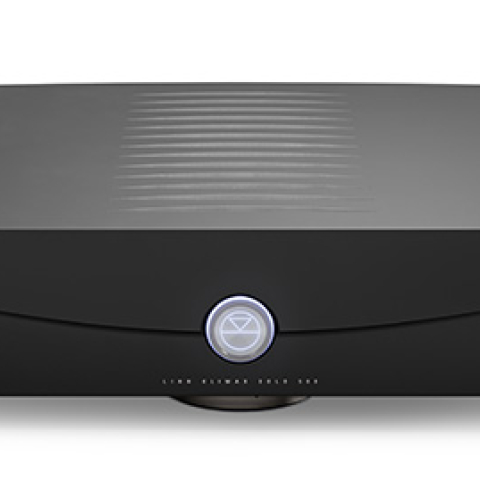
Offering specified powers of 400W into 8 ohms, 800W into 4 ohms, and 1.2kW into 2 ohms, this cool-running, relatively lightweight, Scottish amplifier combines a class-AB output stage with an optimized switch mode power supply. Adaptive Bias Control is used to minimize crossover distortion. The Klimax Solo 800 impressed JVS as one of the most neutral monoblocks he’d reviewed. “Dynamics were considerable if not overwhelming in their extremes,” he wrote, adding that “resolution was very fine, and color differentiation was notable. Every recording of great artistry I heard sounded coherent, ordered, perfectly in place, and musical to a T.” JVS recommended the Linn highly for its musical flow and truth in reproduction. On the test bench, the Klimax 800 slightly exceeded its specified power into 8, 4, and 2 ohms, and impressed the heck out of JA, who wrote “The Linn Klimax Solo 800’s measured performance is one of the best I have encountered, offering very high power with extremely low levels of noise and distortion. Wow!” (Vol.47 Nos.5 & 6 WWW)
Lyngdorf Audio MXA-8400: $8999
This cool-running, lightweight, eight-channel amplifier uses Purifi Eigentakt class-D output modules to offer up to 200Wpc into 8 ohms and 400Wpc into 4 ohms. (JA measured clipping powers with a 1kHz signal of 270W into 8 ohms and 530W into 4 ohms.) With a pair of channels operated in bridged mode, the specified maximum power is 800Wpc into 8 ohms. (JA measured a maximum power in this mode of 990W into 8 ohms.) Gain can be set to High or Low, and speaker connection is via speakON connectors; eight connectors are supplied with the amplifier. KR was impressed by the Lyngdorf, noting that the clarity and imaging afforded by the MXA-8400 driving his KEF Blade speakers “provide the necessary volume without strain in the music or on our ears. This setup provides it all for a thrilling/chilling experience.” He concluded his review by writing “Whether I used two or three channels, unbridged or bridged, the Lyngdorf MXA-8400 sounded wonderful, driving my speakers to realistic volume and allowing them to recreate realistic and pleasing performances from the intimate to the magnificent.” JA was also impressed: “The Lyngdorf Audio MXA-8400 offers superb measured performance, with high power combined with vanishingly low levels of noise and distortion.” (Vol.48 No.6 WWW) McIntosh MC462: $11,500 ★
As of this writing the most powerful stereo amplifier in the McIntosh line, the solid state MC462 is rated at 450Wpc into 2, 4, or 8 ohms, and weighs a floorbending 115lb. The output section is class-AB, designed so that each individual phase of the signal waveform is amplified by a complete push-pull output section; there are two complete push-pull amps in each channel, their outputs combined—using autoformers—in what McIntosh refers to as a Quad Balanced architecture. SM praised the Mac for delivering, without strain, a piano sound faithful to the original, for portraying brass instruments, drums, and other instruments with appropriate force, impact, and, when called for, swing. Reporting from his lab, JA declared that the MC462 is “an extraordinarily well-engineered, exceptionally powerful amplifier.“ SM bought the review sample. (Vol.42 No.5 WWW) Moon 861 stereo/monoblock: $24,000 each
This massive, powerful, dual-mono amplifier is described by its manufacturer as an "MDCA—MOON Distortion-Cancelling Amplifier.” There is no global feedback, as MDCA technology performs signal correction in a special proprietary parallel circuit path that is outside the path of the audio signal. A rear-panel toggle switch allows the amplifier to be used as a monoblock. JVS auditioned a pair of bridged 861s, commenting that they “enabled good old two-channel hi-rez to assume 3D proportions.” While colors were neither as saturated nor as differentiated as those heard through some costlier amps, the bridged pair of Moon 861 power amplifiers’ power, drive, impact, and even balance top to bottom impressed him greatly. Scrolling back through several years of his reviews, he could not find a similarly priced amplifier whose overall sound was as neutral and balanced as the 861’s and whose bass, soundstaging, and dynamics will cause eyes, ears, and wallets to open wide. “Most highly recommended.” In the test lab, the Moon 861 in stereo mode exceeded its specified power of 300Wpc into 8 ohms and 600Wpc into 4 ohms with both 20Hz and 1kHz signals. In mono mode, the 861 clipped at 1150W into 8 ohms, which is 1.6dB higher than the specified 800W into this load. The Moon 861 offered extremely low distortion and noise, even into low impedances. “This is superb measured performance for a power amplifier, one of the best I have encountered,” concluded JA. (Vol.47 No.12 WWW)
Naim Classic 200 Series NAP 250: $8999
The latest version of the English manufacturer’s ground-breaking power amplifier now has true balanced inputs as well as the older amplifier’s unbalanced inputs and offers more power, at 100Wpc into 8 ohms and 190Wpc into 4 ohm, both with both channels driven. (JA measured clipping powers of 110Wpc into 8 ohms and 195Wpc into 4 ohms.) Compared with the older NAP 250 DR, MC was shocked and even confused by the latest iteration. “This was so obviously a new sound, fresh and open, clear and transparent, in the low bass and the upper frequencies,” he wrote. “There was now an extra clarity to the soundstage, increased depth and width, but also a sense of enhanced spatiality. ... The virtual soundstage was significantly enlarged, with more stability and solidity and crisper focus than before. There were also obvious gains in ambience and image depth.” MC concluded that the NAP 250 “is loudspeaker-load tolerant and offers unusually high electrical efficiency. It is undoubtedly a front-line performer.” JA concluded that “Naim’s NAP 250 offers relatively high power with low noise and very low, predominantly second-harmonic distortion in a modest-sized chassis. But it needs to be well ventilated.” (Vol.46 No.11 WWW) Parasound Halo A21+: $5000 ★
The successor to the Parasound A 21, the new A 21+ offers 300Wpc into 8 ohms, compared with its predecessor's 250Wpc—and the new model, which operates in class-AB, can be bridged to serve as a 1000W monoblock. Other refinements include a gruntier power transformer, brawnier speaker connectors, an increase in power-supply filter capacitance, and other niceties. Balanced (XLR) and unbalanced (RCA) inputs are both provided, as are dual-mono level controls. According to KR, "listening to the A 21+ was eminently delightful and satisfying from the first note," and he pointed to the new amp's "transparency without highlighting or emphasis" and the manner in which it handled dynamic challenges in orchestral music "without stress." Technical Editor JA found that the A 21+ exceeded its power specs, delivering a full 400Wpc into 8 ohms, and noted that the amp "isn't fazed by impedances as low as 2 ohms." (Vol.43 No.3 WWW) Parasound JCA100 Tribute: $25,000/pair
This Parasound amplifier’s name is intended as a tribute to legendary engineer John Curl. Hence the “JC,” while the “A100” indicates that the output stage runs in class-A up to 100W into 8 ohms. Only 100 pairs of JCA100 Tributes will be made, each set hand assembled to order in the United States. A significant portion of the proceeds goes to Curl, and a substantial portion will be used to seed scholarships to train repair techs. Each JCA100 starts life as a Halo JC 1+ monoblock—a long-term resident in “Recommended Components”—that has its output stage bias increased and the power supply voltages reduced to allow class-A operation up to the maximum 8 ohm power. Parasound then makes other modifications that include transformer and component value changes. John Curl worked with the Parasound design team for over a year to design and optimize the modification process. JA found that like the Halo JC 1+, the JCA100 offered low-frequency delicacy and authority combined with smooth and clean high frequencies that are similar to what he experiences from a good tube amplifier, superbly precise stereo imaging, and a deep, stable soundstage. Compared with the earlier amplifier, JA found that with the JCA100s he could hear deeper into those soundstages, and while he was always intensely aware of the smallest sonic aspects with every recording he played, this was not achieved by thrusting those details at him. “Instead,” he wrote, “the JCA100s were stepping out of the way of the musicians’ efforts.” On the test bench, the JCA100 exceeded its specified powers, clipping at 115W into 8 ohms, 205W into 4 ohms, and 330W into 2 ohms, and offered very low distortion and noise. “Well done, Mr. Curl,” commented JA. “And well done, new Parasound team.” (Vol.47 No.6 WWW)
Pass Laboratories XA25: $5665 in silver; $6165 in black ★
The lowest-priced amplifier in Pass Laboratories' XA series, the XA25 strips away all inessentials—front-panel meters, balanced inputs, excessive output power—and provides the listener with a three-stage amplifier in which output power is generated by a single pair of transistors per channel, operating in push-pull class-A. Output is specified as 25Wpc into 8 ohms or 50Wpc into 4 ohms. HR tried the Pass with a great variety of speakers, starting with a rebuilt pair of original Quad ESL electrostatics: "Through the Quads, the XA25 radically improved the tactile presence of music and musicians, their voices and instruments," he wrote. "It made the Quad's legendary midrange more solid, dynamic, and well defined than I'd ever thought possible." Another, very different panel speaker came next: "Driven by the Pass Labs XA25, the Magnepan .7s did real-life natural with ease and élan." Additionally, HR found, "bass weight and organ power were well reproduced by a speaker not famous for these traits." But even that pales in comparison to Herb's adventures using the Pass amp to drive his DeVore Orangutan O/93s: "I began to realize that the XA25 is the most transparent amplifier I've ever heard." His verdict: "reasonably priced, strong beyond its power rating, and positively revelatory." Writing from his laboratory, JA noted that the Pass far exceeded its rated power output, concluding that "the XA25 performed well on the test bench, as I've come to expect from Pass Labs." (Vol.41 No.2 WWW) Pass Laboratories XA60.8 monoblock: $15,675/pair in silver; $16,676 in black ★
In reviewing Pass Laboratories' solid state XA60.8 monoblock amplifier, JCA echoed JA's earlier published response to the amp's predecessor, the XA.60.5: "the best amplifier I've heard." Each 88lb XA60.8 operates in pure class-A, made possible in part by the amp's massive aluminum heatsinks and no-less-massive steel mains transformers. (Indeed, the most obvious change from XA60.5 to XA60.8 is a weight increase of 22lb—per channel.) Output is specified as 60W into 8 ohms, doubling to 120W into 4 ohms. JCA thought the Passes sounded "sweeter, warmer, more delicate" than the more expensive monoblocks that preceded them in his system but reserved his greatest praise for their spatial prowess: "I'd never heard an amplifier make such an obvious difference … . To walk into this room while a good recording was playing was to enter an immersive aural space." JA, now acting as measurer rather than reviewer, wrote from his test bench that the "well-engineered" XA60.8 "considerably exceeded" its rated output power, delivering 150W into 8 ohms at 1% THD, and he praised its A-weighted signal/noise ratio of 93.6dB: "This is a quiet amplifier." JCA's conclusion: "I am smitten." (Vol.40 No.12 WWW) Schiit Audio Tyr: $3198/pair $$$
Instead of the ubiquitous high-value capacitors, the US-made Tyr monoblock amplifier uses a hefty inductor or choke to smooth its power supply’s rectified DC voltages. The Tyr’s output stage features a constant-transconductance topology called “Continuity,” which Schiit says offers the benefits of class-A biasing for the 24 bipolar output devices but with greater efficiency than class-A. JA found that the Tyr offered grain-free highs and an excellent sense of low-frequency drive and weight, if not quite up to the level of the much-more-expensive Parasound monoblocks. Compared with the Benchmark AHB2, the Schiit monoblocks had better low-frequency clarity, though he also noted that while the pair of Tyrs excelled at reproducing recorded space, they were slightly less transparent, with a little less soundstage depth. In the test lab, the Tyr exceeded its specified power, clipping at 252W into 8 ohms and 360W into 4 ohms. JA concluded that the Tyr is a perfect example of a thoroughly modern solid state amplifier: “It offers high power, is not fazed by low impedances, sounded superb with the three pairs of loudspeakers that I used for this review, and is competitively priced. Strongly recommended!” (Vol.46 No.1 WWW)
A (TUBE):
Air Tight ATM-1 2024 Edition: $14,975
Developed from the Japanese company’s classic ATM-1S that Art Dudley reviewed in November 2014, the ATM-1E still uses a pair of EL34 tubes for each channel’s push-pull output stage. However, the 2024 amplifier has one 12AT7 for voltage gain and two 6CG7s for phase inversion rather than original’s mix of 12AX7s and 12AU7s. It also has heftier transformers for the High and Low output taps. KM compared the Air Tight ATM-1E with the Shindo Haut Brion tube amp and the Luxman L-509X transistor integrated and decided that it the “combined the Shindo’s warmth, opulent tone, naturalness, and expansive soundstage with the Luxman’s precision and orderliness, though with its exceptional separation and layering, the ATM-1E surpassed both. Its bass was controlled, solid, and abundant, while its transparency made it feel like a neutral conduit, allowing the other components to shine.” While The ATM-1E occasionally softened or rounded notes, even then it remained refined and enthusiastic—“there was nothing slow or stodgy about this EL34 push-pull amplifier.” The Air Tight’s output power is specified as 35Wpc at 5% THD. JA measured maximum powers of 33Wpc into 8 ohms at 3% THD+N from the High tap and 32Wpc into 4 ohms at 3% THD+N from the Low tap. Overall he was impressed by the AirTight ATM-1E’s measured behavior, commenting that it has less noise and distortion, a wider small-signal bandwidth, and offers usefully lower source impedances from both of its output transformer taps than the earlier amplifier. (Vol.47 No.12 WWW) Air Tight ATM-2Plus: $24,975
The original ATM-2 was phased out in 2018, due to its new old stock British KT-88 output tubes no longer being available. The ATM-2Plus still uses KT-88s, sourced from Electro Harmonix in Russia, but at a lower plate voltage than its predecessor. Each channel has a 12AX7 input tube and two 6CG7s respectively acting as a driver/phase inverter and a cathode follower. Bias is set manually using an illuminated meter on the front panel and each channel’s gain can be independently adjusted. There are 4- and 8 ohm output impedance taps. Connected to the Klipsch La Scala speakers using the 8 ohm taps, AH found that the Air Tight sounded a bit too constrained and rigid, like a brand-new pair of leather shoes. When he switched to the 4 ohm taps, “dance music began to dance and folk music began to folk,” so he used those outputs for his critical listening. AH wrote that the Air Tight “played with a composure and even a certain reticence that made me lean forward and pay attention in a different way than I’m accustomed to. I also noticed its big-tetrode dynamics, panoramic staging, and fulsome low-end response.” After experimenting with tube rolling, he concluded that with its stock tubes, the ATM-2Plus was among a handful of the finest and most memorable tube amps he’d heard, and certainly the best one putting out anything like 70Wpc. (Vol.48 No.11 WWW) Ampsandsound Mogwai SE: $3900
The Mogwai SE generates 8W from a single pentode or beam tetrode output tube per channel—the review sample used EL34s—and features class-A operation, zero negative feedback, tube rectification, a single 12AX7 driver, a volume control, and the ability to drive headphones as well as speakers. Using the Mogwai as a stereo power amp with the volume control wide open to drive his Klipsch La Scala speakers, AH found that when he played a Kraftwerk LP “the thick synth notes practically burst out of the big horns in a flying side kick to my eardrums. The music was loud, taut, and borderline scary. The bass hit hard and didn’t lag.” The Mogwai sounded “fresh, spritely, bracingly pure, and irresistibly appealing.” Playing a track from the first CS&N LP, the Mogwai focused his attention on the melody, propelling the song forward with tunefulness and momentum. With headphones the amplifier sounded quiet, powerful, refined, and lovely. And like other good tube amps with speaker-level wattage, it transformed AH’s Sennheiser HD 650 from a veiled, fairly mediocre can into a world-class transducer. (Vol.48 No.12 WWW)
Audio Research Reference 330M monoblock: $90,000/pair
Specified as offering 330W but without a load impedance mentioned—JA measured clipping powers of 360W into 8 ohms from the 8 ohm transformer tap and 330W into 4 ohms from the 4 ohm tap—the 330M’s output stage uses three matched pairs of KT170s. It also uses one 12AX7/ECC83 for the front end, one 6H30 for the gain stage, one 6H30 error amplifier for the power supply regulator, and a 6550 pass tube for the power supply regulator. JVS found that his Wilson speakers, which have a 4 ohm nominal impedance, sounded best through Audio Research’s 8 ohm taps, so that is how he auditioned the 330Ms. “Detail and dynamics were astonishing, tonalities were thrilling and gorgeous, and bass response was out of sight,” he wrote, adding that the 330M excelled in conveying intimacy with the same ease as it reproduced big-boned music. “There’s a beauty to the 330M’s sound that transformed sitting in the sweet spot into an act of joy. No emotion, no color, no pitch—no musical truth, including those that are heart-wrenchingly painful and filled with despair—seems beyond its reach,” he concluded. JA added that “The Audio Research Reference 330M offers high power with relatively low levels of harmonic and intermodulation distortion as long as the load impedance is the same as, or higher than, the nominal output tap impedance.” (Vol.48 No.12 WWW) Doshi Audio Evolution Stereo: $24,995
A hybrid amplifier that combines a solid state front end with two pairs of EL34/6CA7 output tubes for each channel, the Evolution Stereo has both single-ended and balanced inputs, the latter buffered with transformers. There is a single pair of output terminals, these optimized for a 5 ohm load. In an unusual topology, there are two sets of push-pull primary windings, one set for the output tube plates and one set for the screens. “The idea is to load the screens such that the first few watts of output power are the result of screen contribution, and as the screens reach their limit, the plates take over the load,” said designer Nick Doshi. Output tube biasing is straightforward, aided by a front-panel display. KM set the bias to “200” for his auditioning. The Evolution Stereo’s maximum power is specified as 65W into 5 ohms; with the bias set to “182,” JA measured 69W into 8 ohms and 80W into 4 ohms, both at 3% THD+noise. There is just 5dB of global negative feedback, which means that distortion lies around 0.3% at moderate powers. Fortunately, the Evolution Stereo’s distortion signature into 8 ohms was predominantly the subjectively innocuous second harmonic, noted JA. With DeVore Gibbon Super Nine speakers KM found that the Evolution Stereo “delivered surprising levels of visceral texture, absolute presence, and stellar dynamics,” sounding superbly clear, dynamic, punchy, well-controlled, detailed, and coherent. “It offered the best spatial resolution I’ve encountered from an amplifier,” he wrote. “Its tonal presentation was precise and well-ordered. It was never romantic or soft. It presented music on a wide, cavernous stage that often strode out into my listening space like an actor jumping off the stage and into the audience.” (Vol.49 No.2 WWW) Manley Laboratories Mahi monoblock: $6599/pair
This unusually styled push-pull monoblock uses four EL84 tubes, which can be operated in pentode mode, offering 40W into 8 ohms, or triode mode, offering 20W into 8 ohms. AH noted that triode mode increased the clarity (though not the colorfulness) of the already very clear-sounding Mahi, but he kept returning to the pentode setting “for a little more grunt and, more importantly, fun.” AH felt that the robustness and speed of the power supply harnesses the EL84’s “perky, friendly, approachable sound” to create an amplifier with all the musical awesomeness of tubes but very little flavor of their own. Three levels of global negative feedback are available. With the pair of Mahis connected to Klipsch La Scalas, AH found that while increasing the amount of feedback firmed up the bass response and beefed up power output, this was at the expense of liveliness and color. He much preferred the minimum setting of 3dB of negative feedback, which allowed for the most vivid sound and explicit emotional connection while keeping a firm hand on the bass. He summed up the Mahis by writing “if your speakers and room can make a big noise with 40 watts, then these petite but never petite-sounding amplifiers will probably delight you, doing justice to all but the most ambitious systems.” (Vol.46 No.10 WWW)
Octave MRE 220 SE monoblock: $30,000/pair and up, $39,100/pair as reviewed
Supplied with KT88 output tubes, the MRE 220 SE can also be fitted with KT120s, for an extra $800, or KT150s, for an extra $1600. (Optimizing output tube biasing is straightforward with trimmers and LEDs.) Unusually for a tubed amplifier, there is a single output transformer tap. JVS auditioned the amplifiers with KT150s and two Super Black Box external capacitor banks ($7000/pair). Power can be set to High (200W) or Low (140W), the output damping factor can be set to High or Low, and a Ground Lift switch can be used if there is hum from a ground loop. JVS preferred the sound using the balanced inputs, with the ground connected and with the damping factor set to Low. “The soundstage was wide, and the sound was warm and inviting,” he wrote. He tried using the optional 3-P input filter ($3000) but found that layers and textures were less clear with the filter. Without the Super Black Box, instruments sounded smaller and less impactful. Air diminished, low bass became lighter in weight. “It’s irrefutable: The Super Black Box significantly elevates the Octave MRE 220 SE monoblocks’ ability to deliver musical satisfaction,” JVS wrote. He summed up his time with the Octave monoblocks by writing, “There’s a palpable yet paradoxically intangible truth to the sound of the Octave MRE 220 SE mono tube amplifiers that makes them an easy, solid recommendation to music lovers of all stripes.” In the test lab, with KT150 tubes, the Power set to High, and the Super Black Box, the amplifier clipped at 130W into 8 ohms (at 1% THD+N) and at 230W into 4 ohms (at 3% THD+N). Removing the Super Black Box slightly lowered the maximum power, and the lowest distortion at moderate powers was obtained with the damping factor set to High. Overall, JA decided, the measured performance of Octave Audio’s MRE 220 SE is typical of a tubed amplifier that doesn’t use a large amount of corrective loop negative feedback. He recommended that the amplifier not be used with loudspeakers whose impedance drops much below 4 ohms. (Vol.47 No.7 WWW) Unison Research Reference monoblock: $49,999/pair
Unusually, the Reference monoblock uses four paralleled 845 triode tubes operating in class-A for its output stage. The front-end circuitry uses one ECC82 tube and one ECC83 tube. There are both balanced and single-ended inputs and 4 ohm and 8 ohm output transformer taps. (RvB slightly preferred the 8 ohm tap with his reference Focal Scala Utopia Evo speakers, and the 4 ohm one with the Estelon X Diamond Mk IIs.) Playing familiar albums, RvB noted that the Unison monoblocks gave recorded instruments the space they needed: “All sounded lush but not overripe.” They beautifully rendered the hushed, expressive Rhodes piano on John Martyn’s “Couldn’t Love You More” and the claves on his “Certain Surprise.” He also found that the Unison amps handled complex, layered music with composure. “Even the weight and speed of taiko hits came through with more authority than I’d thought likely from a tube amplifier,” he commented, adding that that kind of performance “is usually the province of solid state contenders.” RvB concluded that the 845 tubes occupy their own terrain. “They don’t punch like the PrimaLuna EVO400 amplifier or dazzle with immediacy. Instead, they bloom. They stretch space, thicken tone, and draw you in with an unhurried, dimensional ease. They flesh out the harmonic body of a note and let its decay hang in the air without collapsing the structure around it. The Unison Reference amplifiers make full use of that character.” Unison Research specifies the Reference’s maximum continuous power as 75W, a high power for a single-ended topology. JA found that the amplifier reached its specified maximum power into 8 ohms at almost 10% THD+N. Fortunately, he noted, the distortion in the midrange was predominantly the subjectively innocuous second harmonic. However, with the circuit’s reduced linearity in the top audio octave, intermodulation distortion with an equal mix of 19 and 20kHz tones was disappointing. JA summed up his findings by writing “The amplifier offers relatively high power as long as the load impedance is higher than the nominal output transformer tap value. The single-ended input is preferable to the balanced.” (Vol.48 No.9 WWW) B: EleKit Tu-8600RS: $2080 as reviewed ($1695 basic version) $$$ ★
As the name suggests, the EleKit TU-8600R is a build-it-yourself power amp, a single-ended design that uses one 300B directly heated output tube per side for a specified output of 9.2Wpc at 10% THD. (A preassembled version is available at extra cost.) Prices start at $1185 without tubes and top out at a $2985 version that includes Lundahl output transformers and deluxe German-made Elrog 300B tubes. HR tried a variety of 300Bs in his Lundahl-equipped review sample and praised the EleKit for sounding not warm and soft but “fast and vigorous, as transparent as any amplifier, and extremely captivating,” with a sonic character that’s “clean, neutral, and precise.” HR’s conclusion: “This is what I call value for money.” Other kits are available, but availability is sporadic. In his May and August 2021 Gramophone Dreams, HR used the Elekit TU-8600S as a platform for comparing different 12AX7s and 300Bs. He later compared the Elekit fitted with Linlai Cossor WE300B tubes to the EL34-fitted Lab12 Mighty with a Dietrich Fischer-Dieskau LP. HR noted that the Mighty emphasized the immediacy and raw texture of the upper octaves, while the Elekit directed his attention to beauties in the baritone’s mid and lower octaves. (Vol.42 No.4, Vol.44 Nos.5 & 8, Vol.46 No.1 WWW)
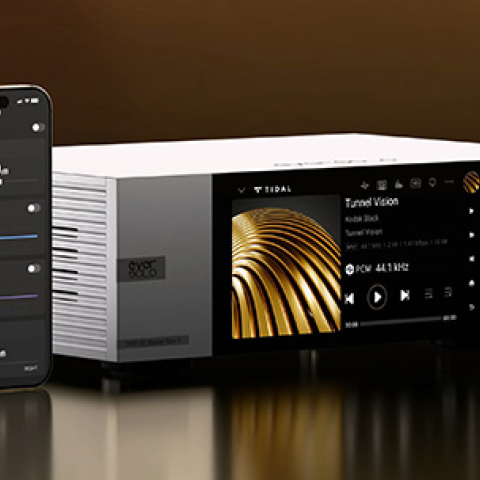
Eversolo AMP-F10: $2480
This solid state amplifier offers 23dB or 29dB gain, to optimize the system’s gain architecture, and can be operated in stereo or bridged-mono modes. The specified maximum powers in stereo mode are 200Wpc into 8 ohms, 320Wpc into 4 ohms, and 450Wpc into 2 ohms. Bridged-mono powers are 650W into 8 ohms and 950W into 4 ohms. JA found that the Eversolo slightly exceeded the specified stereo powers with a 1kHz signal into the higher impedances, though with a 20kHz signal, as required by the FTC’s 2024 “Amplifier Rule,” the amplifier clipped at just 55Wpc into 8 ohms. The AMP-F10 almost met its specified powers in bridged-mono mode, again with a 1kHz signal. JA also found that while THD+N was very low in the bass and midrange, it rose at higher frequencies, which will be due to the amplifier having a limited open-loop bandwidth. TF noted that with his large B&W speakers, the Eversolo brought out usefully more bass weight than he had noticed before, but sometimes it was too much. The soundstage was pleasingly detailed and wide, but not quite as high-def pinpoint as with his reference Benchmark amplifier. While TF preferred the sound of the Benchmark with his B&W speakers, overall, he suspected that the AMP-F10 could push every bit of gut punch out of smaller speakers and probably produce pleasing low-frequency tone and energy at lower listening volumes than some other amps can. (Vol.48 No.8 WWW) First Watt SIT-4: $5000
A SIT is a field-effect transistor with a vertical structure that can operate at high currents and voltages; its I-V characteristic is similar to that of a triode vacuum tube. First Watt’s Nelson Pass commissioned a run of new, built-from-scratch SITs, which are used in the SIT-4. Unusually, the SIT-4 is rated at 10W into 8 ohms and 5W into 4 ohms, the opposite from what is normally the case with power amplifiers. HR found that with both the speakers with which he used this amplifier, the SIT-4 “moved and grooved with a jaunty perkiness that added charm to both speakers’ personalities; ... the SIT-4's intrinsic character leans towards precise, organized, feet-on-the-ground, and fun! Not hi-fi at all.” He subsequently noted that the SIT-4 suited his Falcon Gold Badge speakers perfectly. “Before the SIT-4 I had never experienced bass from any speaker anywhere that was as natural and lifelike as what was coming out of these puny, sealed-box BBC monitors. ... The only thing missing with the SIT-4 is the vibey luminosity of tubes, but that crazy-accurate SIT-4 bass was such a big, dramatic change for my Falcons that I forgot all about tube glow.” (Vol.47 Nos.10 & 12 WWW) Lab12 Mighty: $2995
This Greek amplifier uses just two tubes per channel: a 6N1P dual triode feeding a Russia-made Electro-Harmonix EL34 power tube operating at fixed bias. The Mighty’s output transformer has separate taps for driving 8 or 4 ohm speakers, and the single EL34 can be operated in either triode or Ultralinear modes. Power is specified as 8–9W depending on tube, with 10%–15% more power available in Ultralinear mode. HR commented that the Ultralinear Mighty “played waltzes and reggae with Leica-lens focus and a thinner-than-water flow” and noted the sound’s “surprising physicality.” In triode mode, the presentation “became more pure by several notches—and also more color-saturated.” Compared with the 300B-fitted Elekit TU-8600S, the EL34 Mighty in both UL and triode modes “played with crisper, more conspicuously detailed clarity, which distributed charged energy across a well-constructed, shallower sound matrix.” “The Mighty is an exciting-to-use, paradigm-shifting treat,” concluded HR. (Vol.46 No.1 WWW)
LSA Discovery Warp 1: $1499
This small amplifier features a class-D output stage based on Texas Instruments’ TPA3255 chip. An “over-specified” switch-mode supply supplies the power. Though both single-ended and balanced inputs are provided, balanced operation is preferred. Internal DIP switches allows the driver-stage gain to be optimized for a specific system. The switches are labeled “0dB,” “6dB,” “14dB," and “20dB,” with “6dB” the default setting. TF ended up with “0dB,” when the amplifier offers 20dB of voltage gain, because he likes to use his Benchmark LA4 preamplifier with less attenuation. Driving TF's big B&W 808 speakers, which don't need a ton of amplifier power but do need an amplifier that can push the power through with speed and authority, the Warp 1 delivered the goods. “My favorite rock, soul, blues, and funk tunes took on full-bodied punch that made the beat stand out and got feet tapping,” he wrote. In the test lab, though the Warp 1 offered respectable measured performance, it didn't quite meet its specified output power of 150Wpc into 8 ohms and 250W into 4 ohms. With both channels driven and with clipping defined as when THD+noise reaches 1%, JA measured clipping powers of 110Wpc into 8 ohms 165Wpc into 4 ohms. (Vol.46 No.7 WWW) Plinius Reference A-150 stereo/monoblock: $13,850/each, $27,700/pair
This solid state amplifier from New Zealand can be operated in stereo mode, when it offers 150Wpc into 8 ohms and 250Wpc into 4 ohms, or in bridged-mono mode, when it offers 450Wpc into 8 ohms and 600Wpc into 4 ohms. A button on the front panel allows you to switch between “class-AB” and “class-A” output stage bias. In the test lab, JA found that class-A operation was optimal, where the A-150 offers high power (exceeding its specified powers) with low distortion, especially in bridged-mono mode. However, he also noted that this amplifier will perform best in both stereo and mono modes with loudspeakers whose impedance remains at or above 4 ohms. Nevertheless, JVS found that the stereo Plinius worked well with his low-impedance Wilson speakers. He much preferred class-A operation, which he wrote was “the path forward for focused listening that puts a premium on sparkle, life, and fine detail.” And with two monoblocks the sound was even smoother, warmer in the midrange, and more alive. “A pair of RA-150s delivered abundant midrange warmth, fine bass, true timbres, and emotionally compelling sound,” he wrote. (Vol.47 No.1 WWW) PrimaLuna EVO 300 Hybrid Stereo: $7195; $14,390/pair as monoblocks
The EVO 300 Hybrid marries a tubed input stage with six 12AU7 dual-triodes to a solid state output stage with pairs of MOSFETs biased into class-AB. There are both XLR and RCA inputs and gain can be set to High or Low. Although a stereo amplifier, the two channels can be bridged for mono operation—transfer the loudspeaker cables to the mono posts and flip a switch. The maximum power in Stereo mode is specified as 100Wpc into 8 ohms and 150Wpc into 4 ohms. JA found that the amplifier exceeded those powers, clipping at 115Wpc into 8 ohms and 160Wpc into 4 ohms. The specified powers in Mono mode are 220W into 8 ohms and 300W into 4 ohms; the amplifier clipped at 250Wpc into 8 ohms and 305W into 4 ohms. SM used a pair of bridged-mono PrimaLunas to drive his Wilson The WATT/Puppy speakers, which have a demanding impedance. Listening to a recording of orchestral music by Ravel he found the sound spectacularly detailed, but not so much as to seem artificial or bright. He heard “beautiful, fully distinct and sorted solo winds, lovely, delicate strings, full-bore and lifelike dynamic contrasts, and a yuuuuuge soundstage.” Comparing a single stereo EVO 300 with two used as monoblocks, he wrote that he would peg the single-box EVO 300 at maybe 95% of what two amps gave him in bridged-mono mode. He concluded that “rock-solid build was coupled to rock-solid sound. It seems you can have serious power, low output impedance, and many (perhaps all) of the virtues of tubes.” JA was impressed by the PrimaLuna EVO 300 Hybrid’s measured performance. “In both Stereo and Mono modes, it can deliver relatively high power even at 20kHz into low impedances,” he wrote. (Vol.48 No.10 WWW)
Primare A35.8: $5500 ★
This eight-channel colleague of the Swedish manufacturer’s stereo A35.2 uses the reliable and powerful Hypex NC500 class-D module, with some modifications. The amplifier features a switch-mode power supply, with its two outputs each feeding four amplifier stages. Pairs of outputs can be run as bridged mono amplifiers. KR auditioned the Primare with three bridged pairs to run his Left-Center-Right speakers and the remaining two channels to run his two surround-channel speakers. While he did try the amplifier in eight-channel mode, KR found that bridging transformed the A35.8 “into a much more exciting amplifier” with a better bass balance and superbly stable imaging, even in stereo. He noted that there was never any evidence of the “gray” treble he had experienced with earlier Ncore-based amplifiers: “In my preferred five-channel configuration, the A35.8 equaled other good amplifiers in the treble.” Comparing the Primare with his reference Benchmark AHB2, he felt that the Primare sounded “more convincingly live” than the Benchmark. On the test bench, the A35.8 exceeded its specified power of 150Wpc with two channels driven into 8 ohms, clipping at 200Wpc, and met its 300Wpc specification with two channels driven into 4 ohms. JA’s conclusion was that the Primare A35.8 offers high power, especially in bridged mode, with very low levels of distortion and audioband noise. KR suggests A–; too bad there's no such rating. (Vol.45 No.11 WWW) Quad 303: $1599 $$$
The 2025 Quad 303 looks identical to its 1967 ancestor but is a thoroughly modern design, offering 50Wpc into 8 ohms and 70W into 4 ohms in stereo mode. In bridged-mono mode, the specified maximum powers are 140W into 8 ohms and 170W into 4 ohms. (JA found that the Quad 303 slightly exceeded the specified powers with a 1kHz signal, and, commendably, met the 8 ohm power even at 20kHz. He also noted very low levels of noise and distortion.) MC’s listening panel was impressed by the 303’s sound quality in stereo mode, high-definition sources proving rewarding in terms of transparency, dynamics, and image precision. However, using a pair of 303s in bridged-mono mode, the amplifiers had a firmer grip on MC’s 8 ohm Fink Team loudspeakers: “tighter, more tuneful bass with better rhythmic patterning.” The dynamic headroom was obviously superior—MC heard improvement in dynamics, musical expression, transparency, and focus. The sound overall was more upbeat and bolder, he noted. He concluded that used with the matching 33 preamplifier, “This is classic, timeless audio engineering at its best, beautifully functional, versatile, elegant, essentially self-effacing, and possessed of a calm, almost relaxed musicality respectful of its legendary roots in Quad audio history.” (Vol.48 No.7 WWW) Rogue Audio DragoN monoblock: $5995/pair
The DragoN uses a tubed input stage and Hypex’s NCore MOSFET class-D module in the output stage. Rogue says that a global feedback circuit that includes the front-end’s ECC802S tube forces the class-D output to behave (and sound) like a tube circuit. There are balanced and single-ended inputs. The specified power is 325W into 8 ohms and 525W into 4 ohms. JD used a pair of Rogue DragoNs to power his ESS hybrid-electrostatic loudspeakers and concluded that the monoblocks unveiled new takes on his favorite recordings. “The class-D power and dynamics spoke to the younger me, who craves those overwhelming sensations that result, above all, from loudness, and the today me who appreciates the DragoNs’ excellence at bringing less dynamic music to life at lower volumes, offering me considerable pleasure within the constraints of everyday real life.” On the test bench, the DragoN clipped at 127W into 8 ohms and 226W into 4 ohms, both powers lower than specified, though the amplifier exceeded the specified powers if the clipping definition was relaxed from 1% to 3%. Distortion was relatively high in level, even at moderate powers, but fortunately, the distortion signature was predominantly the subjectively innocuous second harmonic. JA concluded that the Rogue DragoN’s measured performance is dominated by the use of a tube in the input stage. “This amplifier offers high power,” he wrote, “but with high levels of second-harmonic distortion.” (Vol.47 No.3 WWW)
Zesto Audio Bia 200 Select: $15,900
This elegant looking, zero-loop–feedback, tubed design from California comes fitted with push-pull pairs of KT150 output tubes operated in Ultralinear mode, but can also use K120s or KT88s. Output tube bias is adjustable on the fly for KT150s (three settings) and KT120s (two settings). There are balanced and single-ended inputs and 4, 8, and 16 ohm output transformer taps. KM used both KT150s and KT88s. With the latter tubes, KM noted that the Bia 200 Select sounded “laid-back, a bit slumber-toned, and easy on the ears. ... Smoothness and textural sweetness were its strongest points.” With KT150s at the same low bias he had used for the KT88s, the Zesto sounded entirely different, “like a transparent membrane, now pulled tighter.” Moving up to the middle bias setting, and then to the highest, KM commented that “music swelled with more intensity and force in the low end and better articulation and more immediacy, overall.” He concluded that the Bia 200 “is transparent, powerful, resolving, fun. Maybe it’s the top end that seems to go out for miles, or the sonorous bass, or how it steps out of the way of recordings and lets them shine on their own terms.” On the test bench, the Zesto featured extremely high source impedances from all three of its output taps, conform to classic telecommunications practice in which making the source impedance the same as that of the load impedance maximizes power transfer. However, this means that the amplifier will sound different with every loudspeaker with which it is used. Of greater concern was that the Bia 200 only met its specified powers at relatively high levels of harmonic distortion, along with the fact that the distortion was higher at low frequencies than it was in the midrange and that the distortion and noise were different in the two channels. JA found that this behavior was due to mismatched output tubes—Zesto recommends that the tubes have at least 50 hours of use to sound their best, but the review sample’s tubes had more than 500 hours of use, with corresponding deteriorations in their operating parameters. The paradox, therefore, is that the longer the tubes are used the better the amplifier will sound but the worse it will measure. (Vol.46 No.3 WWW) Deletions
Gryphon Apex Stereo, Luxman M-10X, Michi S5, not auditioned in a long time.
“The more I listened to the A-300 monoblocks, the more I wanted to listen,” wrote JVS about his time with a pair of these powerful amplifiers. (It is specified as delivering 125W into 8 ohms, 250W into 4 ohms, 500W into 2 ohms, and 1000W into 1 ohm.) The MOSFET output operates in class-A up to 125W into 8 ohms, 62.5W into 4 ohms, and 31.25W into 2 ohms. The A-300 has both balanced and unbalanced inputs; the gain and XLR polarity can be adjusted; and an operation-mode switch facilitates bridging and biamping. “As revealing and full range as the sound was,” wrote JVS, “these amplifiers emphasized midrange warmth over top-end brilliance.” He summed up the A-300 by writing “as much as the Accuphase A-300 Monophonic Power Amplifier deserves a Class A rating on our Recommended Components list, that classification only begins to capture how wonderful it sounds.” On the test bench, the A-300 exceeded its specified powers, clipping at 210W into 8 ohms, 385W into 4 ohms, and 610W into 2 ohms. JA’s conclusion: “The Accuphase A-300’s measured performance indicates that it has no problem driving low impedances, and it offers very low distortion, especially into 8 ohms. It is also a very quiet amplifier, even at the highest gain setting.” (Vol.46 No.12 WWW) Ayre VX-8: $8000
The modest-sized, solid state VX-8 is specified as delivering up to 100Wpc into 8 ohms or 170Wpc into 4 ohms; JA measured clipping powers of 110Wpc into 8 ohms and 176Wpc into 4 ohms. It offers both balanced and single-ended inputs; in addition to the usual speaker outputs, which use Cardas binding posts, there are balanced and unbalanced subwoofer outputs. KM liked what he heard from the Ayre amplifier: “The VX-8 made familiar records new again. It wasn’t so much casting recordings in a new light as digging deeper to reveal more of a recording’s sonic architecture; a different kind of light induces a different reflection. What’s more, the VX-8 made all the vinyl records I played sound more listenable, regardless of era or genre.” KM’s conclusion was that the VX-8 “commendably reproduces music of all genres while asserting its singular, special sound, as unique today, under the guiding hand of Ariel Brown, as with its originator, Charley Hansen.” He gave it a “heartfelt, shout-it-from-the-rooftops recommendation.” Both KM and JA commented that the VX-8 ran hot; JA warned that the amplifier’s heatsinks’ thermal capacity was only just sufficient for its power capability. (Vol.46 No.10 WWW) Balanced Audio Technology REX 500: $25,000
RvB evaluated the massive, hot-running, zero-feedback REX 500 in three ways. First, he went without a preamp, using the volume control of his main source, an Aurender A20 digital transport/server. Then he listened to the REX with the Aurender connected via the line stage of his Benchmark HPA4. Finally, he pressed BAT’s own VK-90 preamp into service. While he preferred the sound with the BAT preamp in the chain by a small margin, he spent the least time with that combination. (The VK-90 has not yet been reviewed in Stereophile.) RvB wrote that elevated levels of transparency and resolution were evident, and that soundstaging was stellar. He commented on the amplifier’s superb articulation and slam, zero glare, grip that could embarrass a bench vice, and as much truthfulness as the best power amplifiers he’d heard. RvB concluded that the BAT REX 500 “walks that happy line between reticence and bombast, giving preference to neither and varnishing nothing. It doesn’t insert its own drama, but it renders sound that’s both dramatic and refined—if that’s what the recording calls for.” BAT specifies the REX 500’s maximum continuous power as 500W into 8 ohms and 1000W into 4 ohms; JA measured clipping powers of 416Wpc into 8 ohms and 680Wpc into 4 ohms at 1% THD+N. Relaxing the definition of clipping to 3% THD+N gave maximum powers of 520Wpc into 8 ohms and 850Wpc into 4 ohms. Balanced Audio Technology is known for its superb-sounding tube amplifiers, so it came as no surprise to JA that the solid state REX 500’s measured performance was more like that of a high-quality tubed design, with a highish source impedance and a distortion signature dominated by the relatively innocuous second and third harmonics. (Vol.47 No.6 WWW)
Named for the late Allen H. Burdick, the engineer whose work formed the basis for its design, Benchmark’s AHB2 makes use of THX Corporation’s Achromatic Audio Amplifier (AAA) technology, in which a low-power feed-forward amplifier drives a low-bias class-AB output section. In his listening tests, KR discovered “much more apparent low-level detail in already-familiar recordings”—a characteristic he credited to the Benchmark’s evident noiselessness—and a tonal balance that “sounded more ‘right’ than any of [the other amps on hand].” In measuring the AHB2 and attempting to confirm its specified (very) high signal/noise ratio, JA observed nonlinearities in his testing equipment that “haven’t affected the measured performance of other amplifiers I’ve tested, but they were detectable with the AHB2’s very low intrinsic distortion and noise.” His conclusion: “an extraordinary amplifier.” In his Follow-Up report, JCA compared the AHB2 to his reference amp: “Although I preferred the AHB2’s denser presentation of certain details, it’s not clear to me which is truer to the source.” One of Kal Rubinson’s reference amplifiers. JA compared the AHB2 with a pair of Schiit Tyr monoblocks, writing that the Benchmark sounded a tad lighter-balanced—“clean, clear, transparent, yes, with terrific soundstage depth, but lighter.” He also found the AHB2 to be a synergistic partner for Benchmark’s high-resolution DAC3 B. (Vol.38 No.11, Vol.41 No.10, Vol.46 Nos.1 & 3 WWW) Boulder 1151 monoblock: $47,000/pair
This class-A amplifier features Boulder’s “Smart Current” biasing scheme, which adjusts the output stage bias according to the demands of the signal. Specified continuous output power is 250W into 8 ohms; JA measured clipping powers of 310W into 8 ohms with both 1kHz and 20kHz signals and 500W into 4 ohms. JVS wrote that Boulder’s 1151 monoblocks “sounded really beautiful. ... the warm, glowing bath of sound from the 1151s kept drawing me in.” He summed up his time with the Boulders by writing “open, clear as a bell, vital, and alive. Those are the distinguishing characteristics that stood out for me then and that remain with me now. Anything but dry or sterile, these amps bring an inner warmth and freshness to music that is best described not as a breath of fresh air but as a welcome change of seasons.” JA summed up the Boulder 1151’s performance on his test bench as “superb,” with high power accompanied by extremely low levels of noise and all types of distortion. (Vol.48 No.6 WWW) Buckeye Purifi Eigentakt 1ET9040BA monoblock: $2590/pair $$$
This unassuming-looking, lightweight amplifier—it weighs just 7lb—uses Purifi’s Eigentakt 1ET9040BA high-performance class-D module powered by a 1200VA switch-mode supply. KR was impressed by what he heard, writing, “Sonically, the Buckeye 1ET9040BA monoblocks are superb. To their credit, they are transparent, open, and balanced, and with the right program material, thrilling. On the other hand, they will not ‘improve’ source material, nor will they ‘warm’ or ‘smooth’ your system or room acoustics. Physically, they are compact, lightweight, and utilitarian in the best meanings of the word.” Rated output power at 1kHz and 0.1% THD is 375W into 8 ohms, 750W into 4 ohms, and 1200W into 2 ohms. However, JA found that the amplifier’s protection circuit operated at lower powers: 290W into 8 ohms, 450W into 4 ohms, and 660W into 2 ohms. Distortion in the midrange and bass was extraordinarily low, but it rose in the top octave. After the review was published, Purifi let Buckeye know that the modules in the review samples were from an initial batch and were faulty. KR and JA subsequently assessed samples with correctly performing Eigentakt modules. On the test bench, the new samples clipped at 400W into 8 ohms with both 1kHz and 20kHz signals, at 690W into 4 ohms, and at 1200W into 2 ohms. The new amplifier offered even lower THD+N in the bass, midrange, and mid-treble than the original amplifier had, and now there was only a small increase above 5kHz. Tested with an equal mix of 19kHz and 20kHz tones, the new samples produced superbly low intermodulation distortion. KR auditioned a wide range of music with the new amplifiers. He concluded his follow-up by writing that none of his original comments on the Buckeye amplifier’s superb sound needed to be changed. Price includes free shipping in the US. (Vol.48 Nos.1 & 6 WWW)
This elegantly styled German amplifier uses internal heatpipes to optimize cooling and can be operated in conventional stereo mode or as a bridged monoblock. JCA found that as a two-channel amp the Burmester lacked any hint of “electrical” sonic character. “Piano notes sounded weighty, full, dense,” he wrote, adding that the leading-edge transient “was fully there, to a degree I found quite natural, but the emphasis was on the rich core of the notes.” But with two amplifiers in mono mode, the music “spread out more and seemed more relaxed. It didn’t seem as loud. The difference wasn’t subtle. Listening with two amplifiers was a more satisfying experience.” JCA concluded that this may be the most self-effacing amplifier he’s reviewed. “Its utter lack of electronic character is a huge plus. It’s a musical chameleon.” On the test bench, the 216 exceeded its specified power in stereo mode of 100Wpc into 8 ohms and 165Wpc into 4 ohms. In mono mode, the Burmester clipped at 330Wpc into 8 ohms and 500Wpc into 4 ohms. “The Burmester 216 offers very low distortion and noise and won’t be fazed by having to drive low impedances,” concluded JA. (Vol.47 No.1 WWW) Burmester 218 stereo/monoblock: $50,000 each, $100,000/pair
Specified as offering up to 165Wpc into 8 ohms, 275Wpc into 4 ohms, and 400Wpc into 2 ohms, the solid state 218 can also be operated as a bridged monoblock, when it can output 565W into 8 ohms and 785W into 4 ohms. This amplifier met or exceeded these powers in the test lab. Comparing a pair of mono 218s with his reference Accuphase and Dan D’Agostino monoblocks, JVS found that the Burmesters combined the best qualities of both amplifiers: The treble is quite smooth, the midrange natural and beautifully fleshed out, and the bass as balanced, controlled, and voiced as everything above it. “When put to the test, their ability to resolve fine detail and convey subtle gradations in color, pacing, and dynamics is up there with the best.” He added that, “because the 218s enabled me to sink deeper into old favorites and fall in love with new music in record time, listening to them was a consistent joy.” In the test lab, the Burmester 218 offered high power with very low distortion and noise, though it dealt slightly better with very low impedances in stereo mode than as a bridged monoblock. (Vol.47 No.10 WWW) CH Precision M1.1: $57,000 in stereo mode; $110,000/pair in monaural mode ★
The Swiss-made CH Precision M1.1 is a modular solid state amp—the user can configure the amp for stereo or mono use, as well as for a choice of output-power-delivery modes—with a JFET front end and a class-AB output stage. A robust power supply built around a massive 2200VA transformer helps account for the M1.1’s extraordinary (165lb) weight. MF, who found the amp’s timbral balance to be very slightly on the warm side of neutral, was taken with a pair of M1.1s configured for mono, noting that their richness did not come with the penalty of softened transients and praising the amps’ combination of bass depth and bass kick. In measuring the M1.1, JA observed that its performance on the bench was dependent upon the amount of global negative feedback dialed in (MF preferred the sound at 20%) and noted the amp’s preference for loads higher than 2 ohms. In his Follow-Up of a single amplifier in stereo mode, JCA agreed with MF that the M1.1 has “powerful bass grip and remarkable slam.” However, while he settled at 10% negative feedback, he was equally happy with no feedback. In contrast to Mikey’s experience, JCA didn’t find the bass soggy even with feedback set to zero. He also noted a remarkable sense of openness with this amplifier. “Well-separated instruments were laid out in an otherwise empty, blank space,” he wrote, adding that the M1.1 sounded “powerful, muscular, [with] plenty of grunt, clear, open, spacious, relaxed.” JCA’s conclusion? “Highly recommended if you’ve got the cash. I wish I did.” (Vol.42 No.7 WWW; Vol.47 No.3 WWW)
See Jason Victor Serinus's review in this issue. (Vol.49 No.4 WWW) Dan D'Agostino Momentum M400 MxV monoblock: $90,000/pair
The M400 MxV Mono is the latest iteration of Dan D'Agostino Master Audio Systems' debut amplifier of 2011, the Momentum Mono. Featuring circuitry and active devices trickled down from the company's cost-no-object and weight-no object Relentless amplifier, the MxV is specified as offering output powers of 400W into 8 ohms, 800W into 4 ohms, and 1600W into 2 ohms. (JA measured clipping powers of 442W into 8 ohms, 778W into 4 ohms, and 1050W into 2 ohms, though his wall voltage had dropped significantly at the latter two powers.) JVS exclaimed that with the monoblocks driving his Wilson Alexia V speakers, "the strength and quality of bass with the M400 MxV blew me away." The MxV's magic, however, was not limited to its bass, he commented. "Above its fine, true midrange, treble sounded less bright and forward on the M400 MxV than with the Progression M550." Overall, he wrote, the clarity and ease with which the MxV handles even the most challenging recordings is remarkable. "It is one of the most musical, truthful, satisfying amplifiers I've ever heard in my system and one of the most striking aesthetically." (Vol.46 No.6 WWW) Electrocompaniet AW 800 M: $47,500/pair
The AW 800 M is a hefty class-AB design that can be operated as a conventional stereo amplifier or as a monoblock. Specified maximum power in stereo mode is 300Wpc into 8 ohms and 600Wpc into 4 ohms. In mono mode, it is 800W into 8 ohms, 1500W into 4 ohms, and 2200W into 2 ohms. The output stage bias is set so that approximately the first 10W into 8 ohms operates in class-A. JVS’s notes after auditioning a pair as monoblocks mentioned “seductively veiled sound, midrange warmth, a sense of power and rock-solid and marvelously strong bass.” In the test lab, the AW 800 M, in stereo mode with both channels driven, didn’t quite meet its specified powers, clipping at 290Wpc into 8 ohms and 460Wpc into 4 ohms. In mono mode, however, the Electrocompaniet clipped at a massive 1kW into 8 ohms. “With its very low levels of noise and distortion and its very high powers, the Electrocompaniet AW 800 M is a veritable paradigm of modern solid state amplifier design,” JA summed up. (Vol.46 No.10 WWW)
This massive, cool-running stereo amplifier, designed by veteran engineer Ed Meitner, is specified as delivering a peak power of 400Wpc and continuous power of 330Wpc into 4 ohms; JA measured clipping powers of 205Wpc into 8 ohms and 320Wpc into 4 ohms and noted that the MTRS was quiet. The amplifier is supplied with a specially terminated Kimber Kable PK10 Ascent PowerKord, but JVS mainly used Kimber’s top-level PK10 Palladian PowerKord for his auditioning. "It neither glamorized nor warmed the sound,” JVS wrote. He could not recall the last time he encountered “a full-range stereo amplifier that sounded as honest, true, and faithful to recorded music as the MTRS, let alone one that satisfied me so much that I kept focusing on how good it made me feel.” (Vol.47 No.4 WWW) Esoteric Grandioso M1X: $80,000/pair
This massive Japanese class-AB solid state amplifier has single-ended, balanced, and Esoteric's proprietary ESL-A inputs and offers specified maximum powers of 300W into 8 ohms and 600W into 4 ohms. It exceeded those powers in the test lab, JA measuring 340W into 8 ohms and 620W into 4 ohms. JVS found that the M1X requires a very long warm-up period but found that at the end of that period the sound was natural, relaxed, alive, and convincing. “Percussion had gratifying presence on a wide soundstage,æ he wrote, æand was correctly colored.” Bass was “prodigiously powerful,” the midrange “smooth, captivating,” and fatigue free. “Its burnished sound flows effortlessly even through complex passages, and its somewhat laid-back presentation, from top to bottom, helps expose fine detail,” he concluded. (Vol.46 No.4 WWW) Goldmund Telos 2800 monoblock: $290,000/pair
This massive, solid state, class-AB amplifier features single-ended and balanced analog inputs but also digital coaxial S/PDIF input and outputs. The digital input locked to data sampled at rates up to 192kHz but with digital sources the amplifier’s gain needs to be set to the minimum value of –9dB with the front-panel menu. JCA used the monoblocks to drive Wilson and Marten floorstanding speakers and as well as commenting on the Goldmunds’ “formidable bass,” he wrote that “The Telos amplifiers present every type of music with that same sense of order and control—and restraint—seemingly carving the music from solid, transparent crystal . . . these amplifiers do more than render music honestly and accurately. They elevate it, solidify it, render it in quartz.” He concluded that more each day, he found he didn’t want to turn the music off with these amplifiers: “I’d leave it on in the background, playing at low or moderate levels. Even at background levels, the music offered ... peace? Solace? Relief from tension?” Goldmund specifies the Telos 2800’s maximum power as 300W into 8 ohms and 530W into 4 ohms. JA found that the amplifier clipped at 350W into 8 ohms and 530W into 4 ohms with a 1kHz signal and noted that the clipping power into 8 ohms with a 20kHz signal was the specified 300W. JA’s measurements revealed the presence of crossover distortion and that the circuit had a restricted open-loop bandwidth, but as the measured consequences of this behavior were extremely low in level, he could confidently say that they will not have audible consequences. (Vol.49 No.1 WWW)
After this powerful French amplifier—specified power is 300W into 8 ohms, 500W into 4 ohms, and 850W into 2 ohms—had warmed up, JVS found it offered “extremely colorful and neutral sound” that made him want to listen more and more. The JMF Audio HQS 7001 “is especially adept at putting music front and center without injecting commentary,” he concluded, adding that the HQS 7001 “is a bit like the fine wine whose bouquet you can’t describe other than to say that your meal was divine in part because you sipped it.” In the test lab, the JMF amplifier slightly exceeded its specified powers and offered measured performance that was typical of a high-power, solid state design with a class-AB output stage. Distortion will be lowest into 8 ohms, noted JA, who also warned that this amplifier’s heatsink only has just enough thermal capacity for its rated power. (Vol.47 No.2 WWW) Karan Acoustics POWERa Mono: $139,000/pair
Weighing an extreme 231lb, each Serbian POWERa Mono contains two 2700VA toroidal transformers, a 210,000µF bank of custom capacitors, and requires two power cables. Though the amplifier is specified as outputting 2.1kW into 8 ohms, 3.6kW into 4 ohms, and 6kW into 2 ohms, this won't be achievable with US household power, even if each of the two power cords is on its own circuit. JA measured clipping powers of 1.85kW into 8 ohms and 2.5kW into 4 ohm, both powers lower than the specified figures, as his wall voltage had dropped by several volts with the amplifier clipping. The Karan's output stages operate in sliding-bias class-A; as a result the amplifier runs relatively cool. The Karan Mono incorporates switchable DC power filtering—JVS preferred the performance with this engaged: "the sound was even smoother, the noisefloor lower, the top-to-bottom focus tighter. The POWERa's internal power conditioning allowed the inner glow of instruments and voices to emerge with no sense of dynamic constraint." Overall, JVS concluded that "For visceral impact, swiftness of attack, and sheer, apparent accuracy, the POWERa monoblocks top every other monoblock, stereo amp, or integrated I've reviewed. Ditto for color saturation, shading, dynamics, and the ability to portray the most complex passages without a hint of compression." (Vol.46 No.5 WWW) LAiV Harmony GaNM: $4694/pair
See this month's Gramophone Dreams. (Vol.49 No.4 WWW) Linn Klimax Solo 800 monoblock: $102,380/pair
Offering specified powers of 400W into 8 ohms, 800W into 4 ohms, and 1.2kW into 2 ohms, this cool-running, relatively lightweight, Scottish amplifier combines a class-AB output stage with an optimized switch mode power supply. Adaptive Bias Control is used to minimize crossover distortion. The Klimax Solo 800 impressed JVS as one of the most neutral monoblocks he’d reviewed. “Dynamics were considerable if not overwhelming in their extremes,” he wrote, adding that “resolution was very fine, and color differentiation was notable. Every recording of great artistry I heard sounded coherent, ordered, perfectly in place, and musical to a T.” JVS recommended the Linn highly for its musical flow and truth in reproduction. On the test bench, the Klimax 800 slightly exceeded its specified power into 8, 4, and 2 ohms, and impressed the heck out of JA, who wrote “The Linn Klimax Solo 800’s measured performance is one of the best I have encountered, offering very high power with extremely low levels of noise and distortion. Wow!” (Vol.47 Nos.5 & 6 WWW)
This cool-running, lightweight, eight-channel amplifier uses Purifi Eigentakt class-D output modules to offer up to 200Wpc into 8 ohms and 400Wpc into 4 ohms. (JA measured clipping powers with a 1kHz signal of 270W into 8 ohms and 530W into 4 ohms.) With a pair of channels operated in bridged mode, the specified maximum power is 800Wpc into 8 ohms. (JA measured a maximum power in this mode of 990W into 8 ohms.) Gain can be set to High or Low, and speaker connection is via speakON connectors; eight connectors are supplied with the amplifier. KR was impressed by the Lyngdorf, noting that the clarity and imaging afforded by the MXA-8400 driving his KEF Blade speakers “provide the necessary volume without strain in the music or on our ears. This setup provides it all for a thrilling/chilling experience.” He concluded his review by writing “Whether I used two or three channels, unbridged or bridged, the Lyngdorf MXA-8400 sounded wonderful, driving my speakers to realistic volume and allowing them to recreate realistic and pleasing performances from the intimate to the magnificent.” JA was also impressed: “The Lyngdorf Audio MXA-8400 offers superb measured performance, with high power combined with vanishingly low levels of noise and distortion.” (Vol.48 No.6 WWW) McIntosh MC462: $11,500 ★
As of this writing the most powerful stereo amplifier in the McIntosh line, the solid state MC462 is rated at 450Wpc into 2, 4, or 8 ohms, and weighs a floorbending 115lb. The output section is class-AB, designed so that each individual phase of the signal waveform is amplified by a complete push-pull output section; there are two complete push-pull amps in each channel, their outputs combined—using autoformers—in what McIntosh refers to as a Quad Balanced architecture. SM praised the Mac for delivering, without strain, a piano sound faithful to the original, for portraying brass instruments, drums, and other instruments with appropriate force, impact, and, when called for, swing. Reporting from his lab, JA declared that the MC462 is “an extraordinarily well-engineered, exceptionally powerful amplifier.“ SM bought the review sample. (Vol.42 No.5 WWW) Moon 861 stereo/monoblock: $24,000 each
This massive, powerful, dual-mono amplifier is described by its manufacturer as an "MDCA—MOON Distortion-Cancelling Amplifier.” There is no global feedback, as MDCA technology performs signal correction in a special proprietary parallel circuit path that is outside the path of the audio signal. A rear-panel toggle switch allows the amplifier to be used as a monoblock. JVS auditioned a pair of bridged 861s, commenting that they “enabled good old two-channel hi-rez to assume 3D proportions.” While colors were neither as saturated nor as differentiated as those heard through some costlier amps, the bridged pair of Moon 861 power amplifiers’ power, drive, impact, and even balance top to bottom impressed him greatly. Scrolling back through several years of his reviews, he could not find a similarly priced amplifier whose overall sound was as neutral and balanced as the 861’s and whose bass, soundstaging, and dynamics will cause eyes, ears, and wallets to open wide. “Most highly recommended.” In the test lab, the Moon 861 in stereo mode exceeded its specified power of 300Wpc into 8 ohms and 600Wpc into 4 ohms with both 20Hz and 1kHz signals. In mono mode, the 861 clipped at 1150W into 8 ohms, which is 1.6dB higher than the specified 800W into this load. The Moon 861 offered extremely low distortion and noise, even into low impedances. “This is superb measured performance for a power amplifier, one of the best I have encountered,” concluded JA. (Vol.47 No.12 WWW)
The latest version of the English manufacturer’s ground-breaking power amplifier now has true balanced inputs as well as the older amplifier’s unbalanced inputs and offers more power, at 100Wpc into 8 ohms and 190Wpc into 4 ohm, both with both channels driven. (JA measured clipping powers of 110Wpc into 8 ohms and 195Wpc into 4 ohms.) Compared with the older NAP 250 DR, MC was shocked and even confused by the latest iteration. “This was so obviously a new sound, fresh and open, clear and transparent, in the low bass and the upper frequencies,” he wrote. “There was now an extra clarity to the soundstage, increased depth and width, but also a sense of enhanced spatiality. ... The virtual soundstage was significantly enlarged, with more stability and solidity and crisper focus than before. There were also obvious gains in ambience and image depth.” MC concluded that the NAP 250 “is loudspeaker-load tolerant and offers unusually high electrical efficiency. It is undoubtedly a front-line performer.” JA concluded that “Naim’s NAP 250 offers relatively high power with low noise and very low, predominantly second-harmonic distortion in a modest-sized chassis. But it needs to be well ventilated.” (Vol.46 No.11 WWW) Parasound Halo A21+: $5000 ★
The successor to the Parasound A 21, the new A 21+ offers 300Wpc into 8 ohms, compared with its predecessor's 250Wpc—and the new model, which operates in class-AB, can be bridged to serve as a 1000W monoblock. Other refinements include a gruntier power transformer, brawnier speaker connectors, an increase in power-supply filter capacitance, and other niceties. Balanced (XLR) and unbalanced (RCA) inputs are both provided, as are dual-mono level controls. According to KR, "listening to the A 21+ was eminently delightful and satisfying from the first note," and he pointed to the new amp's "transparency without highlighting or emphasis" and the manner in which it handled dynamic challenges in orchestral music "without stress." Technical Editor JA found that the A 21+ exceeded its power specs, delivering a full 400Wpc into 8 ohms, and noted that the amp "isn't fazed by impedances as low as 2 ohms." (Vol.43 No.3 WWW) Parasound JCA100 Tribute: $25,000/pair
This Parasound amplifier’s name is intended as a tribute to legendary engineer John Curl. Hence the “JC,” while the “A100” indicates that the output stage runs in class-A up to 100W into 8 ohms. Only 100 pairs of JCA100 Tributes will be made, each set hand assembled to order in the United States. A significant portion of the proceeds goes to Curl, and a substantial portion will be used to seed scholarships to train repair techs. Each JCA100 starts life as a Halo JC 1+ monoblock—a long-term resident in “Recommended Components”—that has its output stage bias increased and the power supply voltages reduced to allow class-A operation up to the maximum 8 ohm power. Parasound then makes other modifications that include transformer and component value changes. John Curl worked with the Parasound design team for over a year to design and optimize the modification process. JA found that like the Halo JC 1+, the JCA100 offered low-frequency delicacy and authority combined with smooth and clean high frequencies that are similar to what he experiences from a good tube amplifier, superbly precise stereo imaging, and a deep, stable soundstage. Compared with the earlier amplifier, JA found that with the JCA100s he could hear deeper into those soundstages, and while he was always intensely aware of the smallest sonic aspects with every recording he played, this was not achieved by thrusting those details at him. “Instead,” he wrote, “the JCA100s were stepping out of the way of the musicians’ efforts.” On the test bench, the JCA100 exceeded its specified powers, clipping at 115W into 8 ohms, 205W into 4 ohms, and 330W into 2 ohms, and offered very low distortion and noise. “Well done, Mr. Curl,” commented JA. “And well done, new Parasound team.” (Vol.47 No.6 WWW)
The lowest-priced amplifier in Pass Laboratories' XA series, the XA25 strips away all inessentials—front-panel meters, balanced inputs, excessive output power—and provides the listener with a three-stage amplifier in which output power is generated by a single pair of transistors per channel, operating in push-pull class-A. Output is specified as 25Wpc into 8 ohms or 50Wpc into 4 ohms. HR tried the Pass with a great variety of speakers, starting with a rebuilt pair of original Quad ESL electrostatics: "Through the Quads, the XA25 radically improved the tactile presence of music and musicians, their voices and instruments," he wrote. "It made the Quad's legendary midrange more solid, dynamic, and well defined than I'd ever thought possible." Another, very different panel speaker came next: "Driven by the Pass Labs XA25, the Magnepan .7s did real-life natural with ease and élan." Additionally, HR found, "bass weight and organ power were well reproduced by a speaker not famous for these traits." But even that pales in comparison to Herb's adventures using the Pass amp to drive his DeVore Orangutan O/93s: "I began to realize that the XA25 is the most transparent amplifier I've ever heard." His verdict: "reasonably priced, strong beyond its power rating, and positively revelatory." Writing from his laboratory, JA noted that the Pass far exceeded its rated power output, concluding that "the XA25 performed well on the test bench, as I've come to expect from Pass Labs." (Vol.41 No.2 WWW) Pass Laboratories XA60.8 monoblock: $15,675/pair in silver; $16,676 in black ★
In reviewing Pass Laboratories' solid state XA60.8 monoblock amplifier, JCA echoed JA's earlier published response to the amp's predecessor, the XA.60.5: "the best amplifier I've heard." Each 88lb XA60.8 operates in pure class-A, made possible in part by the amp's massive aluminum heatsinks and no-less-massive steel mains transformers. (Indeed, the most obvious change from XA60.5 to XA60.8 is a weight increase of 22lb—per channel.) Output is specified as 60W into 8 ohms, doubling to 120W into 4 ohms. JCA thought the Passes sounded "sweeter, warmer, more delicate" than the more expensive monoblocks that preceded them in his system but reserved his greatest praise for their spatial prowess: "I'd never heard an amplifier make such an obvious difference … . To walk into this room while a good recording was playing was to enter an immersive aural space." JA, now acting as measurer rather than reviewer, wrote from his test bench that the "well-engineered" XA60.8 "considerably exceeded" its rated output power, delivering 150W into 8 ohms at 1% THD, and he praised its A-weighted signal/noise ratio of 93.6dB: "This is a quiet amplifier." JCA's conclusion: "I am smitten." (Vol.40 No.12 WWW) Schiit Audio Tyr: $3198/pair $$$
Instead of the ubiquitous high-value capacitors, the US-made Tyr monoblock amplifier uses a hefty inductor or choke to smooth its power supply’s rectified DC voltages. The Tyr’s output stage features a constant-transconductance topology called “Continuity,” which Schiit says offers the benefits of class-A biasing for the 24 bipolar output devices but with greater efficiency than class-A. JA found that the Tyr offered grain-free highs and an excellent sense of low-frequency drive and weight, if not quite up to the level of the much-more-expensive Parasound monoblocks. Compared with the Benchmark AHB2, the Schiit monoblocks had better low-frequency clarity, though he also noted that while the pair of Tyrs excelled at reproducing recorded space, they were slightly less transparent, with a little less soundstage depth. In the test lab, the Tyr exceeded its specified power, clipping at 252W into 8 ohms and 360W into 4 ohms. JA concluded that the Tyr is a perfect example of a thoroughly modern solid state amplifier: “It offers high power, is not fazed by low impedances, sounded superb with the three pairs of loudspeakers that I used for this review, and is competitively priced. Strongly recommended!” (Vol.46 No.1 WWW)
Developed from the Japanese company’s classic ATM-1S that Art Dudley reviewed in November 2014, the ATM-1E still uses a pair of EL34 tubes for each channel’s push-pull output stage. However, the 2024 amplifier has one 12AT7 for voltage gain and two 6CG7s for phase inversion rather than original’s mix of 12AX7s and 12AU7s. It also has heftier transformers for the High and Low output taps. KM compared the Air Tight ATM-1E with the Shindo Haut Brion tube amp and the Luxman L-509X transistor integrated and decided that it the “combined the Shindo’s warmth, opulent tone, naturalness, and expansive soundstage with the Luxman’s precision and orderliness, though with its exceptional separation and layering, the ATM-1E surpassed both. Its bass was controlled, solid, and abundant, while its transparency made it feel like a neutral conduit, allowing the other components to shine.” While The ATM-1E occasionally softened or rounded notes, even then it remained refined and enthusiastic—“there was nothing slow or stodgy about this EL34 push-pull amplifier.” The Air Tight’s output power is specified as 35Wpc at 5% THD. JA measured maximum powers of 33Wpc into 8 ohms at 3% THD+N from the High tap and 32Wpc into 4 ohms at 3% THD+N from the Low tap. Overall he was impressed by the AirTight ATM-1E’s measured behavior, commenting that it has less noise and distortion, a wider small-signal bandwidth, and offers usefully lower source impedances from both of its output transformer taps than the earlier amplifier. (Vol.47 No.12 WWW) Air Tight ATM-2Plus: $24,975
The original ATM-2 was phased out in 2018, due to its new old stock British KT-88 output tubes no longer being available. The ATM-2Plus still uses KT-88s, sourced from Electro Harmonix in Russia, but at a lower plate voltage than its predecessor. Each channel has a 12AX7 input tube and two 6CG7s respectively acting as a driver/phase inverter and a cathode follower. Bias is set manually using an illuminated meter on the front panel and each channel’s gain can be independently adjusted. There are 4- and 8 ohm output impedance taps. Connected to the Klipsch La Scala speakers using the 8 ohm taps, AH found that the Air Tight sounded a bit too constrained and rigid, like a brand-new pair of leather shoes. When he switched to the 4 ohm taps, “dance music began to dance and folk music began to folk,” so he used those outputs for his critical listening. AH wrote that the Air Tight “played with a composure and even a certain reticence that made me lean forward and pay attention in a different way than I’m accustomed to. I also noticed its big-tetrode dynamics, panoramic staging, and fulsome low-end response.” After experimenting with tube rolling, he concluded that with its stock tubes, the ATM-2Plus was among a handful of the finest and most memorable tube amps he’d heard, and certainly the best one putting out anything like 70Wpc. (Vol.48 No.11 WWW) Ampsandsound Mogwai SE: $3900
The Mogwai SE generates 8W from a single pentode or beam tetrode output tube per channel—the review sample used EL34s—and features class-A operation, zero negative feedback, tube rectification, a single 12AX7 driver, a volume control, and the ability to drive headphones as well as speakers. Using the Mogwai as a stereo power amp with the volume control wide open to drive his Klipsch La Scala speakers, AH found that when he played a Kraftwerk LP “the thick synth notes practically burst out of the big horns in a flying side kick to my eardrums. The music was loud, taut, and borderline scary. The bass hit hard and didn’t lag.” The Mogwai sounded “fresh, spritely, bracingly pure, and irresistibly appealing.” Playing a track from the first CS&N LP, the Mogwai focused his attention on the melody, propelling the song forward with tunefulness and momentum. With headphones the amplifier sounded quiet, powerful, refined, and lovely. And like other good tube amps with speaker-level wattage, it transformed AH’s Sennheiser HD 650 from a veiled, fairly mediocre can into a world-class transducer. (Vol.48 No.12 WWW)
Specified as offering 330W but without a load impedance mentioned—JA measured clipping powers of 360W into 8 ohms from the 8 ohm transformer tap and 330W into 4 ohms from the 4 ohm tap—the 330M’s output stage uses three matched pairs of KT170s. It also uses one 12AX7/ECC83 for the front end, one 6H30 for the gain stage, one 6H30 error amplifier for the power supply regulator, and a 6550 pass tube for the power supply regulator. JVS found that his Wilson speakers, which have a 4 ohm nominal impedance, sounded best through Audio Research’s 8 ohm taps, so that is how he auditioned the 330Ms. “Detail and dynamics were astonishing, tonalities were thrilling and gorgeous, and bass response was out of sight,” he wrote, adding that the 330M excelled in conveying intimacy with the same ease as it reproduced big-boned music. “There’s a beauty to the 330M’s sound that transformed sitting in the sweet spot into an act of joy. No emotion, no color, no pitch—no musical truth, including those that are heart-wrenchingly painful and filled with despair—seems beyond its reach,” he concluded. JA added that “The Audio Research Reference 330M offers high power with relatively low levels of harmonic and intermodulation distortion as long as the load impedance is the same as, or higher than, the nominal output tap impedance.” (Vol.48 No.12 WWW) Doshi Audio Evolution Stereo: $24,995
A hybrid amplifier that combines a solid state front end with two pairs of EL34/6CA7 output tubes for each channel, the Evolution Stereo has both single-ended and balanced inputs, the latter buffered with transformers. There is a single pair of output terminals, these optimized for a 5 ohm load. In an unusual topology, there are two sets of push-pull primary windings, one set for the output tube plates and one set for the screens. “The idea is to load the screens such that the first few watts of output power are the result of screen contribution, and as the screens reach their limit, the plates take over the load,” said designer Nick Doshi. Output tube biasing is straightforward, aided by a front-panel display. KM set the bias to “200” for his auditioning. The Evolution Stereo’s maximum power is specified as 65W into 5 ohms; with the bias set to “182,” JA measured 69W into 8 ohms and 80W into 4 ohms, both at 3% THD+noise. There is just 5dB of global negative feedback, which means that distortion lies around 0.3% at moderate powers. Fortunately, the Evolution Stereo’s distortion signature into 8 ohms was predominantly the subjectively innocuous second harmonic, noted JA. With DeVore Gibbon Super Nine speakers KM found that the Evolution Stereo “delivered surprising levels of visceral texture, absolute presence, and stellar dynamics,” sounding superbly clear, dynamic, punchy, well-controlled, detailed, and coherent. “It offered the best spatial resolution I’ve encountered from an amplifier,” he wrote. “Its tonal presentation was precise and well-ordered. It was never romantic or soft. It presented music on a wide, cavernous stage that often strode out into my listening space like an actor jumping off the stage and into the audience.” (Vol.49 No.2 WWW) Manley Laboratories Mahi monoblock: $6599/pair
This unusually styled push-pull monoblock uses four EL84 tubes, which can be operated in pentode mode, offering 40W into 8 ohms, or triode mode, offering 20W into 8 ohms. AH noted that triode mode increased the clarity (though not the colorfulness) of the already very clear-sounding Mahi, but he kept returning to the pentode setting “for a little more grunt and, more importantly, fun.” AH felt that the robustness and speed of the power supply harnesses the EL84’s “perky, friendly, approachable sound” to create an amplifier with all the musical awesomeness of tubes but very little flavor of their own. Three levels of global negative feedback are available. With the pair of Mahis connected to Klipsch La Scalas, AH found that while increasing the amount of feedback firmed up the bass response and beefed up power output, this was at the expense of liveliness and color. He much preferred the minimum setting of 3dB of negative feedback, which allowed for the most vivid sound and explicit emotional connection while keeping a firm hand on the bass. He summed up the Mahis by writing “if your speakers and room can make a big noise with 40 watts, then these petite but never petite-sounding amplifiers will probably delight you, doing justice to all but the most ambitious systems.” (Vol.46 No.10 WWW)
Supplied with KT88 output tubes, the MRE 220 SE can also be fitted with KT120s, for an extra $800, or KT150s, for an extra $1600. (Optimizing output tube biasing is straightforward with trimmers and LEDs.) Unusually for a tubed amplifier, there is a single output transformer tap. JVS auditioned the amplifiers with KT150s and two Super Black Box external capacitor banks ($7000/pair). Power can be set to High (200W) or Low (140W), the output damping factor can be set to High or Low, and a Ground Lift switch can be used if there is hum from a ground loop. JVS preferred the sound using the balanced inputs, with the ground connected and with the damping factor set to Low. “The soundstage was wide, and the sound was warm and inviting,” he wrote. He tried using the optional 3-P input filter ($3000) but found that layers and textures were less clear with the filter. Without the Super Black Box, instruments sounded smaller and less impactful. Air diminished, low bass became lighter in weight. “It’s irrefutable: The Super Black Box significantly elevates the Octave MRE 220 SE monoblocks’ ability to deliver musical satisfaction,” JVS wrote. He summed up his time with the Octave monoblocks by writing, “There’s a palpable yet paradoxically intangible truth to the sound of the Octave MRE 220 SE mono tube amplifiers that makes them an easy, solid recommendation to music lovers of all stripes.” In the test lab, with KT150 tubes, the Power set to High, and the Super Black Box, the amplifier clipped at 130W into 8 ohms (at 1% THD+N) and at 230W into 4 ohms (at 3% THD+N). Removing the Super Black Box slightly lowered the maximum power, and the lowest distortion at moderate powers was obtained with the damping factor set to High. Overall, JA decided, the measured performance of Octave Audio’s MRE 220 SE is typical of a tubed amplifier that doesn’t use a large amount of corrective loop negative feedback. He recommended that the amplifier not be used with loudspeakers whose impedance drops much below 4 ohms. (Vol.47 No.7 WWW) Unison Research Reference monoblock: $49,999/pair
Unusually, the Reference monoblock uses four paralleled 845 triode tubes operating in class-A for its output stage. The front-end circuitry uses one ECC82 tube and one ECC83 tube. There are both balanced and single-ended inputs and 4 ohm and 8 ohm output transformer taps. (RvB slightly preferred the 8 ohm tap with his reference Focal Scala Utopia Evo speakers, and the 4 ohm one with the Estelon X Diamond Mk IIs.) Playing familiar albums, RvB noted that the Unison monoblocks gave recorded instruments the space they needed: “All sounded lush but not overripe.” They beautifully rendered the hushed, expressive Rhodes piano on John Martyn’s “Couldn’t Love You More” and the claves on his “Certain Surprise.” He also found that the Unison amps handled complex, layered music with composure. “Even the weight and speed of taiko hits came through with more authority than I’d thought likely from a tube amplifier,” he commented, adding that that kind of performance “is usually the province of solid state contenders.” RvB concluded that the 845 tubes occupy their own terrain. “They don’t punch like the PrimaLuna EVO400 amplifier or dazzle with immediacy. Instead, they bloom. They stretch space, thicken tone, and draw you in with an unhurried, dimensional ease. They flesh out the harmonic body of a note and let its decay hang in the air without collapsing the structure around it. The Unison Reference amplifiers make full use of that character.” Unison Research specifies the Reference’s maximum continuous power as 75W, a high power for a single-ended topology. JA found that the amplifier reached its specified maximum power into 8 ohms at almost 10% THD+N. Fortunately, he noted, the distortion in the midrange was predominantly the subjectively innocuous second harmonic. However, with the circuit’s reduced linearity in the top audio octave, intermodulation distortion with an equal mix of 19 and 20kHz tones was disappointing. JA summed up his findings by writing “The amplifier offers relatively high power as long as the load impedance is higher than the nominal output transformer tap value. The single-ended input is preferable to the balanced.” (Vol.48 No.9 WWW) B: EleKit Tu-8600RS: $2080 as reviewed ($1695 basic version) $$$ ★
As the name suggests, the EleKit TU-8600R is a build-it-yourself power amp, a single-ended design that uses one 300B directly heated output tube per side for a specified output of 9.2Wpc at 10% THD. (A preassembled version is available at extra cost.) Prices start at $1185 without tubes and top out at a $2985 version that includes Lundahl output transformers and deluxe German-made Elrog 300B tubes. HR tried a variety of 300Bs in his Lundahl-equipped review sample and praised the EleKit for sounding not warm and soft but “fast and vigorous, as transparent as any amplifier, and extremely captivating,” with a sonic character that’s “clean, neutral, and precise.” HR’s conclusion: “This is what I call value for money.” Other kits are available, but availability is sporadic. In his May and August 2021 Gramophone Dreams, HR used the Elekit TU-8600S as a platform for comparing different 12AX7s and 300Bs. He later compared the Elekit fitted with Linlai Cossor WE300B tubes to the EL34-fitted Lab12 Mighty with a Dietrich Fischer-Dieskau LP. HR noted that the Mighty emphasized the immediacy and raw texture of the upper octaves, while the Elekit directed his attention to beauties in the baritone’s mid and lower octaves. (Vol.42 No.4, Vol.44 Nos.5 & 8, Vol.46 No.1 WWW)
This solid state amplifier offers 23dB or 29dB gain, to optimize the system’s gain architecture, and can be operated in stereo or bridged-mono modes. The specified maximum powers in stereo mode are 200Wpc into 8 ohms, 320Wpc into 4 ohms, and 450Wpc into 2 ohms. Bridged-mono powers are 650W into 8 ohms and 950W into 4 ohms. JA found that the Eversolo slightly exceeded the specified stereo powers with a 1kHz signal into the higher impedances, though with a 20kHz signal, as required by the FTC’s 2024 “Amplifier Rule,” the amplifier clipped at just 55Wpc into 8 ohms. The AMP-F10 almost met its specified powers in bridged-mono mode, again with a 1kHz signal. JA also found that while THD+N was very low in the bass and midrange, it rose at higher frequencies, which will be due to the amplifier having a limited open-loop bandwidth. TF noted that with his large B&W speakers, the Eversolo brought out usefully more bass weight than he had noticed before, but sometimes it was too much. The soundstage was pleasingly detailed and wide, but not quite as high-def pinpoint as with his reference Benchmark amplifier. While TF preferred the sound of the Benchmark with his B&W speakers, overall, he suspected that the AMP-F10 could push every bit of gut punch out of smaller speakers and probably produce pleasing low-frequency tone and energy at lower listening volumes than some other amps can. (Vol.48 No.8 WWW) First Watt SIT-4: $5000
A SIT is a field-effect transistor with a vertical structure that can operate at high currents and voltages; its I-V characteristic is similar to that of a triode vacuum tube. First Watt’s Nelson Pass commissioned a run of new, built-from-scratch SITs, which are used in the SIT-4. Unusually, the SIT-4 is rated at 10W into 8 ohms and 5W into 4 ohms, the opposite from what is normally the case with power amplifiers. HR found that with both the speakers with which he used this amplifier, the SIT-4 “moved and grooved with a jaunty perkiness that added charm to both speakers’ personalities; ... the SIT-4's intrinsic character leans towards precise, organized, feet-on-the-ground, and fun! Not hi-fi at all.” He subsequently noted that the SIT-4 suited his Falcon Gold Badge speakers perfectly. “Before the SIT-4 I had never experienced bass from any speaker anywhere that was as natural and lifelike as what was coming out of these puny, sealed-box BBC monitors. ... The only thing missing with the SIT-4 is the vibey luminosity of tubes, but that crazy-accurate SIT-4 bass was such a big, dramatic change for my Falcons that I forgot all about tube glow.” (Vol.47 Nos.10 & 12 WWW) Lab12 Mighty: $2995
This Greek amplifier uses just two tubes per channel: a 6N1P dual triode feeding a Russia-made Electro-Harmonix EL34 power tube operating at fixed bias. The Mighty’s output transformer has separate taps for driving 8 or 4 ohm speakers, and the single EL34 can be operated in either triode or Ultralinear modes. Power is specified as 8–9W depending on tube, with 10%–15% more power available in Ultralinear mode. HR commented that the Ultralinear Mighty “played waltzes and reggae with Leica-lens focus and a thinner-than-water flow” and noted the sound’s “surprising physicality.” In triode mode, the presentation “became more pure by several notches—and also more color-saturated.” Compared with the 300B-fitted Elekit TU-8600S, the EL34 Mighty in both UL and triode modes “played with crisper, more conspicuously detailed clarity, which distributed charged energy across a well-constructed, shallower sound matrix.” “The Mighty is an exciting-to-use, paradigm-shifting treat,” concluded HR. (Vol.46 No.1 WWW)
This small amplifier features a class-D output stage based on Texas Instruments’ TPA3255 chip. An “over-specified” switch-mode supply supplies the power. Though both single-ended and balanced inputs are provided, balanced operation is preferred. Internal DIP switches allows the driver-stage gain to be optimized for a specific system. The switches are labeled “0dB,” “6dB,” “14dB," and “20dB,” with “6dB” the default setting. TF ended up with “0dB,” when the amplifier offers 20dB of voltage gain, because he likes to use his Benchmark LA4 preamplifier with less attenuation. Driving TF's big B&W 808 speakers, which don't need a ton of amplifier power but do need an amplifier that can push the power through with speed and authority, the Warp 1 delivered the goods. “My favorite rock, soul, blues, and funk tunes took on full-bodied punch that made the beat stand out and got feet tapping,” he wrote. In the test lab, though the Warp 1 offered respectable measured performance, it didn't quite meet its specified output power of 150Wpc into 8 ohms and 250W into 4 ohms. With both channels driven and with clipping defined as when THD+noise reaches 1%, JA measured clipping powers of 110Wpc into 8 ohms 165Wpc into 4 ohms. (Vol.46 No.7 WWW) Plinius Reference A-150 stereo/monoblock: $13,850/each, $27,700/pair
This solid state amplifier from New Zealand can be operated in stereo mode, when it offers 150Wpc into 8 ohms and 250Wpc into 4 ohms, or in bridged-mono mode, when it offers 450Wpc into 8 ohms and 600Wpc into 4 ohms. A button on the front panel allows you to switch between “class-AB” and “class-A” output stage bias. In the test lab, JA found that class-A operation was optimal, where the A-150 offers high power (exceeding its specified powers) with low distortion, especially in bridged-mono mode. However, he also noted that this amplifier will perform best in both stereo and mono modes with loudspeakers whose impedance remains at or above 4 ohms. Nevertheless, JVS found that the stereo Plinius worked well with his low-impedance Wilson speakers. He much preferred class-A operation, which he wrote was “the path forward for focused listening that puts a premium on sparkle, life, and fine detail.” And with two monoblocks the sound was even smoother, warmer in the midrange, and more alive. “A pair of RA-150s delivered abundant midrange warmth, fine bass, true timbres, and emotionally compelling sound,” he wrote. (Vol.47 No.1 WWW) PrimaLuna EVO 300 Hybrid Stereo: $7195; $14,390/pair as monoblocks
The EVO 300 Hybrid marries a tubed input stage with six 12AU7 dual-triodes to a solid state output stage with pairs of MOSFETs biased into class-AB. There are both XLR and RCA inputs and gain can be set to High or Low. Although a stereo amplifier, the two channels can be bridged for mono operation—transfer the loudspeaker cables to the mono posts and flip a switch. The maximum power in Stereo mode is specified as 100Wpc into 8 ohms and 150Wpc into 4 ohms. JA found that the amplifier exceeded those powers, clipping at 115Wpc into 8 ohms and 160Wpc into 4 ohms. The specified powers in Mono mode are 220W into 8 ohms and 300W into 4 ohms; the amplifier clipped at 250Wpc into 8 ohms and 305W into 4 ohms. SM used a pair of bridged-mono PrimaLunas to drive his Wilson The WATT/Puppy speakers, which have a demanding impedance. Listening to a recording of orchestral music by Ravel he found the sound spectacularly detailed, but not so much as to seem artificial or bright. He heard “beautiful, fully distinct and sorted solo winds, lovely, delicate strings, full-bore and lifelike dynamic contrasts, and a yuuuuuge soundstage.” Comparing a single stereo EVO 300 with two used as monoblocks, he wrote that he would peg the single-box EVO 300 at maybe 95% of what two amps gave him in bridged-mono mode. He concluded that “rock-solid build was coupled to rock-solid sound. It seems you can have serious power, low output impedance, and many (perhaps all) of the virtues of tubes.” JA was impressed by the PrimaLuna EVO 300 Hybrid’s measured performance. “In both Stereo and Mono modes, it can deliver relatively high power even at 20kHz into low impedances,” he wrote. (Vol.48 No.10 WWW)
This eight-channel colleague of the Swedish manufacturer’s stereo A35.2 uses the reliable and powerful Hypex NC500 class-D module, with some modifications. The amplifier features a switch-mode power supply, with its two outputs each feeding four amplifier stages. Pairs of outputs can be run as bridged mono amplifiers. KR auditioned the Primare with three bridged pairs to run his Left-Center-Right speakers and the remaining two channels to run his two surround-channel speakers. While he did try the amplifier in eight-channel mode, KR found that bridging transformed the A35.8 “into a much more exciting amplifier” with a better bass balance and superbly stable imaging, even in stereo. He noted that there was never any evidence of the “gray” treble he had experienced with earlier Ncore-based amplifiers: “In my preferred five-channel configuration, the A35.8 equaled other good amplifiers in the treble.” Comparing the Primare with his reference Benchmark AHB2, he felt that the Primare sounded “more convincingly live” than the Benchmark. On the test bench, the A35.8 exceeded its specified power of 150Wpc with two channels driven into 8 ohms, clipping at 200Wpc, and met its 300Wpc specification with two channels driven into 4 ohms. JA’s conclusion was that the Primare A35.8 offers high power, especially in bridged mode, with very low levels of distortion and audioband noise. KR suggests A–; too bad there's no such rating. (Vol.45 No.11 WWW) Quad 303: $1599 $$$
The 2025 Quad 303 looks identical to its 1967 ancestor but is a thoroughly modern design, offering 50Wpc into 8 ohms and 70W into 4 ohms in stereo mode. In bridged-mono mode, the specified maximum powers are 140W into 8 ohms and 170W into 4 ohms. (JA found that the Quad 303 slightly exceeded the specified powers with a 1kHz signal, and, commendably, met the 8 ohm power even at 20kHz. He also noted very low levels of noise and distortion.) MC’s listening panel was impressed by the 303’s sound quality in stereo mode, high-definition sources proving rewarding in terms of transparency, dynamics, and image precision. However, using a pair of 303s in bridged-mono mode, the amplifiers had a firmer grip on MC’s 8 ohm Fink Team loudspeakers: “tighter, more tuneful bass with better rhythmic patterning.” The dynamic headroom was obviously superior—MC heard improvement in dynamics, musical expression, transparency, and focus. The sound overall was more upbeat and bolder, he noted. He concluded that used with the matching 33 preamplifier, “This is classic, timeless audio engineering at its best, beautifully functional, versatile, elegant, essentially self-effacing, and possessed of a calm, almost relaxed musicality respectful of its legendary roots in Quad audio history.” (Vol.48 No.7 WWW) Rogue Audio DragoN monoblock: $5995/pair
The DragoN uses a tubed input stage and Hypex’s NCore MOSFET class-D module in the output stage. Rogue says that a global feedback circuit that includes the front-end’s ECC802S tube forces the class-D output to behave (and sound) like a tube circuit. There are balanced and single-ended inputs. The specified power is 325W into 8 ohms and 525W into 4 ohms. JD used a pair of Rogue DragoNs to power his ESS hybrid-electrostatic loudspeakers and concluded that the monoblocks unveiled new takes on his favorite recordings. “The class-D power and dynamics spoke to the younger me, who craves those overwhelming sensations that result, above all, from loudness, and the today me who appreciates the DragoNs’ excellence at bringing less dynamic music to life at lower volumes, offering me considerable pleasure within the constraints of everyday real life.” On the test bench, the DragoN clipped at 127W into 8 ohms and 226W into 4 ohms, both powers lower than specified, though the amplifier exceeded the specified powers if the clipping definition was relaxed from 1% to 3%. Distortion was relatively high in level, even at moderate powers, but fortunately, the distortion signature was predominantly the subjectively innocuous second harmonic. JA concluded that the Rogue DragoN’s measured performance is dominated by the use of a tube in the input stage. “This amplifier offers high power,” he wrote, “but with high levels of second-harmonic distortion.” (Vol.47 No.3 WWW)
This elegant looking, zero-loop–feedback, tubed design from California comes fitted with push-pull pairs of KT150 output tubes operated in Ultralinear mode, but can also use K120s or KT88s. Output tube bias is adjustable on the fly for KT150s (three settings) and KT120s (two settings). There are balanced and single-ended inputs and 4, 8, and 16 ohm output transformer taps. KM used both KT150s and KT88s. With the latter tubes, KM noted that the Bia 200 Select sounded “laid-back, a bit slumber-toned, and easy on the ears. ... Smoothness and textural sweetness were its strongest points.” With KT150s at the same low bias he had used for the KT88s, the Zesto sounded entirely different, “like a transparent membrane, now pulled tighter.” Moving up to the middle bias setting, and then to the highest, KM commented that “music swelled with more intensity and force in the low end and better articulation and more immediacy, overall.” He concluded that the Bia 200 “is transparent, powerful, resolving, fun. Maybe it’s the top end that seems to go out for miles, or the sonorous bass, or how it steps out of the way of recordings and lets them shine on their own terms.” On the test bench, the Zesto featured extremely high source impedances from all three of its output taps, conform to classic telecommunications practice in which making the source impedance the same as that of the load impedance maximizes power transfer. However, this means that the amplifier will sound different with every loudspeaker with which it is used. Of greater concern was that the Bia 200 only met its specified powers at relatively high levels of harmonic distortion, along with the fact that the distortion was higher at low frequencies than it was in the midrange and that the distortion and noise were different in the two channels. JA found that this behavior was due to mismatched output tubes—Zesto recommends that the tubes have at least 50 hours of use to sound their best, but the review sample’s tubes had more than 500 hours of use, with corresponding deteriorations in their operating parameters. The paradox, therefore, is that the longer the tubes are used the better the amplifier will sound but the worse it will measure. (Vol.46 No.3 WWW) Deletions
Gryphon Apex Stereo, Luxman M-10X, Michi S5, not auditioned in a long time.