

Recommended Components Addendum
Recommended Components Addendum
Recommended Components Addendum
Phono Accessories & Record Cleaners
Recommended Components Addendum
Phono Accessories & Record Cleaners
Road Trip!

Illustration: Jeff WongJohn Atkinson and I were On the Road, whistling down I-95 in a big, Kona Blue Metallic 2011 Ford Edge Ltd with voice-command everything. To paraphrase Raoul Duke at the very beginning of Hunter S. Thompson's Fear and Loathing in Las Vegas, we were somewhere around Princeton, New Jerseynot quite the edge of the desertwhen the drugs began to take hold. Just as in the original text, "there was a terrible roar all around us, and the sky was full of what looked like huge bats, all swooping and screeching and diving around the car . . ." I decided that there was no point in mentioning the bats to JA. He'd bought the Criterion Collection DVD of Terry Gilliam's film version of Fear and Loathing at Princeton Record Exchange. He knew about the bats.
Sisters in Sound
We all know that women generally have better hearing than men and enjoy music at least as much as men do, but women are conspicuously absent from every segment of the high-end audio scene. The vast majority of high-end companies are owned by men, and any head count of female designers, retailers, reviewers, or consumers will yield a pitifully small number. High-end audio is a man's, man's, man's world.
Snake Oil: A Short History
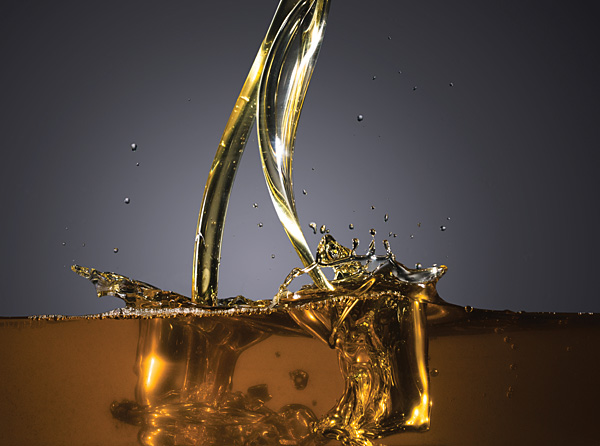
If there's one thing audiophiles agree on, it's that snake oil is badeven if they can't agree about what snake oil actually is.
In audio, snake oil means fake science or fake technologyanything that's claimed to improve the sound of a system but that looks like an obvious rip-off. For some people, expensive speaker cables and interconnects are snake oil. A few objectivists consider AC power treatments snake oil: most modern audio components, after all, can correct for AC line-voltage flaws and reject "ripple" in a power supply's output. A handful of hard-core objectivists maintain that every new digital technology since the advent of the Compact Disc is snake oil.
Space...the Final Frontier
High-end audiophiles are space freaks---we relish the warmth and spaciousness of a fine, old performing hall almost as much as we do the music recorded in it. But my attendance at a series of orchestral concerts held last summer brought home to me---as never before---the sad fact that our search for the ultimate soundstage is doomed to failure: we're trying to reproduce three-dimensional space from a two-dimensional system, and it simply can't be done.
Super Audio CD: The Rich Report
Although Philips invented the Compact Disc, it was only when Sony got involved in the early 1980s that it was decided—at the prompting of conductor Herbert von Karajan, a close friend of Sony's then-president Akio Morita—that the CD should have a long enough playing time to fit Beethoven's Ninth Symphony on a single disc (footnote 1). Even if the conductor was using very slow tempos, and even given the minimum pit size and track pitch printable at the time, the 16-bit data and 44.1kHz sampling rate they settled on gave them a little margin.
Super Audio CD—One Year Later
In his very English way, Sony's then managing director for the UK, Tim Steele, was getting a touch, er, desperate. His oh-so-cultured voice rose a smidgen as he resorted to a direct selling of the benefits of what he was talking about. "Look, you're all sitting on riches," was his fundamental pitch. "You can sell music-lovers your entire back catalog all over again—at a higher price!"
Survival Tips For Living With An Audioholic
PO/SSSLQs (footnote 1), SOs (footnote 2), & Spouses of audiophiles: Linda Tasker (aka Mrs. Kevin Conklin) has some advice for you!