Features

Sort By: Post DateTitle Publish Date

Contingent Dither

If there is one thing I've learned in almost 28 years (ouch) of audio writing, it's that audience reaction is fickle. Sometimes readers will swallow the most contentious pronouncements without indigestion, only to choke on throwaway lines you've invested with little importance. It just goes to confirm that human communication involves senders and receivers, and they aren't always in synchrony.


New Media Metrics

Looked at from one viewpoint, DVD-Audio and SACD appear to be exercises in sheer profligacy. In the case of DVD-A, why provide a maximum">http://www.stereophile.com/features/282">maximum bandwidth almost five times what is conventionally taken to be the audible frequency range, and couple it to a dynamic-range capability far in excess of that achievable by the microphones used to record the sound? In the case of SACD, why provide a potential bandwidth in excess of 1.4MHz, only to fill more than 95% of it with quantization">http://www.stereophile.com/features/374">quantization noise?


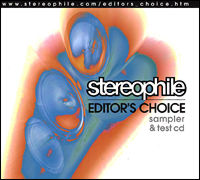
Editor's Choice: Stereophile's Sampler & Test CD

The science of recording music is, to apply a metaphor from a very different context, akin to "breaking a butterfly on a wheel" (footnote 1). The art of recording is to make it appear as though that pinned insect could still take wing. I have been devoted to both the science and the art of recording music since 1965, when I was given a Grundig ¼" open-reel tape recorder as a birthday present. You could even say that my evolving interest in audio and my current position at the helm of Stereophile date back to my finding out how different a Shure SM57 dynamic cardioid microphone sounded from a Reslo Ribbon, even in mono, even at 3¾ips, when captured on that Grundig.


Advertisement
Advertisement
Advertisement