Martin Colloms argues persuasively in the January 1998 Stereophile that negative feedback is not the panacea that amplifier designers believe it to be. His experience of an amplifier (the Cary CAD-805C) and a preamplifier (the Conrad-Johnson ART) that use no negative feedback other than local degeneration, yet have sound quality better than he has previously experienced, convinces him that even when a design's closed-loop distortion appears to be acceptably low, the listener is still aware of an amplifier's very distorted open-loop behavior.In the Six/1997 issue of Audio Electronics, an article by Jan Didden, "Feedback---Curse or Blessing?," provides supporting evidence for Martin's conjecture. Didden summarizes research performed by the late British engineer Peter Baxandall (though no reference is given). Baxandall found that, as loop negative feedback is introduced to a solid-state (FET) amplifier circuit, the amplitude of the low harmonics is reduced by the feedback ratio, as expected. But what was not expected was that the amplitudes of the higher harmonics increased as the feedback was increased in level. These high harmonics started to decrease in level only when the amount of loop negative feedback crossed a threshold. With 40dB of negative feedback, the level of the fifth harmonic was still higher than it was without any feedback!So what, you may be asking yourself? The point is that the higher harmonics are considerably more audible than the low harmonics, and are subjectively more unpleasant. You can test this yourself with Stereophile Test CD 2, which includes a track allowing listeners to determine for themselves how much second- and seventh-harmonic distortion they can hear with a pure tone. While it's hard to hear 1% of second-harmonic content, 0.1% of seventh-harmonic is still audible to many listeners.
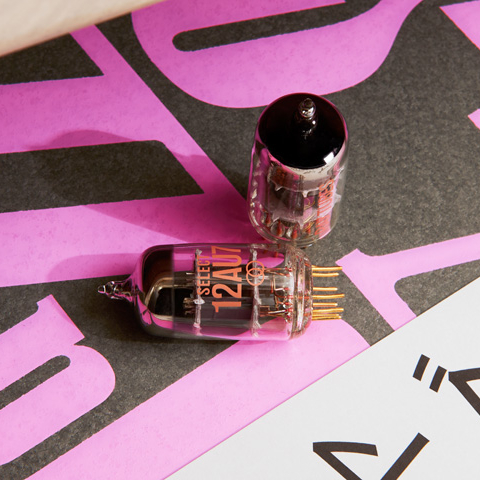
So before you dismiss audiophiles in love with the sound of single-ended tube amplifiers as anachrophilic tweako-cultists, you should note that the open-loop behavior of such designs is extremely linear compared with that of typical push-pull solid-state designs. This means that they can get away with a very small amount of loop negative feedback, and that what harmonic distortion they do have is almost all low-order.Audio Electronics, by the way, is the new title of Audio Amateur magazine, published six times a year by Audio Amateur Corporation, P.O. Box 576, Peterborough, NH 03458. Tel: (603) 924-9464. Fax: (603) 924-9467. E-mail: audiotech@top.monad.net.
Negative feedback doesn't always decrease amplifier distortion!
- Log in or register to post comments