Sidebar 3: Measurements
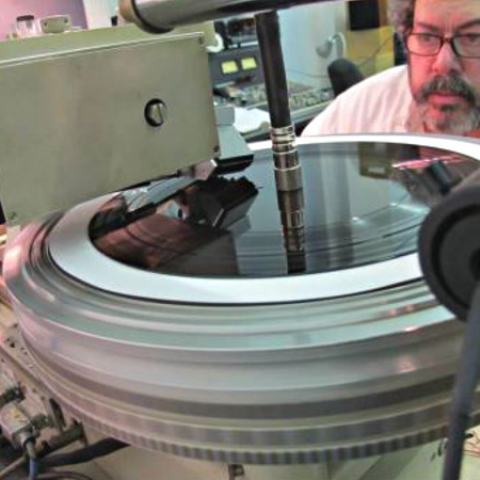
The Rockport Lynx loudspeakers were measured in a large conference room 11'11" H × 25'3" L × 15'8" W, on an Outline ET250R2-3D turntable with a loudspeaker stand, and with an accelerometer. The first reflection was off the floor at about 6.5ms, or 150Hz. The loudspeaker was measured at tweeter height, at a distance of 1m. From the center of the tweeter to the floor was approximately 72".
The equipment used for the measurements was a GRAS 40BD ¼" microphone and a 26CB preamp, with an SCM2 measurement ¼" microphone, a seven-microphone array at 15° vertical increments, and an AmpConnect 621 audio interface and amplifier. The system was calibrated with a B&K 4231 acoustic calibrator at an SPL of 94dB at 1kHz.
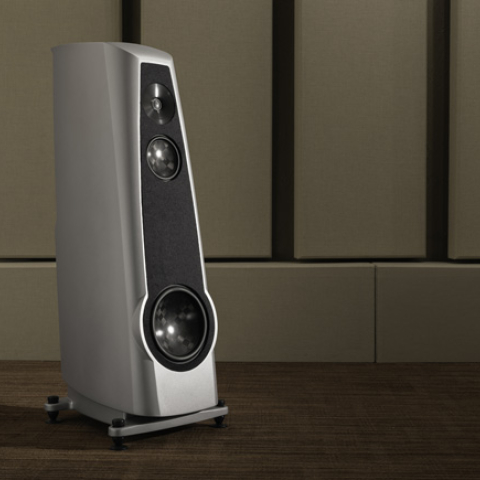
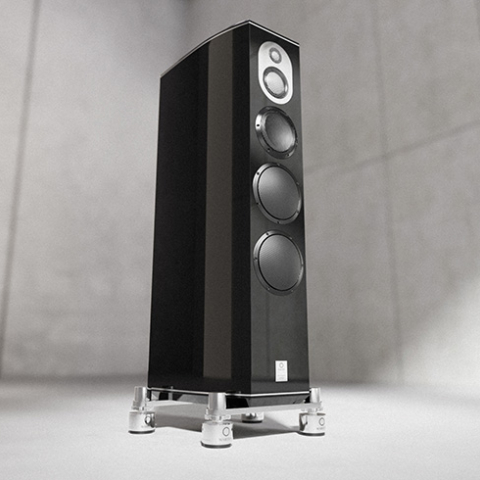
The floorstanding Lynx is built into a massive, well-damped aluminum casing shaped to minimize acoustic diffraction and cabinet resonances. It houses a custom 10" carbon-fiber sandwich-cone woofer, a 6" carbon-fiber sandwich-cone midrange, and a 1" waveguide-loaded beryllium-dome tweeter. Because each cabinet weighs 305 lb, we bought a 1000 lb hydraulic lift to raise the speaker to the proper height for our simulated free-field measurement and a wheelchair ramp to roll it onto the turntable on top of the lift.
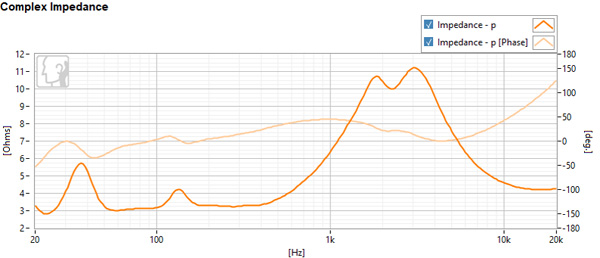
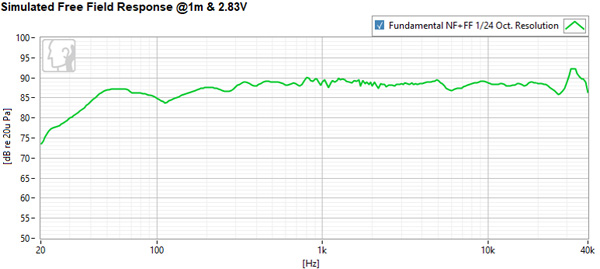
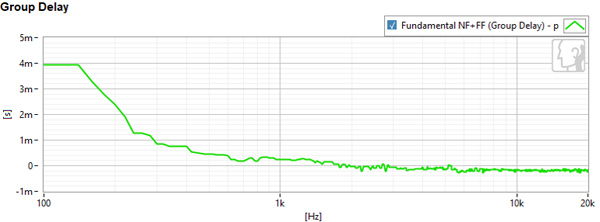
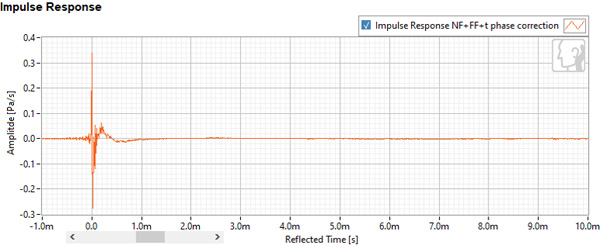
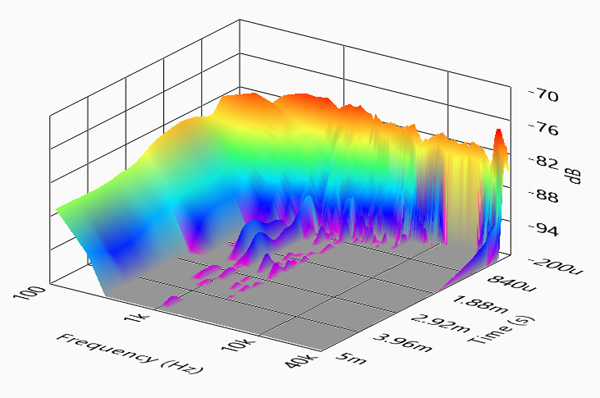
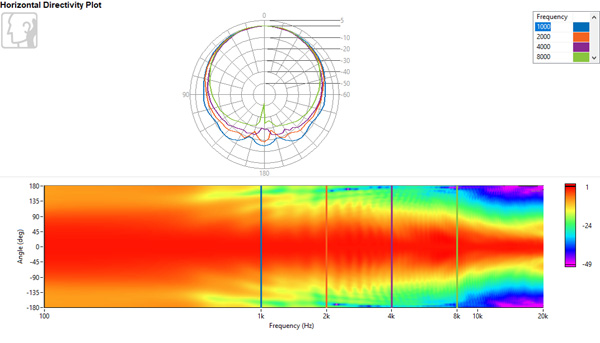
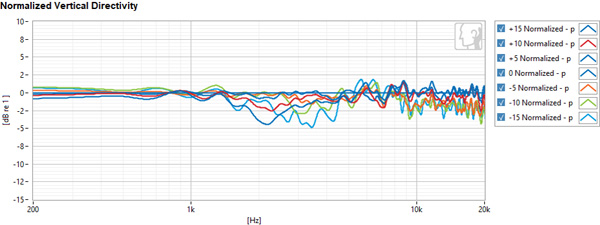
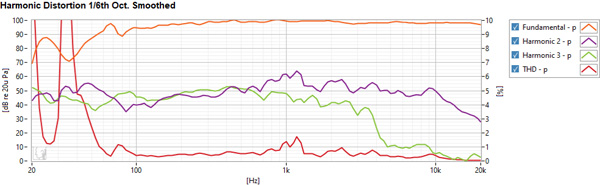
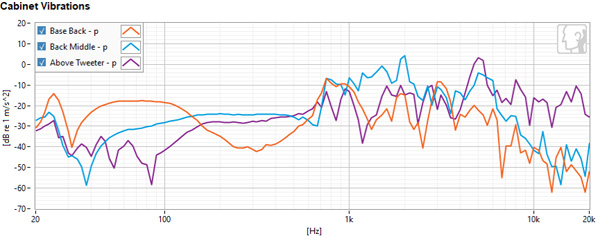
Fig.1 Rockport Lynx, electrical impedance and phase, 20Hz–20kHz.
Rockport specifies the Lynx's nominal impedance as 4 ohms. The measured impedance ranged from a minimum of 3 ohms to a maximum of 11 ohms (fig.1), with a small phase angle; the speaker should be an easy load for modern solid state (and higher-powered tube) amplifiers to drive.
Fig.2 Rockport Lynx, quasi-anechoic response on tweeter axis at 1m, 2.83V, with nearfield and farfield responses spliced at 150Hz.
With the microphone pointing at the tweeter, the average sensitivity, measured between 100Hz and 10kHz, was 88dB/2.83V/1m. That was 2dB lower than Rockport specifies; presumably Rockport's measurement was at 1kHz, where the sensitivity is modestly higher than the broadband sensitivity. The frequency response (fig.2) was ±3dB from 40Hz to 30kHz, with small resonances around 5kHz and 33kHz. The left and right speakers matched to within ±1dB from 100Hz to 28kHz, which is excellent.
Fig.3 Rockport Lynx, group delay on tweeter axis at 1m.
The group delay (fig.3) is the difference in time it takes for sound at all frequencies to travel from the individual drivers and reach the measurement microphone. Ideally it should be zero, but it usually increases at low frequencies, where the speaker driver is physically large and therefore difficult to time-align with the midrange and tweeter. Rockport has done a good job here: sloping the front baffle places the woofer cone's acoustic center, which sits farther back than the tweeter's dome, into better alignment, minimizing group delay.
Fig.4 Rockport Lynx, impulse response on tweeter axis at 1m, 20Hz–20kHz.
The impulse response measured across the full 20Hz–20kHz bandwidth (fig.4) indicated very good transient response, with slight ringing after the direct sound at 2.8ms.
Fig.5 Rockport Lynx, cumulative spectral decay plot on tweeter axis at 1m.
The waterfall (cumulative spectral decay) plot (fig.5) revealed resonances at around 1kHz and 40kHz. Since there is typically no musical content—and no hearing acuity—at 40kHz, that resonance should not be audible.
Fig.6 Rockport Lynx, horizontal directivity: off-axis responses at 1m, in 5° steps.
Fig.7 Rockport Lynx, vertical directivity: responses from 15° above axis to 15° below, in 5° steps.
The horizontal directivity (fig.6) was very smooth off axis up to 10kHz, suggesting very good imaging from any listening position in the room, especially considering how well matched the left and right speakers' frequency responses are. The loudspeaker's vertical directivity (fig.7) also looked very smooth, with just a little attenuation off axis at the crossover frequency of around 2kHz.
Fig.8 Rockport Lynx, harmonic distortion at an SPL of 90dB, corrected to 1m: second harmonic, third harmonic, and THD (distortion percentage, right-hand scale).
In order to measure harmonic distortion down to low frequencies, the microphone was placed closer to the loudspeaker, at 17", to reduce the influence of room reflections; the sound level was then corrected to a distance of 1m for an SPL of 90dB. For most of the frequency range—50Hz and above—total harmonic distortion (fig.8) was below 1%, apart from a rise at around 1kHz, which also showed up as small resonances in the waterfall plot. Since the 2nd harmonic is much higher than the 3rd harmonic around 1kHz, it could be an asymmetrical distortion in the midrange woofer. I'm not sure what is causing it without testing the midrange woofer and tweeter by themselves, outside the cabinet and with no crossover. It is also possible that it is a tweeter resonance, since it is close to the 2kHz crossover frequency. In any case, this still is very good performance and in general, even-order harmonics are not as audible as odd-order harmonics and may even add a little warmth to the sound like a tube amplifier. This is very good performance.
Fig.9 Rockport Lynx, cabinet vibration measured with an accelerometer at several positions on the enclosure (driving voltage, 2.83V).
Finally, vibration measurements of the cabinet were made using an accelerometer to check for cabinet resonances that could impact the sound. The cabinet is a single, massive 305 lb aluminum casting. The accelerometer was placed at different positions on the panels, and the vibration was measured using the same sinewave sweep at 2.83V (fig.9). This is the most solid cabinet I have ever measured; knocking on any side produces only a quiet, dull thud.—Steve Temme