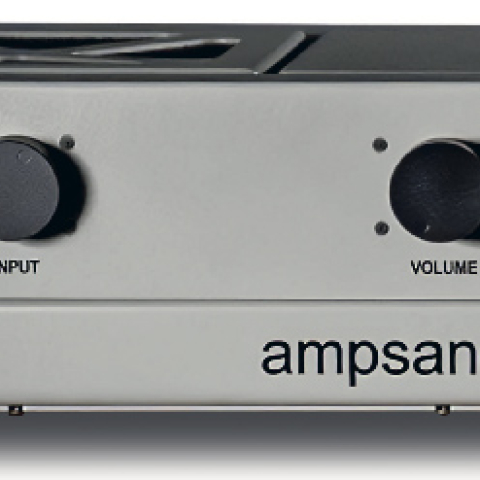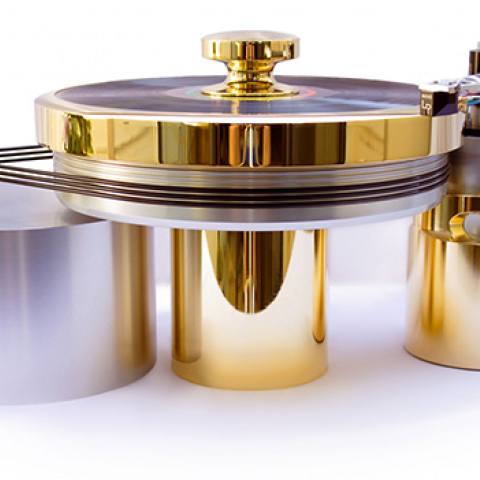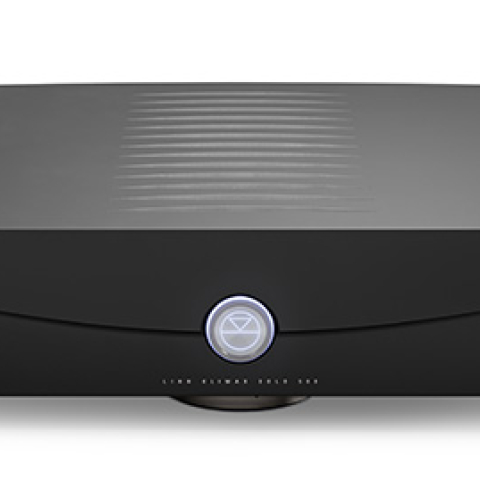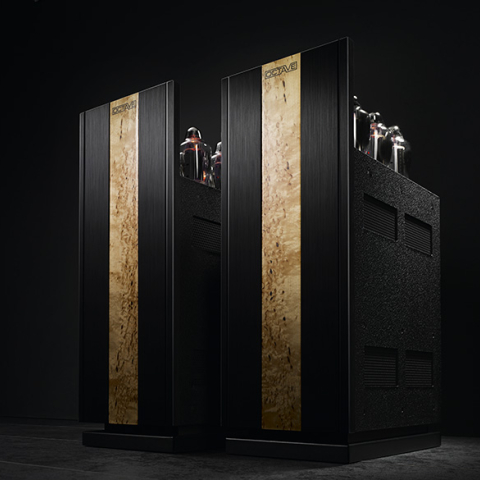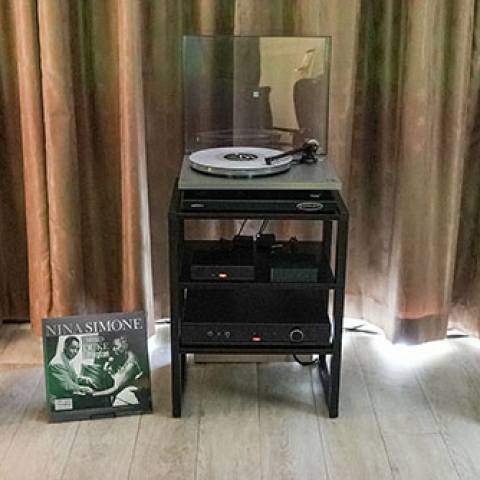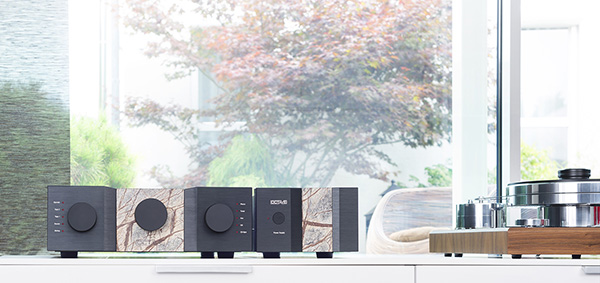
During the reviewing period, I started to worry that the sound, as good as it was, was compromised by EMI. That's when I remembered the Grand Prix Formula Shelf (footnote 6) that sat unused under my couch. With assistance from Off Islanders Audio Society members Stan Delles and Paul Rickert, I installed the platform between the Stromtank and the Jubilee power supply, with the HRS Damping Plates and Wilson Audio Pedestal on top. We all sat amazed at the degree to which extra isolation enhanced the Jubilee's presentation. I stuck with this setup for the remainder of the review.
Some minor damage occurred during shipping. The top center plate, which hosts the Gain and Phase push buttons, shifted ever so slightly forward, preventing buttons from popping out. I freed the buttons by reaching over the preamp and pushing the top plate forward a hair.
Even so, the Jubilee presented a few logistical challenges. If you're short like me and place the Jubilee high on your rack, it's difficult to see which Gain or Phase LED is lit. Even if you put the Jubilee on a lower shelf, the shelf above may block your view of those LEDs. Octave could save some Jubilee owners some tsuris by replacing the push buttons with toggle switches. This would also make those LEDs dispensable.
Another challenge: The Jubilee preamp's remote volume control and the music room's heat pump remote operate on the same frequency. Every time I adjusted the temperature in the room or switched between heating and cooling, the volume went askew. On one occasion, only a fast move on Scott's part saved my speakers from possible damage. After that, I lowered volume all the way before starting a new track or album.
It quickly became clear that the "Connect to Ground" setting delivered a fuller, richer, tighter, more profound bottom end, with weightier images and increased transparency, than I heard with the ground floated. After adjusting that setting, I was ready to begin taking notes. Throughout the review period, the Jubilee operated without buzz or hum. And it was a total joy to listen to.
 Jubilee = sonic bliss
During my first serious listening session, no matter what music I cued up, the word that played on repeat in my head was "beautiful." It's a lovely word, but what does it mean?
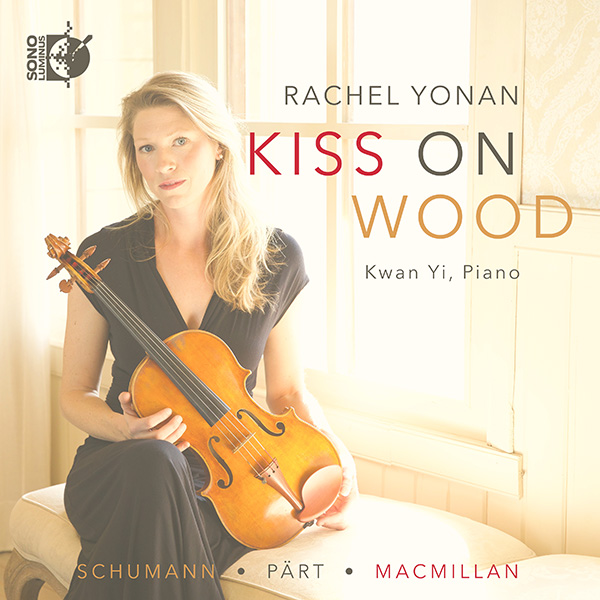
I began with a track from a superb recording I'd just reviewed for the August issue, Arvo Pärt's
Spiegel im Spiegel, performed by violist Rachel Yonan and pianist Kwan Yi on the album
Kiss on Wood (24/352.8 FLAC, Sono Luminus/download). The sound was quite clear if not totally transparent, and the images full, round, and bursting with life and abundant detail.
But there was something more—a seductive smoothness in the midrange that left me in a state of wonder. There was no excess sweetness to detract from the viola's unique tang. Like when you take the first bite of a perfectly steamed organic zucchini in which traces of natural sweetness and tarter flavors harmoniously intermingle with its predominant green core (footnote 7). Wine connoisseurs could come up with other analogies—eg, "a savory mix of chocolate, anise, and licorice with a whiff of tart berries and a smooth-as-velvet finish reminiscent of the frescoes in the private palace in Venice that I visited with the editor of Vogue that glorious summer in Italy"—but we'd be describing the same experience: sound so inviting, satisfying, and easy to listen to that it transports you to a place beyond words.

Eager to explore more, I put on
L'extase: Debussy & Messiaen (24/192 FLAC, Pentatone/download), a marvelous recording by mezzo-soprano Magdalena Kožená and pianist Mitsuko Uchida, which I
reviewed in the September issue. I sat in awe. Every note of Uchida's revelatory artistry and every vocal inflection seemed laid bare. The sound was gorgeous and flattered Kožená's midrange no end.
Deeper into romantic excess I dove, with an old favorite: the studio recording of the Immolation Scene from Wagner's
Götterdämmerung (24/192 FLAC, Columbia/Qobuz), performed by soprano Eileen Farrell and the New York Philharmonic under Leonard Bernstein. Farrell is underrated, perhaps because her instrument was so sensational that she often coasted on its laurels rather than sinking as deeply as possible into the music and her character. But Bernstein had a special rapport with Farrell, whom he clearly adored, and knew how to masterfully coax out everything the great soprano could create. Every instrument, every note was highlighted and gorgeous. Percussion was strong, the soundstage huge and deep. The maternal warmth of Farrell's midrange and lows was one of her many gifts, and the Octave Jubilee highlighted it beautifully, if not with ultimate transparency. As good old Brunnhilde urged her faithful flying horse, Grane, into the flames, and they and the kingdom of the gods fried to a crisp, I was ecstatic.
Knowing that Andreas Hofmann holds the core European classical composers close to his heart, I stuck with classical a bit longer. I couldn't resist revisiting another recording
reviewed in the September issue, Spunicunifait's
Mozart: 6 String Quintets on Historical Instruments (24/192 WAV, Alpha/download). Soundstaging and transparency were quite good, the air surrounding the ensemble gratifying, and every instrument and color was highlighted and flattered. I was in bliss. Then I played the August issue's maximally transparent
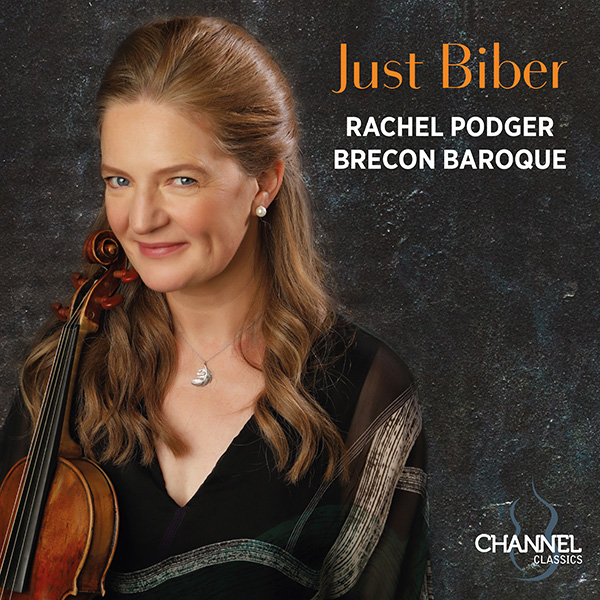
Recording of the Month, Rachel Podger and Brecon Baroque's
Just Biber (DSD128, Channel Classics/download), on which Podger's baroque violin exhibited an ideal amount of edge. More bliss.
In the Adagio from Mahler's Fourth Symphony, performed on period instruments by Les Siècles under the leadership of François-Xavier Roth (24/96 WAV, Harmonia Mundi/download), bass notes were in tune and nicely (if not perfectly) well-defined. Credit is also due to recently installed room treatments from Artnovion, which complement previously installed treatments from A/V RoomService, Stillpoints, and other companies.
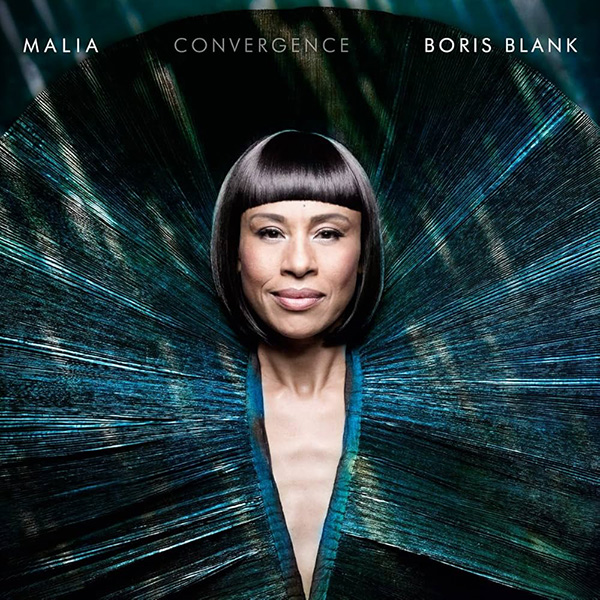
Time to burst out of the ghetto and into Boris Blank and Malia's "Celestial Echo" from
Convergence (16/44.1 FLAC, Boutique/Qobuz). This track has quickly become a show favorite, for good reason. With the Jubilee pre and the rest of the system, the artists' electronically manipulated soundstage was all-encompassing. The bass was jaw-droppingly powerful though not the fastest or tightest my system can produce. I cannot claim that the presentation in my moderate-sized listening room equaled the huge soundstage and bass I heard from the massive Magico M9s, four D'Agostino Relentless amps, and more top-level equipment in a huge, two-story room at AXPONA 2025. But on a smaller scale, Malia and forces seemed to fill every inch of my space.
I continued on a bass kick. On the long version of Aretha's "Bridge Over Troubled Water," remastered in 2021 and issued on the compilation
Aretha (24/96 FLAC, Rhino Atlantic/Qobuz), the midrange sounded gorgeous and smooth. What a joy.
Choosing among other tracks on Tom Fine's "Bass Test" playlist on Qobuz (footnote 8), I cued up "Ratchets" from Hedegaard's
Inferno (24/44.1 FLAC, Spinnin Records/Qobuz); "No Sanctuary Here" from Chris Jones's
Roadhouses & Automobiles (24/44.1 FLAC, Stockfisch Records/Qobuz); "Honky Tonk Women" from the Stones'
Forty Licks (24/96 FLAC, Polydor/Qobuz); and one of my standbys, "Electrified II" from Yello's
Toy (24/48 FLAC, Polydor/Qobuz). In every case, bass was weighty and impressive, and highs were notably less aggressive than I've heard them on my system at other times, in other auditions.
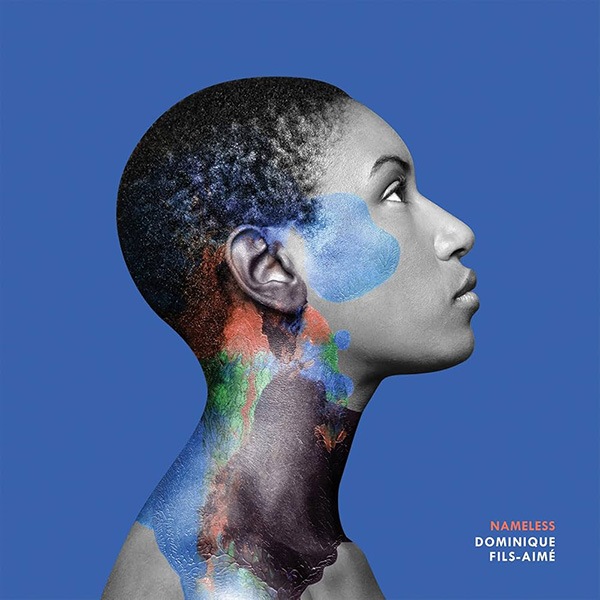
One of the last pieces of music I visited was Dominique Fils-Aimé's "Birds," a track from her superbly recorded album
Nameless (24/88.2 FLAC, Ensoul Records/download) that's played so often at shows that its first notes sometimes tempt me to flee from demo rooms (footnote 9). But this time, I sat still. I heard far more intimate detail than I've heard at any audio show, which is not unusual. But there was something more: a midrange beauty amidst the expanse of sound that invited me to nest rather than fly. That, my friend, is an accomplishment.
 Comparisons
On one level, it's unfair to compare the $42,000 hybrid Octave Jubilee to two more expensive solid state preamps, the $150,000
D'Agostino Relentless and $77,975
Soulution 727. But when a preamp that costs much less than either of those impresses me this much, those supposedly "unfair" comparisons help underscore how much the Octave can deliver.
The Relentless has an astounding ability to unravel the most complex orchestral passages. It masterfully delivers stunningly strong and maximally fast bass, large and convincingly weighty images, perfectly defined leading edges, a massive and completely open soundstage, remarkable transparency, and a kaleidoscopic range of colors (footnote 10).
One of my go-to torture tracks is the second movement of Shostakovich Symphony No.11, "The Year 1905," on Andris Nelsons and the Boston Symphony Orchestra's live recording of
Shostakovich Symphonies Nos. 4 & 11 (24/96 FLAC, Deutsche Grammophon/Qobuz). Stunningly captured in Boston Symphony Hall by Nick Squire (with assistance from Joel Watts and John Morin) and mastered by Tim Martyn of Phoenix Audio, the recording's bass and detail are exceptional. The Relentless is the only preamp I've reviewed that can untangle every colliding line in this musical massacre with aplomb and without adding more noise to the ruckus. It holds nothing back, fires every breathtaking bass wallop right at your gut, and rules in its extraordinary range of colors and silence between notes.
The Octave Jubilee communicates much of what the Relentless can, with bass that's timbre-true and impactful, a midrange whose mellowness draws you in, and highs whose leading edge is softer. Its bass is almost on a par with the Soulution 727's. Where the Soulution excels is in the upper regions, where its additional silence and clarity, utterly refined presentation, bloom, and ability to convey complex timbral nuance and shading sets it apart. Its soundstage is also wider, and its overall presentation a bit warmer and more transparent.
Ultimately, music is more than a checklist of attributes or transitions from a major third to a minor fourth. It's about feelings, and that which lies far beyond and above the realm of words and measurements. On that score ...
Let us sing its praises
Listening to music through Octave's flagship Jubilee hybrid preamp left me grateful to be alive. Even if music in the Celestial Spheres resounds with a magnificence that dwarfs anything we can experience here on Earth, our time in the physical body is far more bearable when reproduced music sounds so inviting and wonderful that it transcends the confines of four walls, mental chatter, and the body itself.
Some will point to the Jubilee's tubes and declare, "See, that's what tubes can do!" Others will praise its lack of negative feedback, its outboard power supply, and the considerable gifts of its designer, Andreas Hofmann. Me? I'm content with the mystery of not knowing. Like any fine work of art, the Octave Jubilee hybrid preamplifier transcends the sum of its parts. I can't imagine anyone with a heart, soul, and love of music who would not want to partake of its riches.
Footnote 6: See grandprixaudio.com/isolation.
Footnote 7: That is, if you don't smother it in hot sauce.
Footnote 8: See open.qobuz.com/playlist/21395182.
Footnote 9: No disrespect for Dominique Fils-Aimé, who makes beautiful, beautifully recorded music, but I recall doing exactly this in one room at the 2025 Munich show. She is over-played.—
Jim Austin
Footnote 10: A recent visitor, Off Islanders Audio Society member Stan Delles, praised its "unparalleled bass definition and impact and meat on the bone."